Lucinda Luciane Boreki, Prosdócimo Ana Claudia Merchan Giaxa, de Carvalho Katherine Athayde Teixeira, Francisco Julio Cesar, Baena Cristina Pellegrino, Olandoski Marcia, do Amaral Vivian Ferreira, Faria-Neto José Rocha, Guarita-Souza Luiz César
Pontifícia Universidade Católica do Paraná, Curitiba, PR, Brazil.
Instituto de Pesquisa Pelé Pequeno Príncipe, Curitiba, PR, Brazil.
Rev Bras Cir Cardiovasc. 2015 Jan-Mar;30(1):16-23. doi: 10.5935/1678-9741.20140068.
Acute myocardial infarction is a social health problem of epidemiological relevance, with high levels of morbidity and mortality. Stress is one of the modifiable risk factors that triggers acute myocardial infarction. Stress is a result of a set of physiological reactions, which when exaggerated in intensity or duration can lead to imbalances in one's organism, resulting in vulnerability to diseases.
To identify the presence of stress and its phases in hospitalized and active labor market patients with unstable myocardial infarction and observe its correlation with the life of this population with stress.
The methodology used was a quantitative, descriptive and transversal research approach conducted with a total of 43 patients, who were still active in the labor market, presenting or not morbidities. Data collection occurred on the fourth day of their hospitalization and patients responded to Lipp's Stress Symptom Inventory for adults.
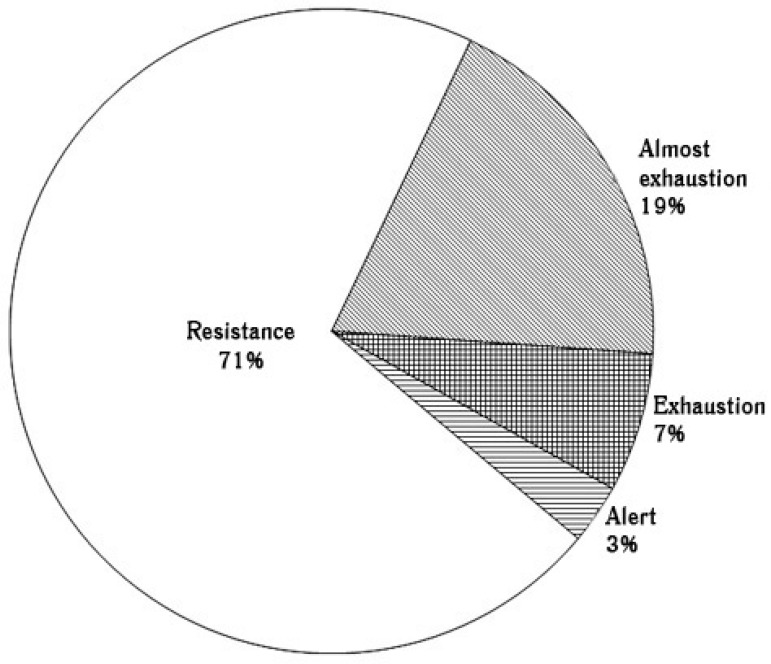
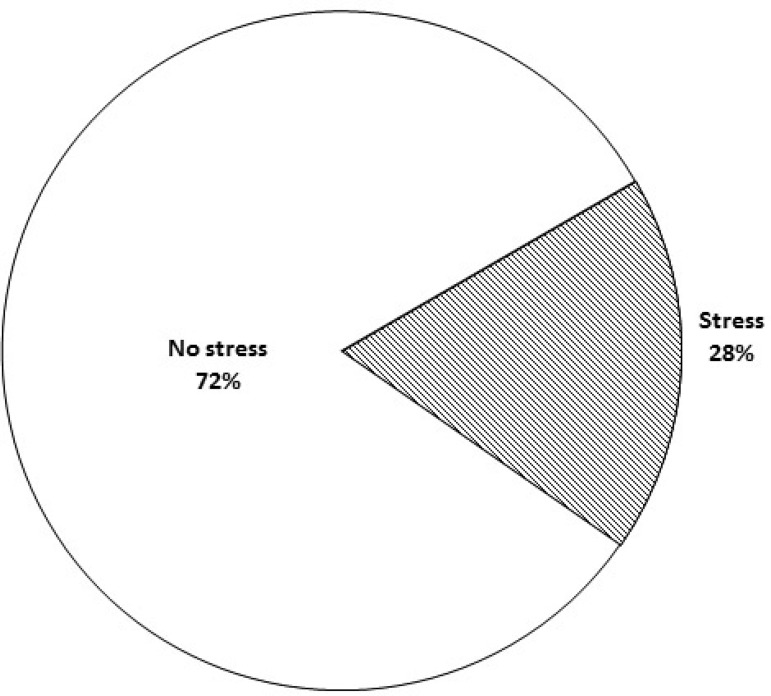
Thirty-one patients (72.1%) presented stress and twelve (27.8%) did not. In patients with stress, the identified phases were: alert - one patient (3.2%); resistance -twenty-two patients (71.0%); quasi-exhaustion - six patients (19.4%) and exhaustion - two patients (6.5%). All women researched presented stress.
The results suggest a high level of stress, especially in the resistance phase, in the male infarcted population, hospitalized and active in the labor market.
急性心肌梗死是一个具有流行病学相关性的社会健康问题,发病率和死亡率都很高。压力是引发急性心肌梗死的可改变风险因素之一。压力是一系列生理反应的结果,当这些反应的强度或持续时间过度时,可能导致机体失衡,从而易患疾病。
确定不稳定型心肌梗死的住院患者和活跃于劳动力市场的患者中压力的存在及其阶段,并观察其与该压力人群生活的相关性。
所采用的方法是一种定量、描述性和横向研究方法,共对43名仍活跃于劳动力市场、有或无疾病的患者进行了研究。在他们住院的第四天进行数据收集,患者对成人版的利普压力症状量表进行了作答。
31名患者(72.1%)存在压力,12名患者(27.8%)不存在压力。在存在压力的患者中,确定的阶段为:警觉期——1名患者(3.2%);抵抗期——22名患者(71.0%);准衰竭期——6名患者(19.4%);衰竭期——2名患者(6.5%)。所有接受研究的女性都存在压力。
结果表明,在住院且活跃于劳动力市场的男性梗死人群中,压力水平较高,尤其是在抵抗期。