Andrews J R, Basu S, Dowdy D W, Murray M B
Division of Infectious Diseases and Geographic Medicine, Stanford University School of Medicine, Stanford, California, USA.
Stanford Prevention Research Center, Stanford University School of Medicine, Stanford, California, USA.
Int J Tuberc Lung Dis. 2015 Apr;19(4):375-80. doi: 10.5588/ijtld.14.0423.
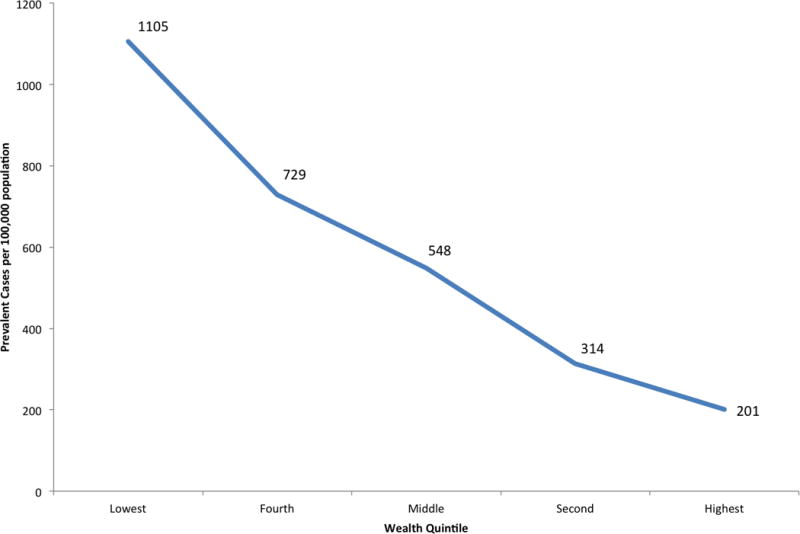
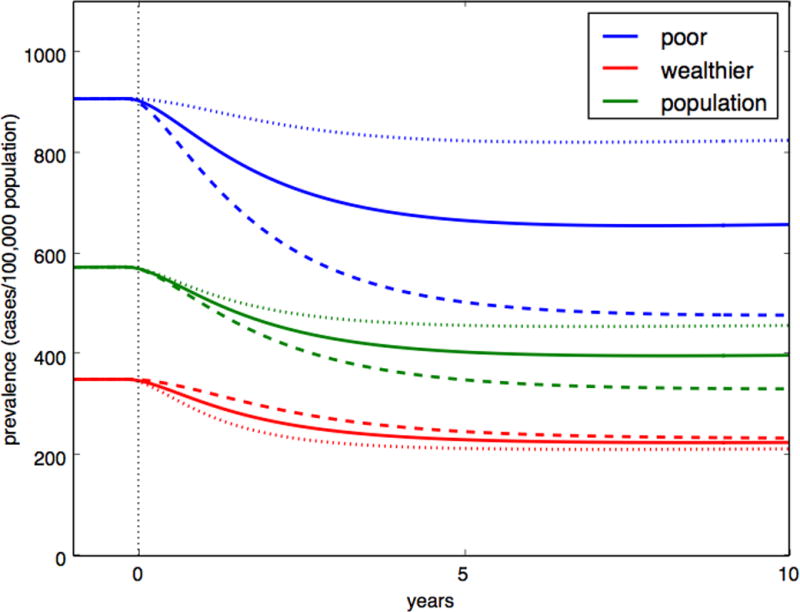
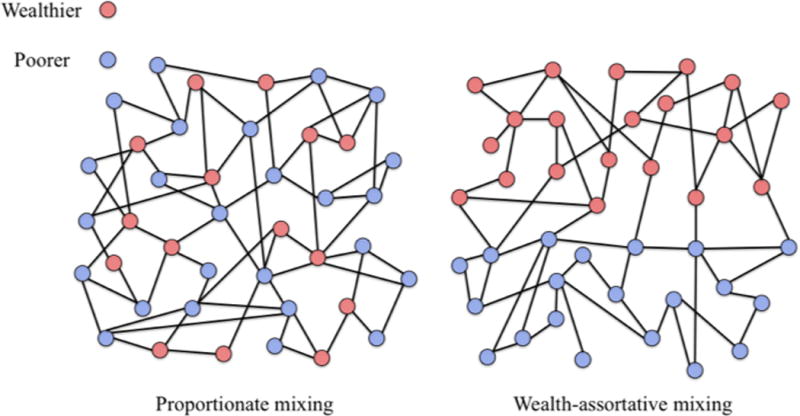
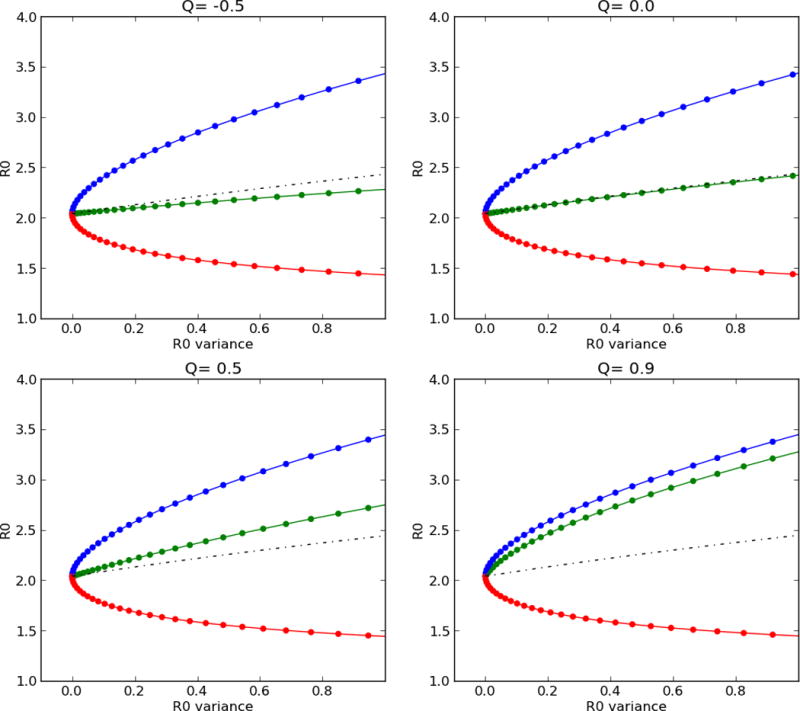
Tuberculosis (TB) remains disproportionately concentrated among the poor, yet known determinants of TB reactivation may fail to explain observed disparities in disease rates according to wealth. Reviewing data on TB disparities in India and the wealth distribution of known TB risk factors, we describe how social mixing patterns could be contributing to TB disparities. Wealth-assortative mixing, whereby individuals are more likely to be in contact with others from similar socio-economic backgrounds, amplifies smaller differences in risk of TB, resulting in large population-level disparities. As disparities and assortativeness increase, TB becomes more difficult to control, an effect that is obscured by looking at population averages of epidemiological parameters, such as case detection rates. We illustrate how TB control efforts may benefit from preferential targeting toward the poor. In India, an equivalent-scale intervention could have a substantially greater impact if targeted at those living below the poverty line than with a population-wide strategy. In addition to potential efficiencies in targeting higher-risk populations, TB control efforts would lead to a greater reduction in secondary TB cases per primary case diagnosed if they were preferentially targeted at the poor. We highlight the need to collect programmatic data on TB disparities and explicitly incorporate equity considerations into TB control plans.
结核病(TB)在贫困人口中的集中程度仍然过高,但已知的结核病复发决定因素可能无法解释根据财富状况观察到的发病率差异。通过回顾印度结核病差异数据以及已知结核病风险因素的财富分布情况,我们描述了社会交往模式可能如何导致结核病差异。财富选择性交往,即个体更有可能与来自相似社会经济背景的其他人接触,放大了结核病风险的较小差异,导致在人群层面出现巨大差异。随着差异和选择性增加,结核病变得更难控制,而这一效应通过观察流行病学参数(如病例发现率)的人群平均值会被掩盖。我们说明了结核病控制工作如何可能从优先针对贫困人口中受益。在印度,如果针对生活在贫困线以下的人群实施同等规模的干预措施,其影响将比采用全人群策略大得多。除了在针对高风险人群方面可能提高效率外,如果结核病控制工作优先针对贫困人口,每诊断出一例原发性结核病病例,继发性结核病病例的减少幅度会更大。我们强调需要收集关于结核病差异的项目数据,并将公平性考虑明确纳入结核病控制计划。