Bovy Nicolas, Blomme Benoît, Frères Pierre, Dederen Stella, Nivelles Olivier, Lion Michelle, Carnet Oriane, Martial Joseph A, Noël Agnès, Thiry Marc, Jérusalem Guy, Josse Claire, Bours Vincent, Tabruyn Sébastien P, Struman Ingrid
Laboratory of Molecular Angiogenesis, GIGA-R, University of Liège, Belgium.
Laboratory of Human Genetics, GIGA-R, University of Liège, Belgium.
Oncotarget. 2015 Apr 30;6(12):10253-66. doi: 10.18632/oncotarget.3520.
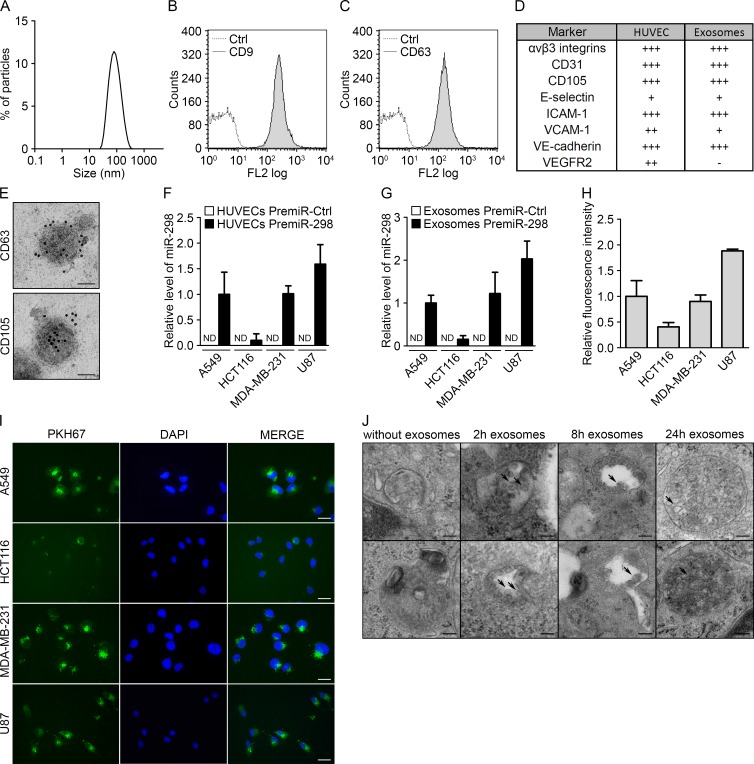
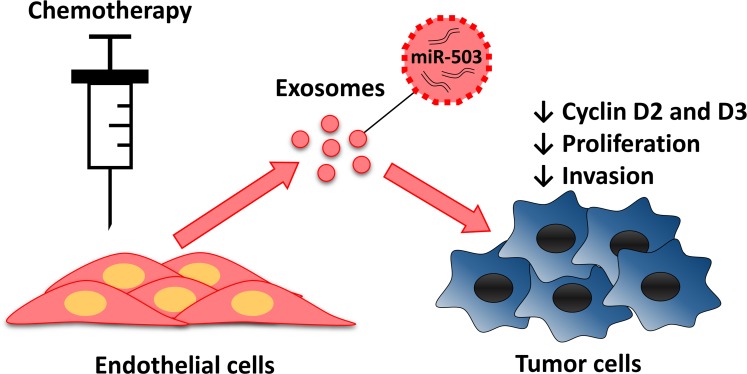
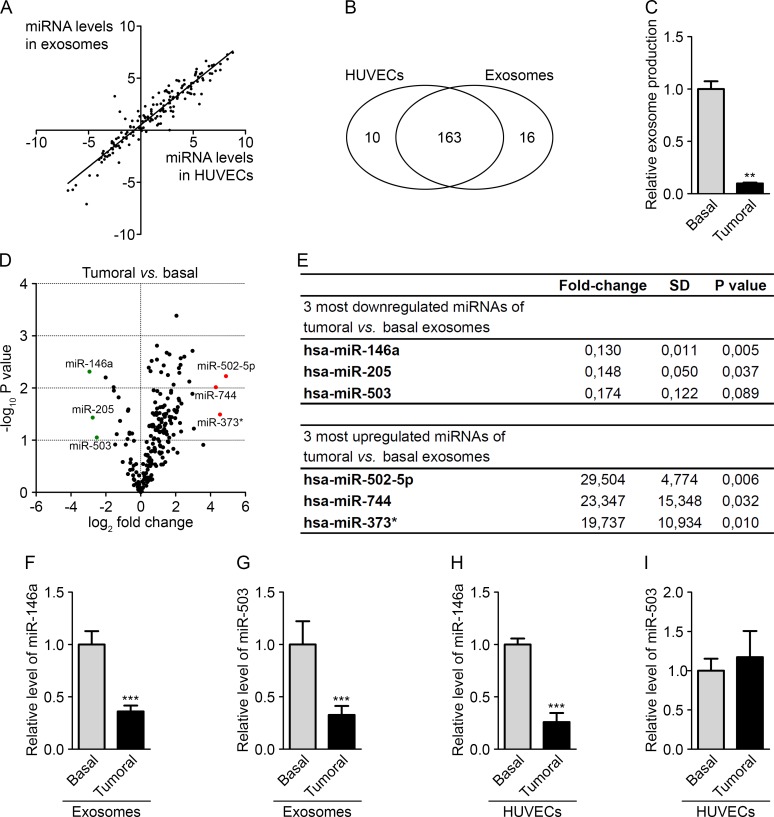
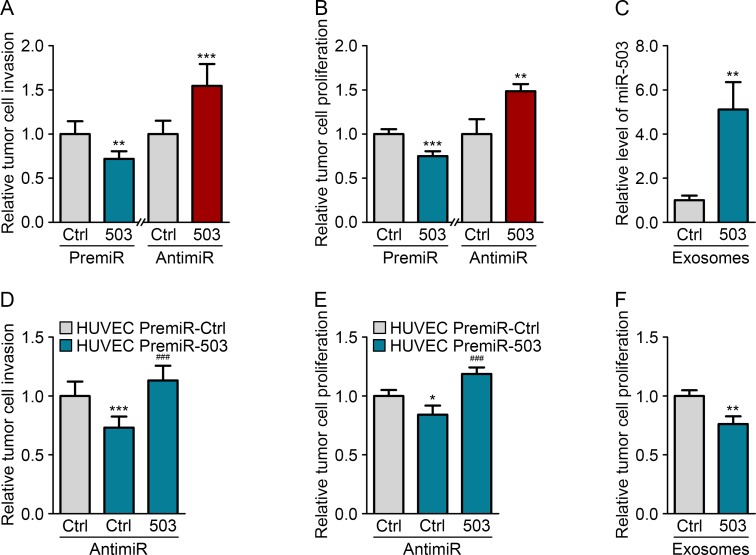
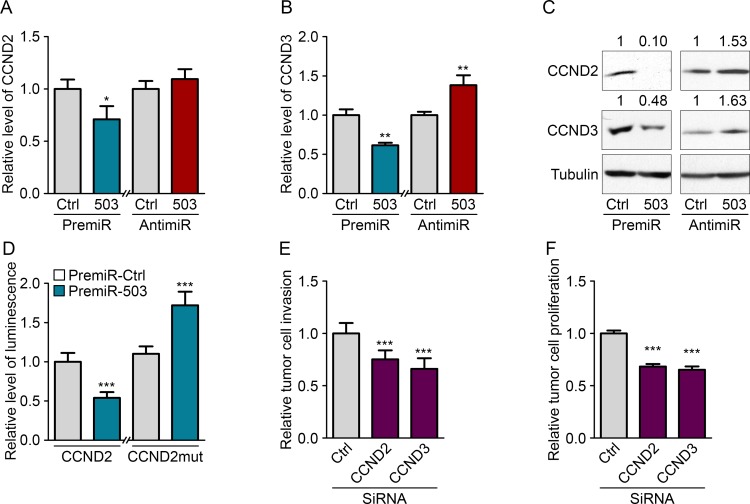
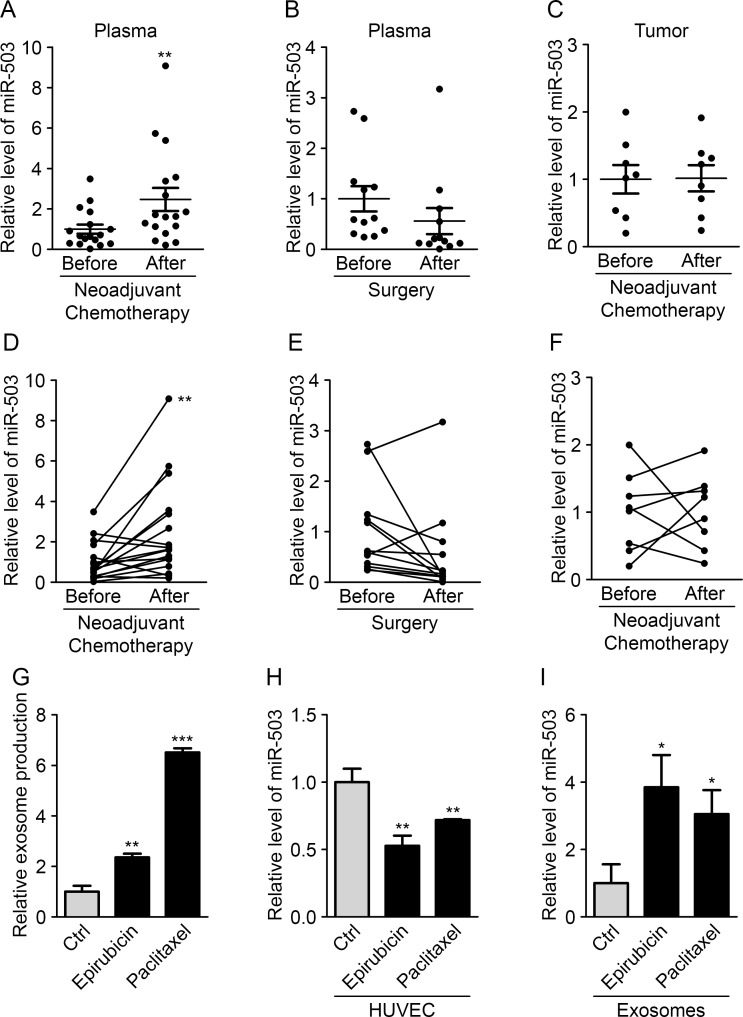
The interaction between tumor cells and their microenvironment is an essential aspect of tumor development. Therefore, understanding how this microenvironment communicates with tumor cells is crucial for the development of new anti-cancer therapies. MicroRNAs (miRNAs) are small non-coding RNAs that inhibit gene expression. They are secreted into the extracellular medium in vesicles called exosomes, which allow communication between cells via the transfer of their cargo. Consequently, we hypothesized that circulating endothelial miRNAs could be transferred to tumor cells and modify their phenotype. Using exogenous miRNA, we demonstrated that endothelial cells can transfer miRNA to tumor cells via exosomes. Using miRNA profiling, we identified miR-503, which exhibited downregulated levels in exosomes released from endothelial cells cultured under tumoral conditions. The modulation of miR-503 in breast cancer cells altered their proliferative and invasive capacities. We then identified two targets of miR-503, CCND2 and CCND3. Moreover, we measured increased plasmatic miR-503 in breast cancer patients after neoadjuvant chemotherapy, which could be partly due to increased miRNA secretion by endothelial cells. Taken together, our data are the first to reveal the involvement of the endothelium in the modulation of tumor development via the secretion of circulating miR-503 in response to chemotherapy treatment.
肿瘤细胞与其微环境之间的相互作用是肿瘤发展的一个重要方面。因此,了解这种微环境如何与肿瘤细胞进行通讯对于开发新的抗癌疗法至关重要。微小RNA(miRNA)是抑制基因表达的小非编码RNA。它们被分泌到称为外泌体的囊泡中的细胞外介质中,这允许细胞之间通过其货物的转移进行通讯。因此,我们推测循环内皮miRNA可以转移到肿瘤细胞并改变其表型。使用外源性miRNA,我们证明内皮细胞可以通过外泌体将miRNA转移到肿瘤细胞。使用miRNA谱分析,我们鉴定出miR-503,其在肿瘤条件下培养的内皮细胞释放的外泌体中水平下调。乳腺癌细胞中miR-503的调节改变了它们的增殖和侵袭能力。然后我们鉴定了miR-503的两个靶标CCND2和CCND3。此外,我们测量了新辅助化疗后乳腺癌患者血浆miR-503升高,这可能部分归因于内皮细胞miRNA分泌增加。综上所述,我们的数据首次揭示了内皮细胞通过分泌循环miR-503对化疗治疗作出反应而参与肿瘤发展的调节。