Food and Meal Science, School of Education and Environment, Kristianstad University, Kristianstad, Sweden;
Food Nutr Res. 2015 Apr 8;59:26932. doi: 10.3402/fnr.v59.26932. eCollection 2015.
Health-related illnesses such as obesity and diabetes continue to increase, particularly in groups of low socioeconomic status. The increasing cost of nutritious food has been suggested as an explanation.
To construct a price index describing the cost of a diet adhering to nutritional recommendations for a rational and knowledgeable consumer and, furthermore, to investigate which nutrients have become more expensive to obtain over time.
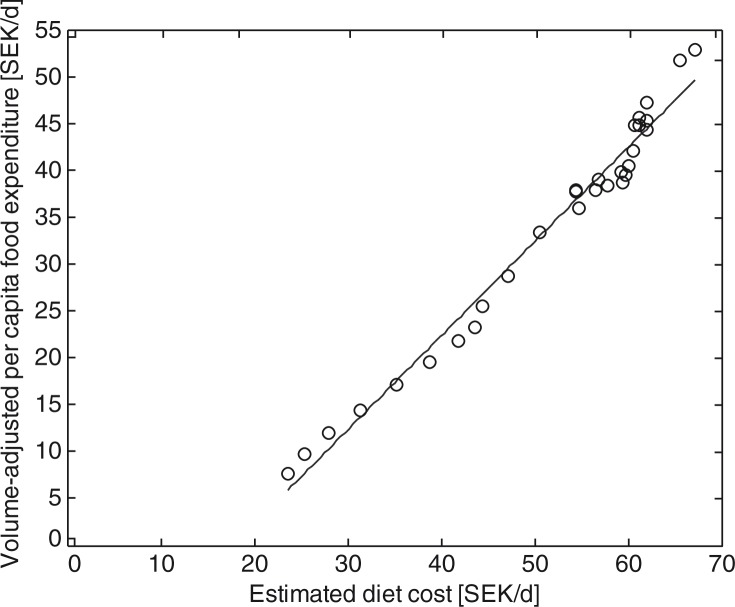
Linear programming and goal programming were used to calculate two optimal and nutritious diets for each year in the interval under different assumptions. The first model describes the rational choice of a cost-minimizing consumer; the second, the choice of a consumer trying to deviate as little as possible from average consumption. Shadow price analysis was used to investigate how nutrients contribute to the diet cost.
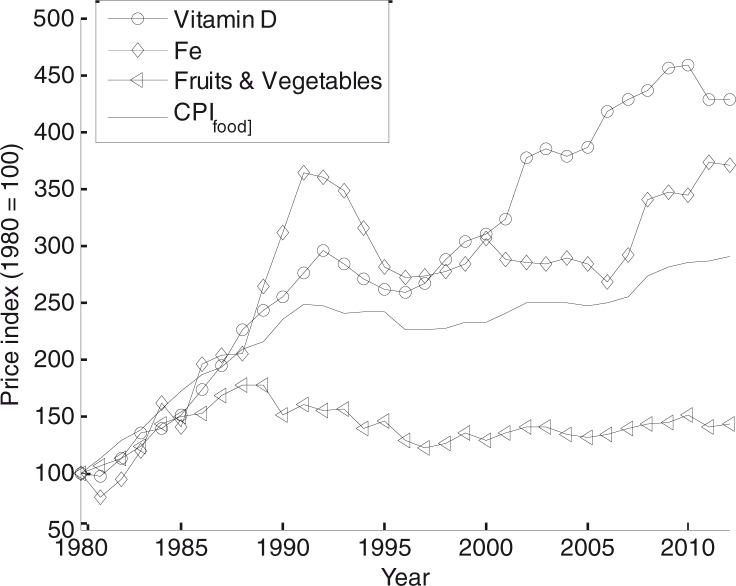
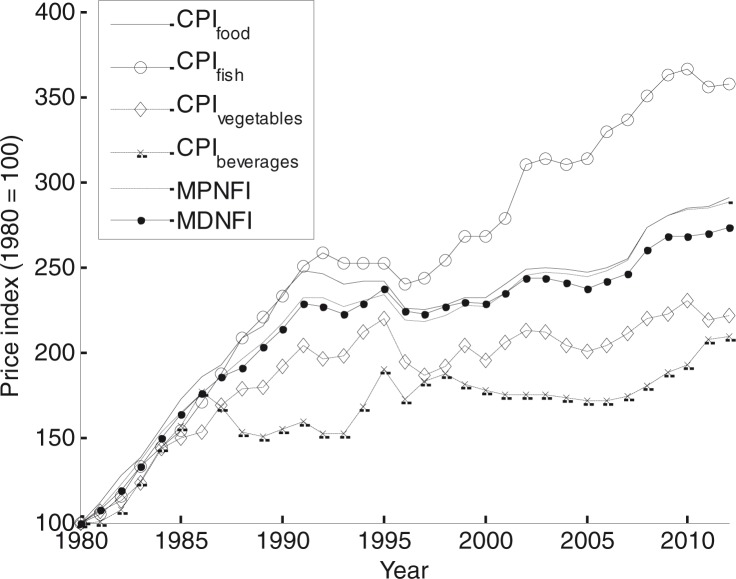
The cost of a diet adhering to nutritional recommendations has not increased more than general food prices in Sweden between 1980 and 2012. However, following nutrient recommendations increases the diet cost even for a rational consumer, particularly for vitamin D, iron, and selenium. The cost of adhering to the vitamin D recommendation has increased faster than the general food prices.
Not adhering to recommendations (especially those for vitamin D) offers an opportunity for consumers to lower the diet cost. However, the cost of nutritious diets has not increased more than the cost of food in general between 1980 and 2012 in Sweden.
与健康相关的疾病(如肥胖和糖尿病)持续增加,尤其是在社会经济地位较低的群体中。有人认为,营养食品价格的上涨是造成这种情况的原因。
构建一个描述符合营养建议的饮食成本的价格指数,对于理性和有知识的消费者来说,并且还研究了随着时间的推移,哪些营养物质的获取成本变得更高。
使用线性规划和目标规划来计算每个时间段内的两个最佳和营养丰富的饮食,这些时间段在不同的假设下。第一个模型描述了成本最小化消费者的理性选择;第二个模型描述了试图尽可能偏离平均消费水平的消费者的选择。影子价格分析用于研究营养物质如何影响饮食成本。
1980 年至 2012 年期间,瑞典遵循营养建议的饮食成本并未超过普通食品价格的涨幅。然而,即使对于理性消费者而言,遵循营养建议也会增加饮食成本,特别是对于维生素 D、铁和硒。遵循维生素 D 建议的成本增长速度超过了普通食品价格的涨幅。
不遵循建议(尤其是维生素 D 建议)为消费者降低饮食成本提供了机会。然而,1980 年至 2012 年期间,瑞典遵循营养建议的饮食成本并未超过普通食品价格的涨幅。