Clark Peter G K, Vieira Lucas C C, Tallant Cynthia, Fedorov Oleg, Singleton Dean C, Rogers Catherine M, Monteiro Octovia P, Bennett James M, Baronio Roberta, Müller Susanne, Daniels Danette L, Méndez Jacqui, Knapp Stefan, Brennan Paul E, Dixon Darren J
Department of Chemistry, Chemistry Research Laboratory, University of Oxford, Mansfield Road, Oxford, OX1 3TA (UK).
Structural Genomics Consortium & Target Discovery Institute, University of Oxford, NDM Research Building, Roosevelt Drive, Oxford, OX3 7DQ and OX3 7FZ (UK).
Angew Chem Int Ed Engl. 2015 May 18;54(21):6217-21. doi: 10.1002/anie.201501394. Epub 2015 Apr 13.
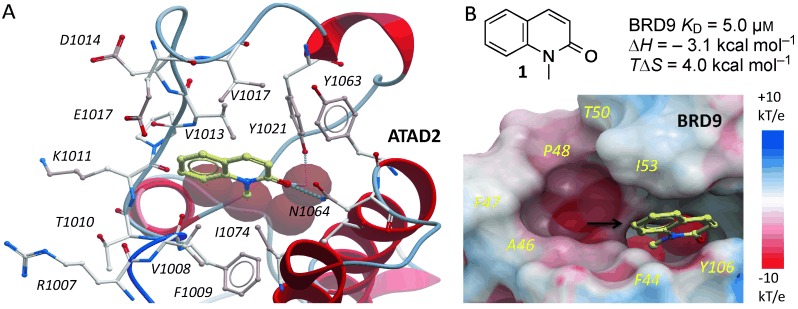
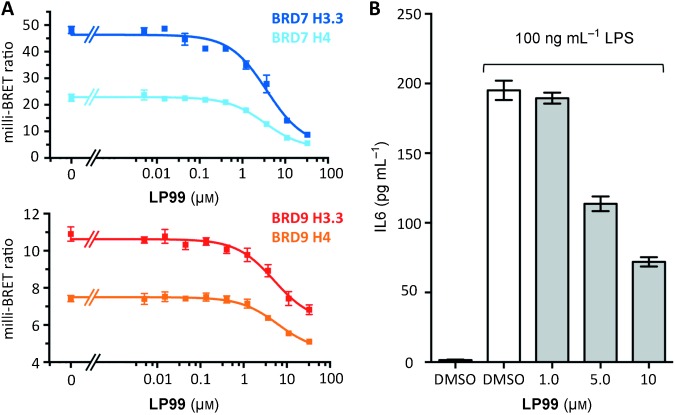
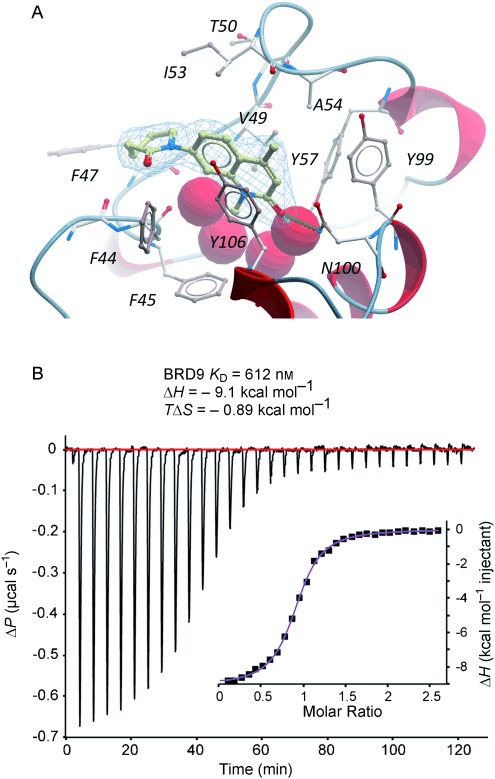
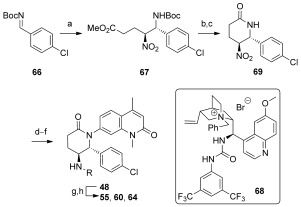
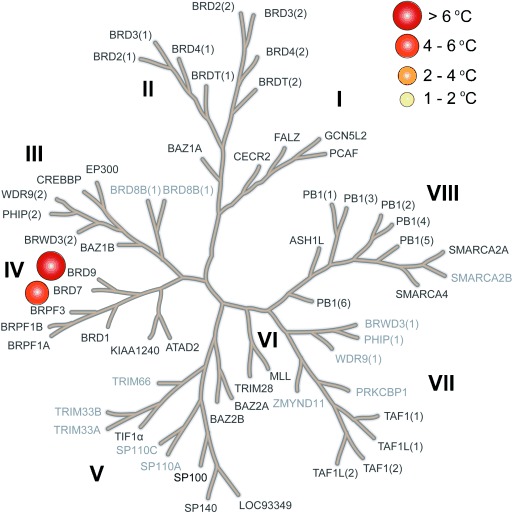
The bromodomain-containing proteins BRD9 and BRD7 are part of the human SWI/SNF chromatin-remodeling complexes BAF and PBAF. To date, no selective inhibitor for BRD7/9 has been reported despite its potential value as a biological tool or as a lead for future therapeutics. The quinolone-fused lactam LP99 is now reported as the first potent and selective inhibitor of the BRD7 and BRD9 bromodomains. Development of LP99 from a fragment hit was expedited through balancing structure-based inhibitor design and biophysical characterization against tractable chemical synthesis: Complexity-building nitro-Mannich/lactamization cascade processes allowed for early structure-activity relationship studies whereas an enantioselective organocatalytic nitro-Mannich reaction enabled the synthesis of the lead scaffold in enantioenriched form and on scale. This epigenetic probe was shown to inhibit the association of BRD7 and BRD9 to acetylated histones in vitro and in cells. Moreover, LP99 was used to demonstrate that BRD7/9 plays a role in regulating pro-inflammatory cytokine secretion.
含溴结构域蛋白BRD9和BRD7是人类SWI/SNF染色质重塑复合物BAF和PBAF的组成部分。尽管BRD7/9作为一种生物学工具或未来治疗药物的先导具有潜在价值,但迄今为止,尚未有针对BRD7/9的选择性抑制剂的报道。喹诺酮稠合内酰胺LP99现被报道为BRD7和BRD9溴结构域的首个强效选择性抑制剂。通过平衡基于结构的抑制剂设计和生物物理表征与易于处理的化学合成,加速了从片段命中物开发LP99的过程:构建复杂性的硝基曼尼希/内酰胺化级联反应允许早期的构效关系研究,而对映选择性有机催化硝基曼尼希反应能够以对映体富集的形式并规模化合成先导支架。这种表观遗传探针在体外和细胞中均显示出抑制BRD7和BRD9与乙酰化组蛋白结合的作用。此外,LP99被用于证明BRD7/9在调节促炎细胞因子分泌中发挥作用。