Ouatu Anca, Tãnase Daniela Maria, Floria Mariana, Ionescu Simona Daniela, Ambãruş Valentin, Arsenescu-Georgescu Cãtãlina
Grigore T.Popa University of Medicine and Pharmacy; Iaşi-România; IIIrd Medical Clinic from Sf. Spiridon University Hospital; Iaşi-România.
Anatol J Cardiol. 2015 Nov;15(11):938-43. doi: 10.5152/akd.2014.5739. Epub 2014 Dec 31.
Renal dysfunction is associated with increased cardiovascular morbidity and mortality. The alteration in renal function as a marker of mortality in pulmonary thromboembolism (PTE) has not been studied extensively.
Four hundred four consecutive patients diagnosed with non-high-risk PTE (without cardiogenic shock or blood pressure <90 mm Hg) were prospectively enrolled in the study between 2005-2010. Kidney function, based on glomerular filtration rate (GFR), calculated by the simplified modification in diet in renal disease (MDRD) equation (sMDRD); troponin I; B-type natriuretic peptide (BNP); and echocardiographic markers of right ventricular (RV) function were determined in survivors versus non-survivors after a 2-year follow-up.
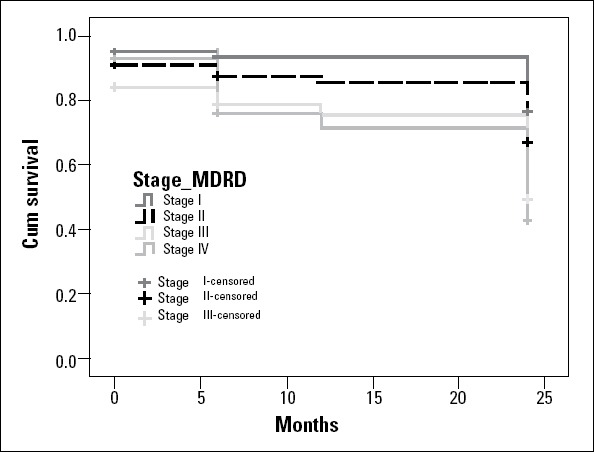
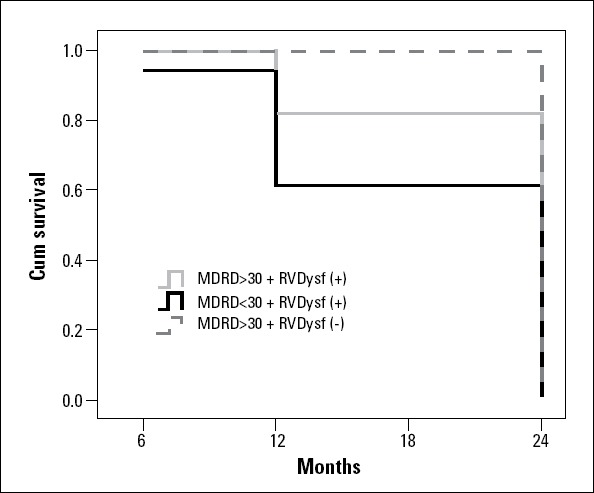
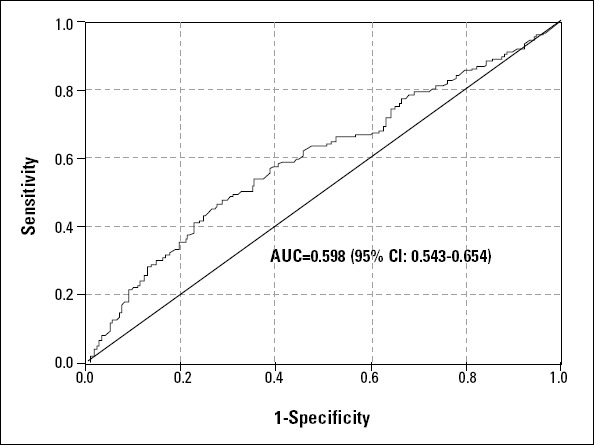
GFR was significantly lower in non-survivors than in survivors: 51.85±19.08 mL/min/1.73 m2 and 71.65±23.21 mL/min/1.73 m2, respectively (p=0.000). The highest 2-year mortality rate (20%) was recorded in patients with moderate renal dysfunction associated with RV dysfunction. Using multivariate analysis, we found that GFR is an independent predictor of 2-year mortality (OR 0.973, 95% CI: 0.959-0.987, p=0.000), besides troponin I, dyslipidemia, acceleration time of pulmonary ejection, pericardial effusion, and BNP.
The association of renal dysfunction with right ventricular dysfunction in patients with non-fatal pulmonary thromboembolism resulted in high mortality. Renal dysfunction, assessed by glomerular filtration rate, may be used in the risk stratification of patients with non-high-risk pulmonary thromboembolism, besides troponin I, BNP, and right ventricle echocardiographic dysfunction markers.
肾功能不全与心血管疾病发病率和死亡率增加相关。肾功能改变作为肺血栓栓塞症(PTE)死亡率的标志物尚未得到广泛研究。
2005年至2010年间,前瞻性纳入404例连续诊断为非高危PTE(无心源性休克或血压<90 mmHg)的患者。基于简化的肾脏病饮食改良(MDRD)方程(sMDRD)计算的肾小球滤过率(GFR)来评估肾功能;测定肌钙蛋白I、B型利钠肽(BNP)以及右心室(RV)功能的超声心动图标志物。对存活者和非存活者进行2年随访后进行比较。
非存活者的GFR显著低于存活者,分别为51.85±19.08 mL/min/1.73 m2和71.65±23.21 mL/min/1.73 m2(p = 0.000)。中度肾功能不全合并RV功能不全的患者2年死亡率最高(20%)。多因素分析显示,除肌钙蛋白I、血脂异常、肺动脉射血加速时间、心包积液和BNP外,GFR是2年死亡率的独立预测因素(OR 0.973,95%CI:0.959 - 0.987,p = 0.000)。
非致死性肺血栓栓塞症患者中,肾功能不全与右心室功能不全相关导致高死亡率。除肌钙蛋白I、BNP和右心室超声心动图功能障碍标志物外,通过肾小球滤过率评估的肾功能不全可用于非高危肺血栓栓塞症患者的危险分层。