Rockwell Hannah E, McCurdy Victoria J, Eaton Samuel C, Wilson Diane U, Johnson Aime K, Randle Ashley N, Bradbury Allison M, Gray-Edwards Heather L, Baker Henry J, Hudson Judith A, Cox Nancy R, Sena-Esteves Miguel, Seyfried Thomas N, Martin Douglas R
Boston College Biology Department, Chestnut Hill, MA, USA.
Scott-Ritchey Research Center, College of Veterinary Medicine, Auburn University, AL, USA Department of Anatomy, Physiology & Pharmacology, College of Veterinary Medicine, Auburn University, AL, USA.
ASN Neuro. 2015 Apr 13;7(2). doi: 10.1177/1759091415569908. Print 2015 Mar-Apr.
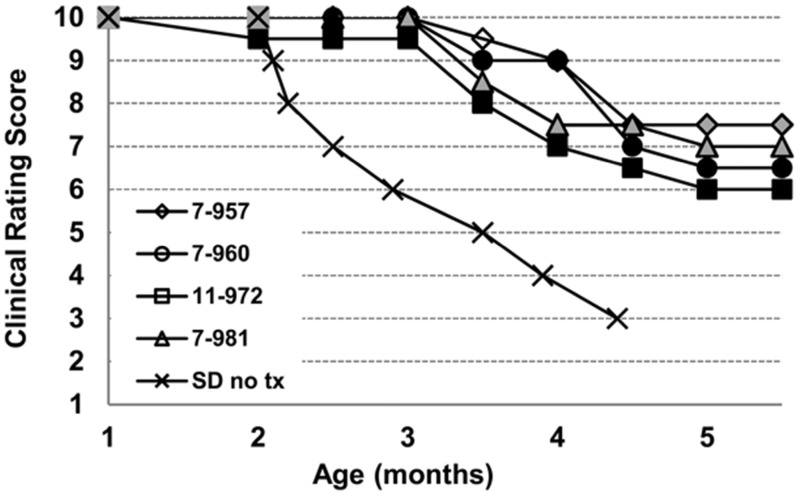
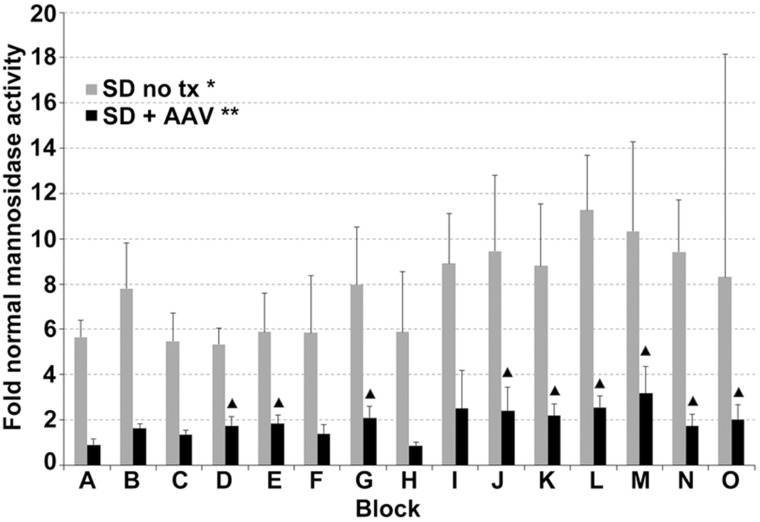
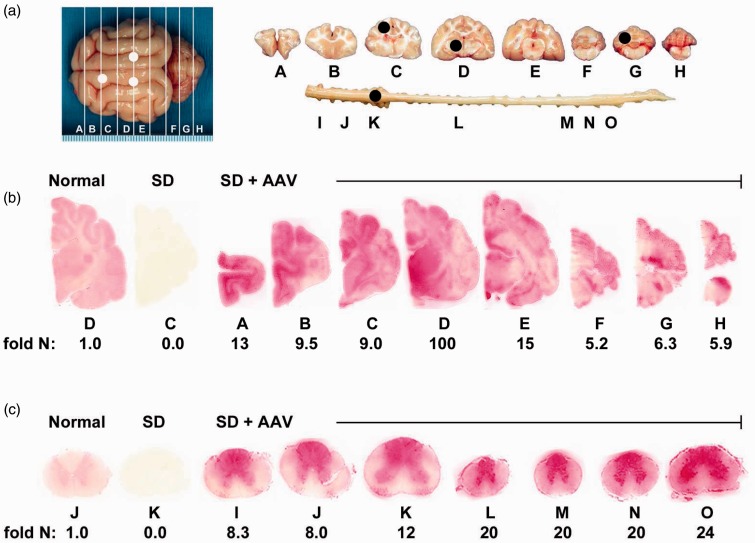
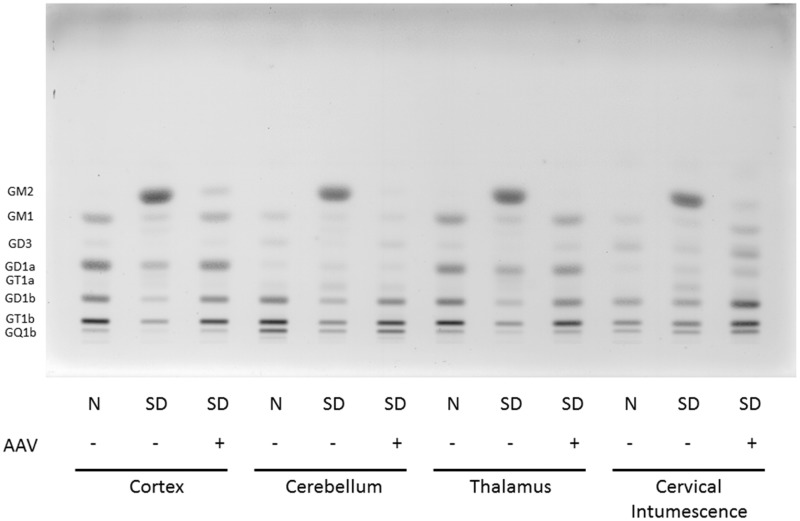
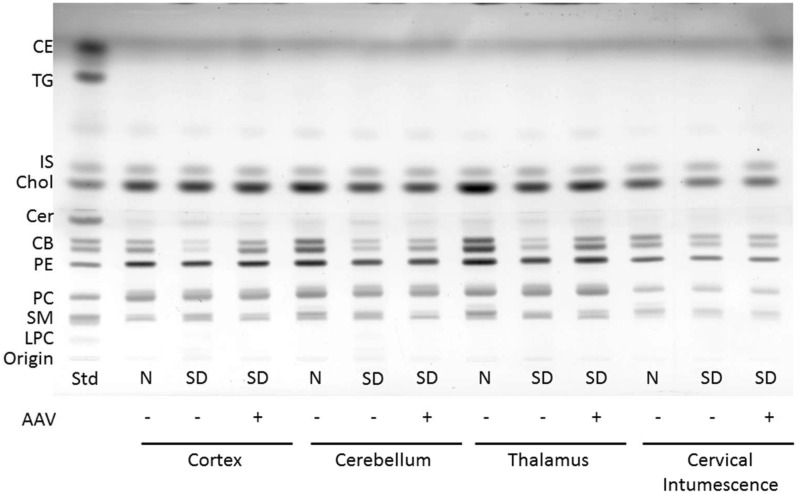
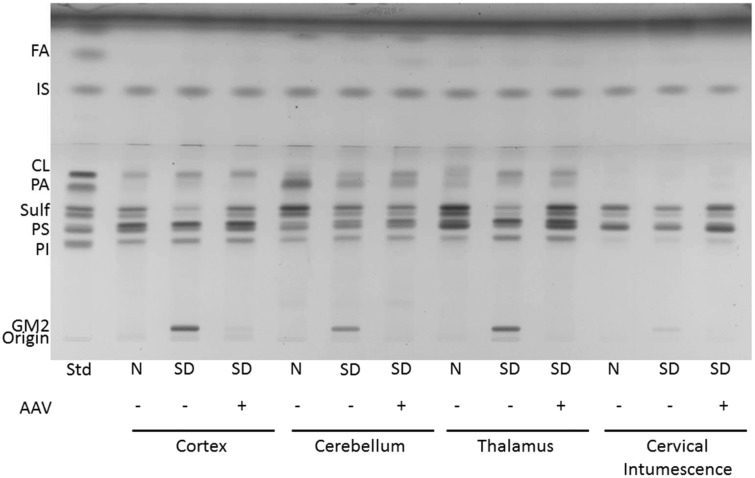
Sandhoff disease (SD) is an autosomal recessive neurodegenerative disease caused by a mutation in the gene for the β-subunit of β-N-acetylhexosaminidase (Hex), resulting in the inability to catabolize ganglioside GM2 within the lysosomes. SD presents with an accumulation of GM2 and its asialo derivative GA2, primarily in the central nervous system. Myelin-enriched glycolipids, cerebrosides and sulfatides, are also decreased in SD corresponding with dysmyelination. At present, no treatment exists for SD. Previous studies have shown the therapeutic benefit of adeno-associated virus (AAV) vector-mediated gene therapy in the treatment of SD in murine and feline models. In this study, we treated presymptomatic SD cats with AAVrh8 vectors expressing feline Hex in the thalamus combined with intracerebroventricular (Thal/ICV) injections. Treated animals showed clearly improved neurologic function and quality of life, manifested in part by prevention or attenuation of whole-body tremors characteristic of untreated animals. Hex activity was significantly elevated, whereas storage of GM2 and GA2 was significantly decreased in tissue samples taken from the cortex, cerebellum, thalamus, and cervical spinal cord. Treatment also increased levels of myelin-enriched cerebrosides and sulfatides in the cortex and thalamus. This study demonstrates the therapeutic potential of AAV for feline SD and suggests a similar potential for human SD patients.
桑德霍夫病(SD)是一种常染色体隐性神经退行性疾病,由β-N-乙酰己糖胺酶(Hex)β亚基基因突变引起,导致溶酶体内无法分解代谢神经节苷脂GM2。SD表现为GM2及其脱唾液酸衍生物GA2的蓄积,主要在中枢神经系统。富含髓磷脂的糖脂、脑苷脂和硫脂在SD中也减少,与髓鞘形成异常相关。目前,尚无治疗SD的方法。先前的研究表明,腺相关病毒(AAV)载体介导的基因治疗在小鼠和猫模型中对SD的治疗具有益处。在本研究中,我们用表达猫Hex的AAVrh8载体经丘脑联合脑室内(丘脑/脑室内)注射治疗症状前SD猫。治疗的动物神经功能和生活质量明显改善,部分表现为预防或减轻了未治疗动物特有的全身震颤。Hex活性显著升高,而从皮质、小脑、丘脑和颈脊髓采集组织样本中的GM2和GA储备显著减少。治疗还增加了皮质和丘脑中富含髓磷脂的脑苷脂和硫脂水平。本研究证明了AAV对猫SD的治疗潜力,并提示对人类SD患者可能有类似潜力。