Scott-Ritchey Research Center, College of Veterinary Medicine, Auburn University, Auburn, AL, USA.
Department of Anatomy, Physiology & Pharmacology, College of Veterinary Medicine, Auburn University, Auburn, AL, USA.
Gene Ther. 2021 Apr;28(3-4):142-154. doi: 10.1038/s41434-020-00190-1. Epub 2020 Sep 3.
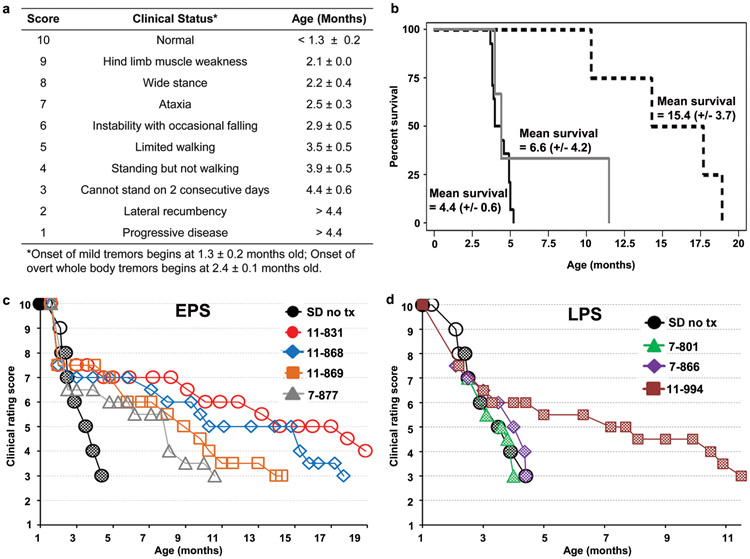
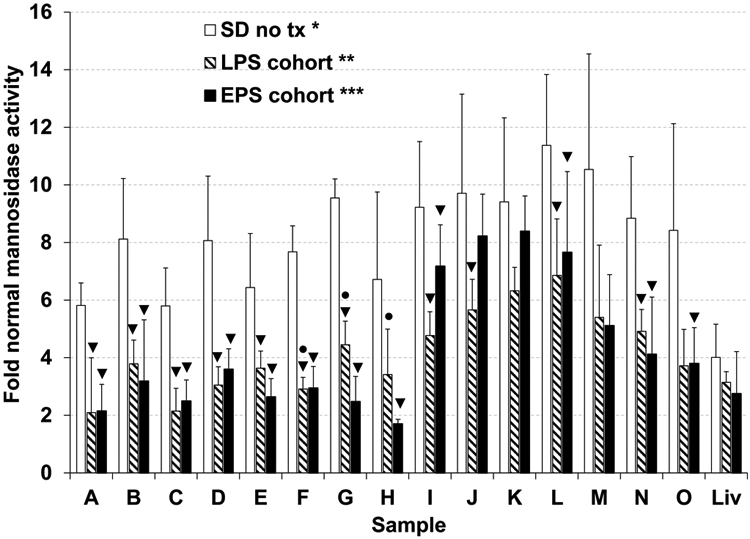
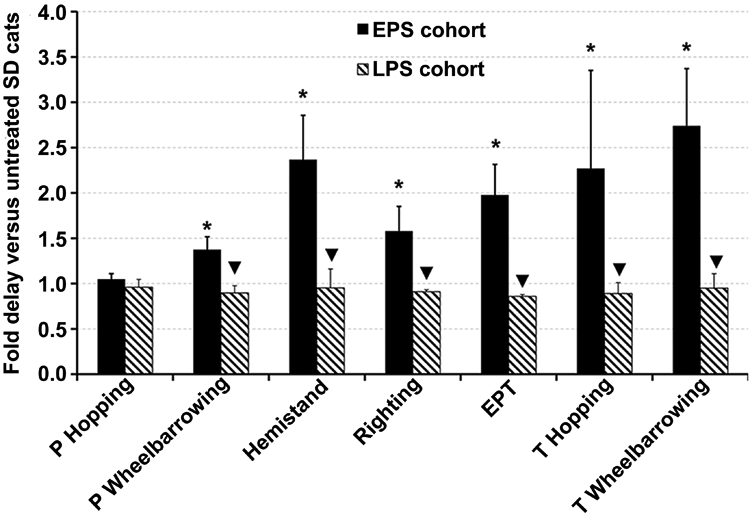
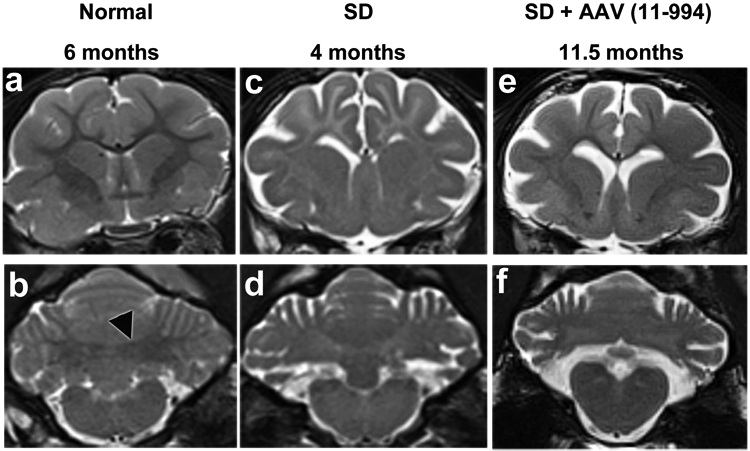
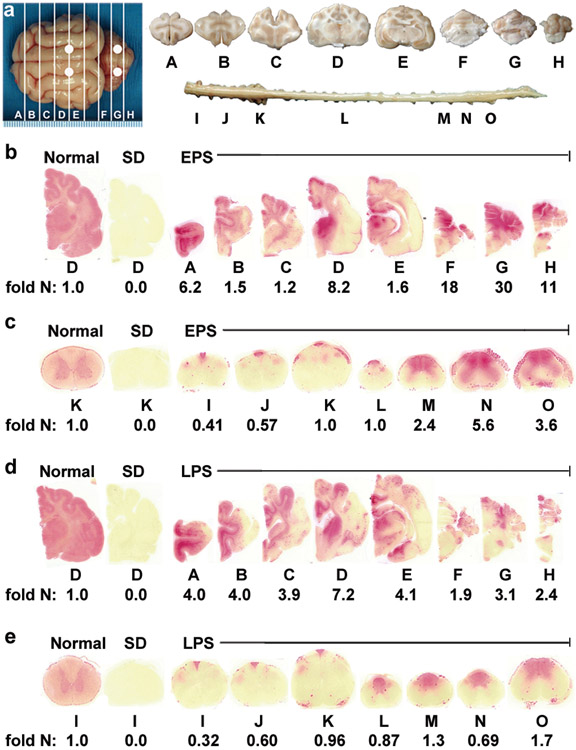
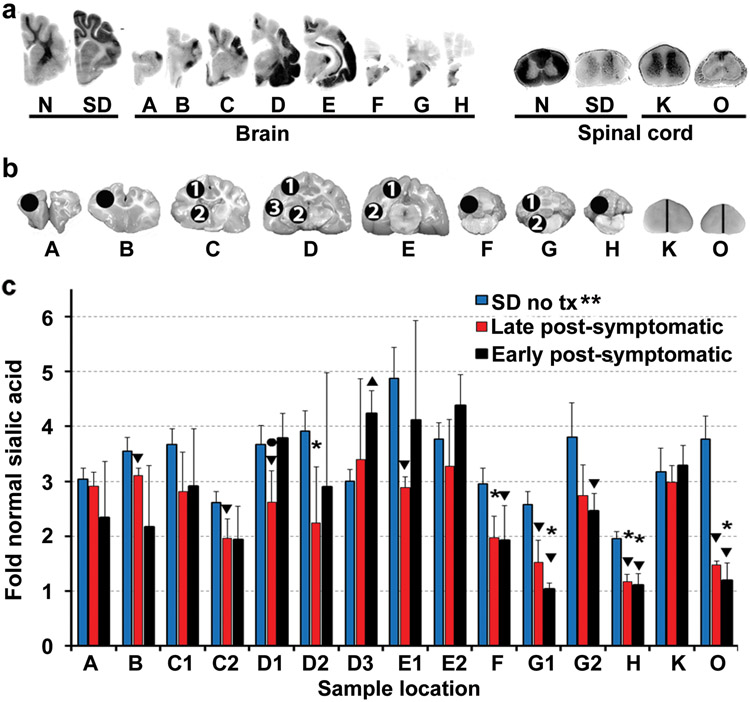
Sandhoff disease (SD) is an autosomal recessive lysosomal storage disease caused by defects in the β-subunit of β-N-acetylhexosaminidase (Hex), the enzyme that catabolizes GM2 ganglioside. Hex deficiency causes neuronal storage of GM2 and related glycoconjugates, resulting in progressive neurodegeneration and death, typically in infancy. No effective treatment exists for human patients. Adeno-associated virus (AAV) gene therapy led to improved clinical outcome and survival of SD cats treated before the onset of disease symptoms. Most human patients are diagnosed after clinical disease onset, so it is imperative to test AAV-gene therapy in symptomatic SD cats to provide a realistic indication of therapeutic benefits that can be expected in humans. In this study, AAVrh8 vectors injected into the thalamus and deep cerebellar nuclei of symptomatic SD cats resulted in widespread central nervous system enzyme distribution, although a substantial burden of storage material remained. Cats treated in the early symptomatic phase showed delayed disease progression and a significant survival increase versus untreated cats. Treatment was less effective when administered later in the disease course, although therapeutic benefit was still possible. Results are encouraging for the treatment of human patients and provide support for the development AAV-gene therapy for human SD.
桑德霍夫病(SD)是一种常染色体隐性溶酶体贮积病,由β-N-乙酰己糖胺酶(Hex)β亚基的缺陷引起,该酶可分解 GM2 神经节苷脂。Hex 缺乏导致 GM2 和相关糖脂在神经元中的储存,从而导致进行性神经退行性变和死亡,通常在婴儿期。目前尚无有效的人类患者治疗方法。腺相关病毒(AAV)基因治疗可改善疾病症状出现前接受治疗的 SD 猫的临床结局和生存率。大多数人类患者在出现临床症状后才被诊断出来,因此在有症状的 SD 猫中测试 AAV 基因治疗以提供可预期的人类治疗益处的现实指示至关重要。在这项研究中,注射到有症状的 SD 猫丘脑和小脑深部核的 AAVrh8 载体导致中枢神经系统广泛分布酶,尽管仍存在大量储存物质。与未治疗的猫相比,在早期症状阶段接受治疗的猫显示出疾病进展延迟和显著的生存增加。在疾病过程中较晚给药时,治疗效果较差,但仍有可能产生治疗效果。这些结果为人类患者的治疗提供了令人鼓舞的结果,并为人类 SD 的 AAV 基因治疗的发展提供了支持。