Edokpayi Joshua N, Odiyo John O, Msagati Titus A M, Potgieter Natasha
Department of Hydrology and Water Resources, University of Venda, Private Bag X5050, Thohoyandou 0950, South Africa.
College of Science, Engineering and Technology, Nanotechnology and Water Sustainability Research Unit, Florida Science Campus, University of South Africa, Roodepoort 1709, Johannesburg, South Africa.
Int J Environ Res Public Health. 2015 Apr 14;12(4):4128-40. doi: 10.3390/ijerph120404128.
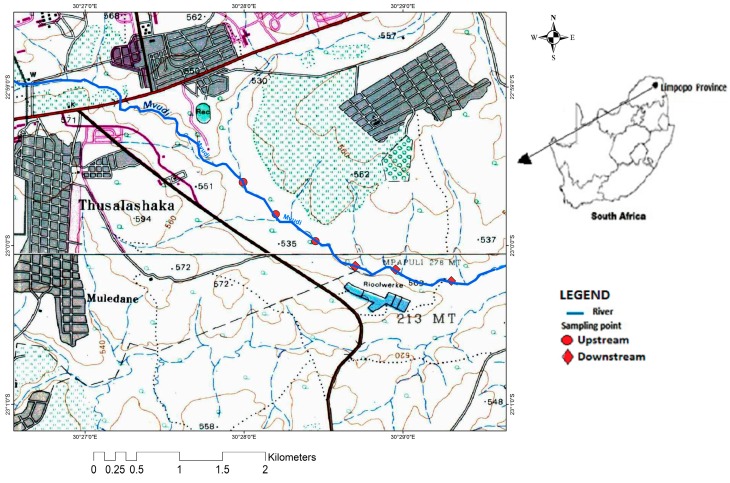
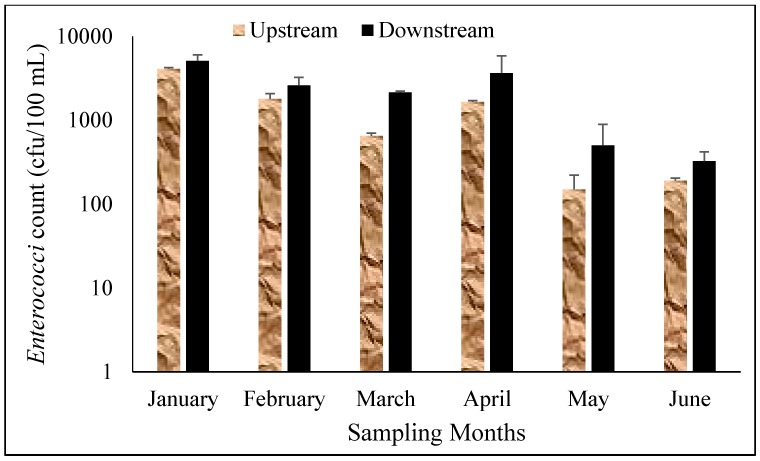
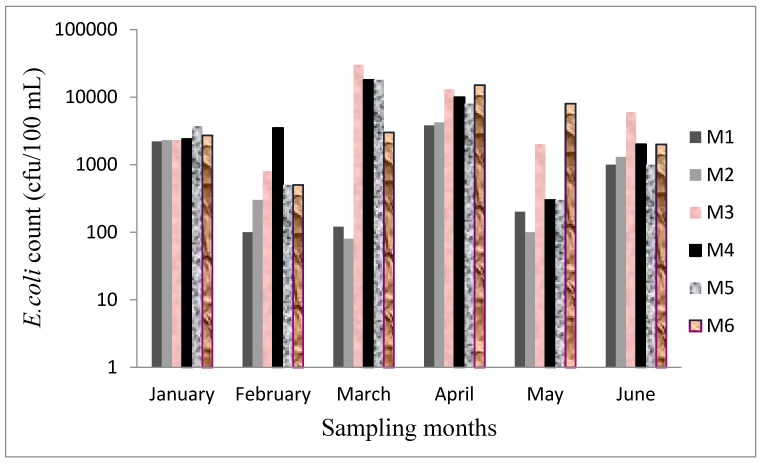
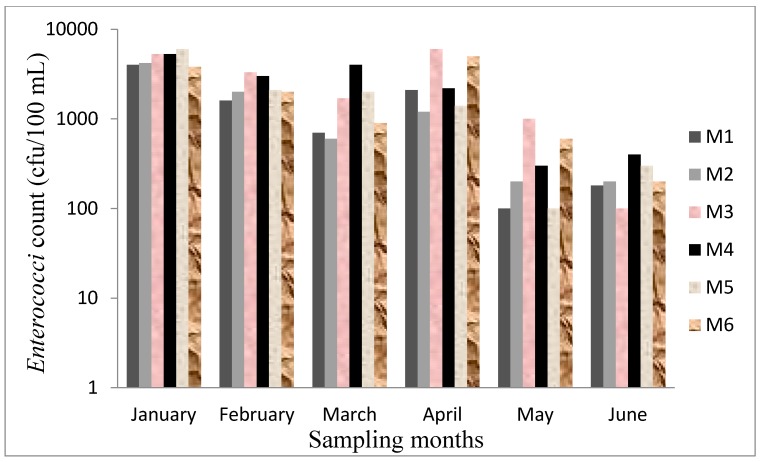
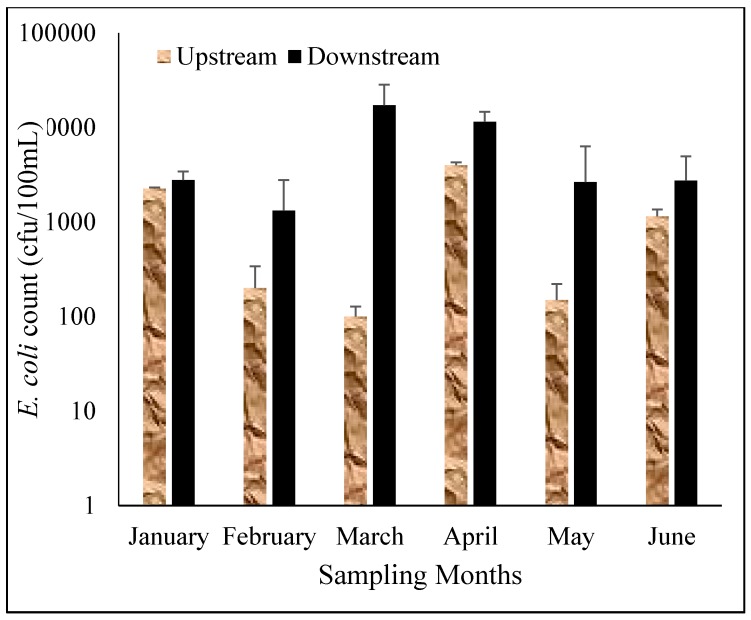
Surface water has been a source of domestic water due to shortage of potable water in most rural areas. This study was carried out to evaluate the level of contamination of Mvudi River in South Africa by measuring turbidity, electrical conductivity (EC), pH, concentrations of nitrate, fluoride, chloride, and sulphate. E. coli and Enterococci were analysed using membrane filtration technique. Average pH, EC and Turbidity values were in the range of 7.2-7.7, 10.5-16.1 mS/m and 1.3-437.5 NTU, respectively. The mean concentrations of fluoride, chloride, nitrate and sulphate for both the wet and the dry seasons were 0.11 mg/L and 0.27 mg/L, 9.35 mg/L and 14.82 mg/L, 3.25 mg/L and 6.87 mg/L, 3.24 mg/L and 0.70 mg/L, respectively. E. coli and Enterococci counts for both the wet and the dry seasons were 4.81 × 10³ (log = 3.68) and 5.22 × 10³ (log = 3.72), 3.4 × 10³ (log = 3.53) and 1.22 × 10³ (log = 3.09), per 100 mL of water, respectively. The count of E. coli for both seasons did not vary significantly (p > 0.05) but Enterococci count varied significantly (p < 0.001). All the physico-chemical parameters obtained were within the recommended guidelines of the Department of Water Affairs and Forestry of South Africa and the World Health Organization for domestic and recreational water use for both seasons except turbidity and nitrates. The microbiological parameters exceeded the established guidelines. Mvudi River is contaminated with faecal organisms and should not be used for domestic purposes without proper treatment so as to mitigate the threat it poses to public health.
由于大多数农村地区饮用水短缺,地表水一直是生活用水的来源。本研究通过测量浊度、电导率(EC)、pH值、硝酸盐、氟化物、氯化物和硫酸盐的浓度,对南非姆武迪河的污染程度进行了评估。采用膜过滤技术分析了大肠杆菌和肠球菌。平均pH值、EC值和浊度值分别在7.2 - 7.7、10.5 - 16.1 mS/m和1.3 - 437.5 NTU范围内。雨季和旱季氟化物、氯化物、硝酸盐和硫酸盐的平均浓度分别为0.11 mg/L和0.27 mg/L、9.35 mg/L和14.82 mg/L、3.25 mg/L和6.87 mg/L、3.24 mg/L和0.70 mg/L。每100 mL水中,雨季和旱季大肠杆菌和肠球菌的计数分别为4.81×10³(对数= 3.68)和5.22×10³(对数= 3.72)、3.4×10³(对数= 3.53)和1.22×10³(对数= 3.09)。两个季节的大肠杆菌计数没有显著差异(p > 0.05)但肠球菌计数差异显著(p < 0.001)。除浊度和硝酸盐外,两个季节获得的所有理化参数均在南非水事和林业部以及世界卫生组织推荐的生活和娱乐用水指南范围内。微生物参数超过了既定指南。姆武迪河受到粪便生物的污染,未经适当处理不得用于家庭用途,以减轻其对公众健康构成的威胁。