Senetta Rebecca, Duregon Eleonora, Sonetto Cristina, Spadi Rossella, Mistrangelo Massimiliano, Racca Patrizia, Chiusa Luigi, Munoz Fernando H, Ricardi Umberto, Arezzo Alberto, Cassenti Adele, Castellano Isabella, Papotti Mauro, Morino Mario, Risio Mauro, Cassoni Paola
Department of Medical Sciences, University of Turin, Turin, Italy.
Department of Oncology, University of Turin, Turin, Italy.
PLoS One. 2015 Apr 15;10(4):e0123759. doi: 10.1371/journal.pone.0123759. eCollection 2015.
Neoadjuvant chemo-radiotherapy (CRT) followed by surgical resection is the standard treatment for locally advanced rectal cancer, although complete tumor pathological regression is achieved in only up to 30% of cases. A clinicopathological and molecular predictive stratification of patients with advanced rectal cancer is still lacking. Here, c-Met and YKL-40 have been studied as putative predictors of CRT response in rectal cancer, due to their reported involvement in chemoradioresistance in various solid tumors.
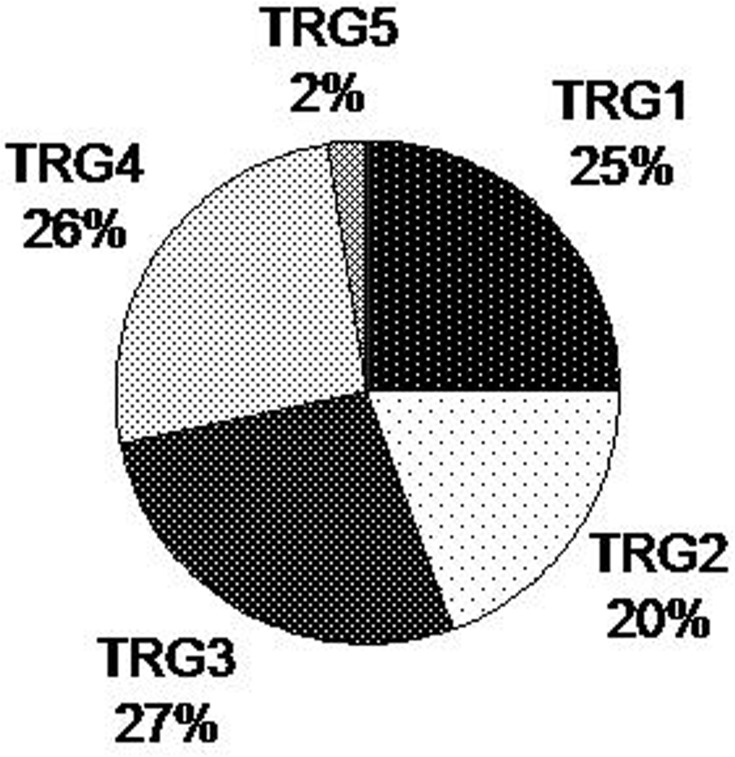
A multicentric study was designed to assess the role of c-Met and YKL-40 expression in predicting chemoradioresistance and to correlate clinical and pathological features with CRT response. Immunohistochemistry and fluorescent in situ hybridization for c-Met were performed on 81 rectal cancer biopsies from patients with locally advanced rectal adenocarcinoma. All patients underwent standard (50.4 gy in 28 fractions + concurrent capecitabine 825 mg/m2) neoadjuvant CRT or the XELOXART protocol. CRT response was documented on surgical resection specimens and recorded as tumor regression grade (TRG) according to the Mandard criteria.
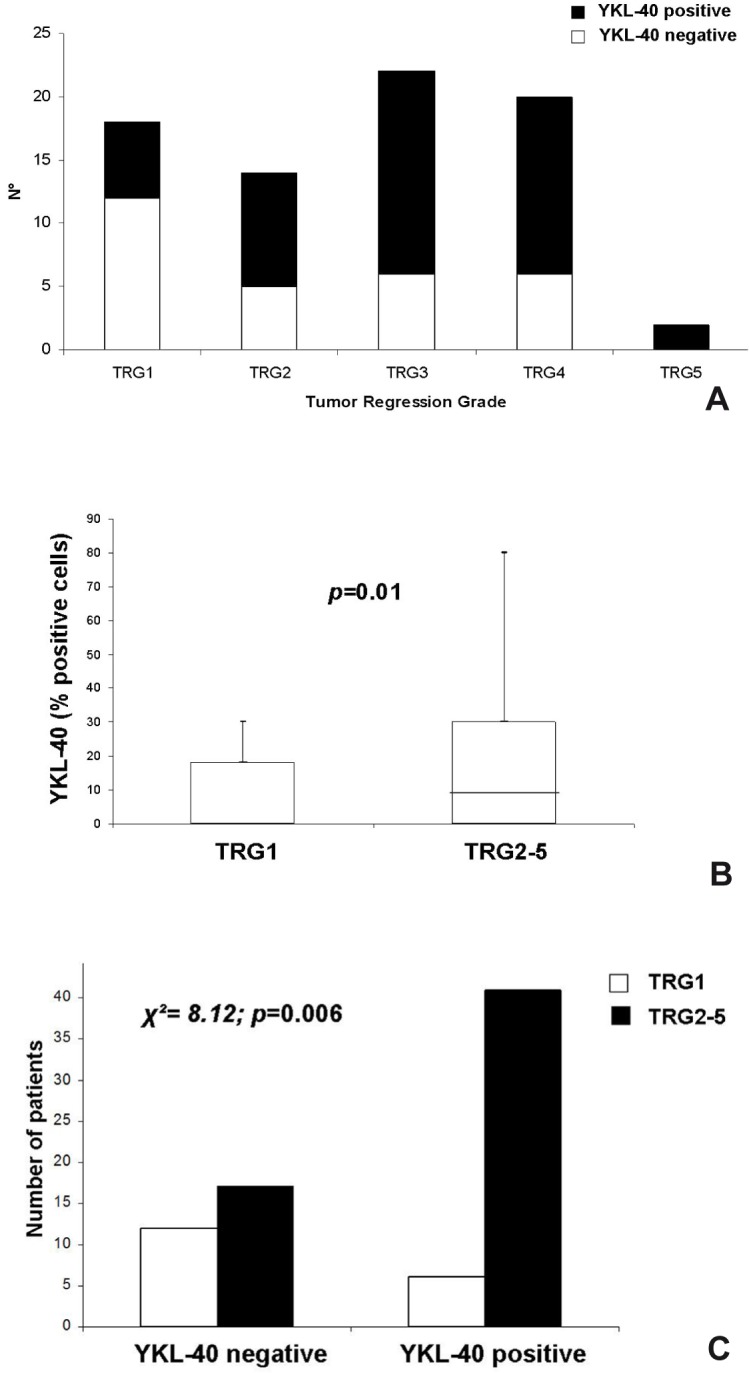
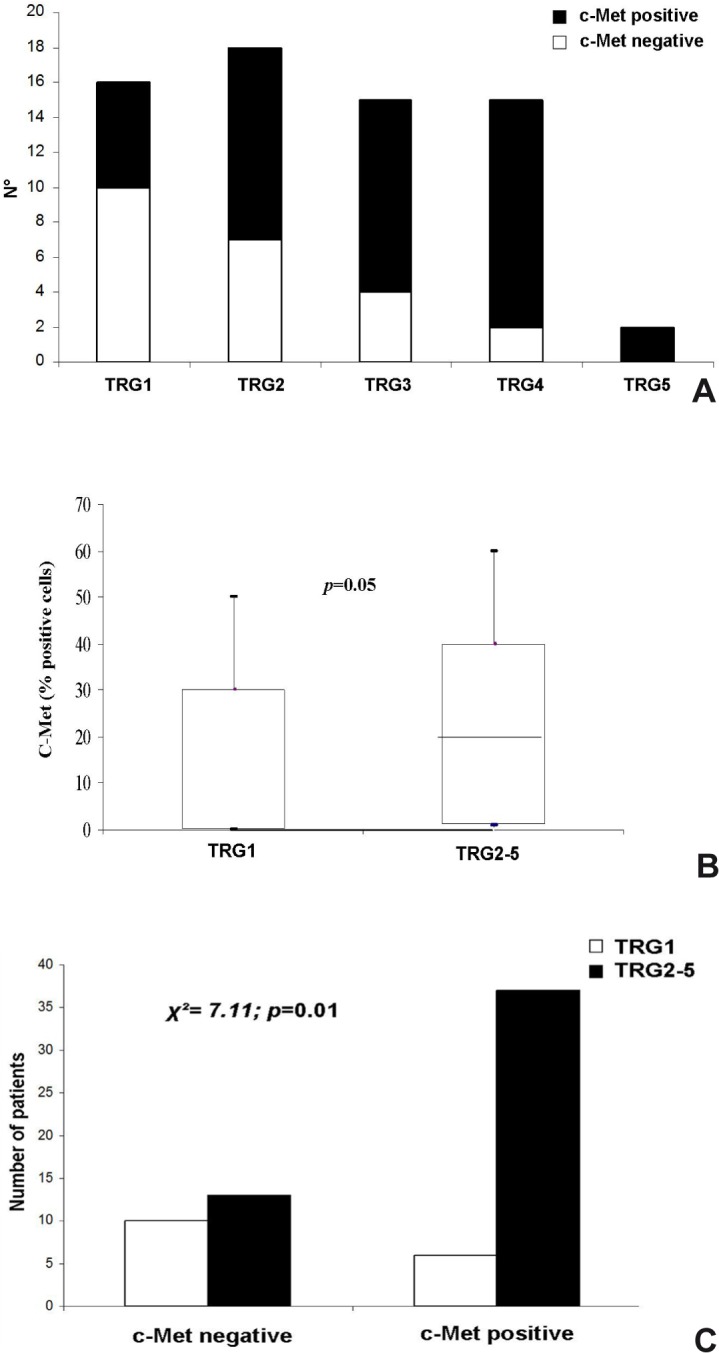
A significant correlation between c-Met and YKL-40 expression was observed (R = 0.43). The expressions of c-Met and YKL-40 were both significantly associated with a lack of complete response (86% and 87% of c-Met and YKL-40 positive cases, p< 0.01 and p = 0.006, respectively). Thirty of the 32 biopsies co-expressing both markers had partial or absent tumor response (TRG 2-5), strengthening their positive predictive value (94%). The exclusive predictive role of YKL-40 and c-Met was confirmed using a multivariate analysis (p = 0.004 and p = 0.007 for YKL-40 and c-Met, respectively). TRG was the sole morphological parameter associated with poor outcome.
c-Met and YKL-40 expression is a reliable predictor of partial/absent response to neoadjuvant CRT in rectal cancer. Targeted therapy protocols could take advantage of prior evaluations of c-MET and YKL-40 expression levels to increase therapeutic efficacy.
新辅助放化疗(CRT)后行手术切除是局部晚期直肠癌的标准治疗方法,尽管仅高达30%的病例能实现肿瘤完全病理消退。目前仍缺乏对晚期直肠癌患者的临床病理和分子预测分层。由于c-Met和YKL-40在多种实体瘤的放化疗耐药中发挥作用,因此对其作为直肠癌CRT反应的潜在预测指标展开了研究。
开展一项多中心研究,以评估c-Met和YKL-40表达在预测放化疗耐药中的作用,并将临床和病理特征与CRT反应相关联。对81例局部晚期直肠腺癌患者的直肠癌活检组织进行c-Met的免疫组织化学和荧光原位杂交检测。所有患者均接受标准的新辅助CRT(28次分割照射,共50.4 Gy + 同步卡培他滨825 mg/m²)或XELOXART方案。根据手术切除标本记录CRT反应,并按照Mandard标准记录为肿瘤消退分级(TRG)。
观察到c-Met和YKL-40表达之间存在显著相关性(R = 0.43)。c-Met和YKL-40的表达均与无完全缓解显著相关(c-Met和YKL-40阳性病例分别为86%和87%,p分别< 0.01和p = 0.006)。32例同时表达这两种标志物的活检组织中有30例有部分或无肿瘤反应(TRG 2 - 5),强化了它们的阳性预测价值(94%)。使用多因素分析证实了YKL-40和c-Met的独立预测作用(YKL-40和c-Met的p值分别为0.004和0.007)。TRG是与预后不良相关的唯一形态学参数。
c-Met和YKL-40表达是直肠癌新辅助CRT部分/无反应的可靠预测指标。靶向治疗方案可利用对c-MET和YKL-40表达水平的预先评估来提高治疗效果。