Onyilagha Chukwunonso, Jia Ping, Jayachandran Nipun, Hou Sen, Okwor Ifeoma, Kuriakose Shiby, Marshall Aaron, Uzonna Jude E
Department of Immunology, Faculty of Medicine, University of Manitoba, Winnipeg, Manitoba, Canada.
Department of Medical Microbiology, Faculty of Medicine, University of Manitoba, Winnipeg, Manitoba, Canada.
PLoS Negl Trop Dis. 2015 Apr 13;9(4):e0003716. doi: 10.1371/journal.pntd.0003716. eCollection 2015 Apr.
Bam32, a 32 kDa adaptor molecule, plays important role in B cell receptor signalling, T cell receptor signalling and antibody affinity maturation in germinal centres. Since antibodies against trypanosome variant surface glycoproteins (VSG) are critically important for control of parasitemia, we hypothesized that Bam32 deficient (Bam32-/-) mice would be susceptible to T. congolense infection.
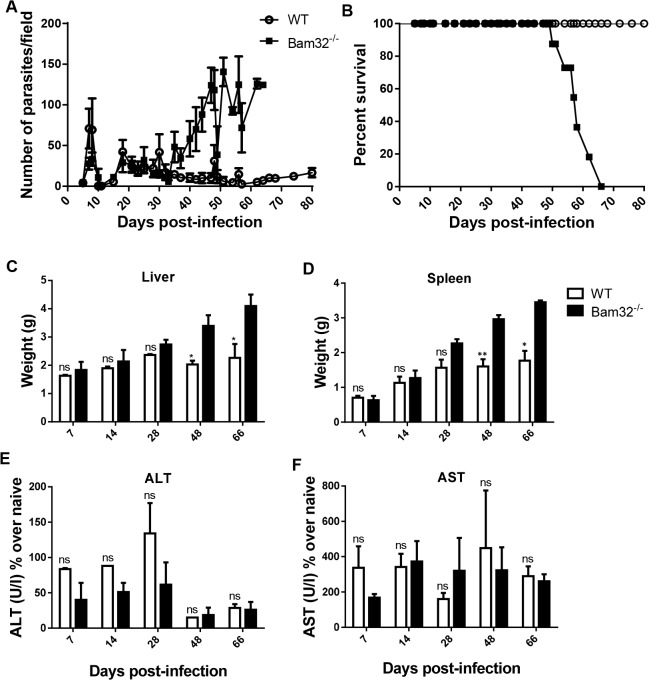
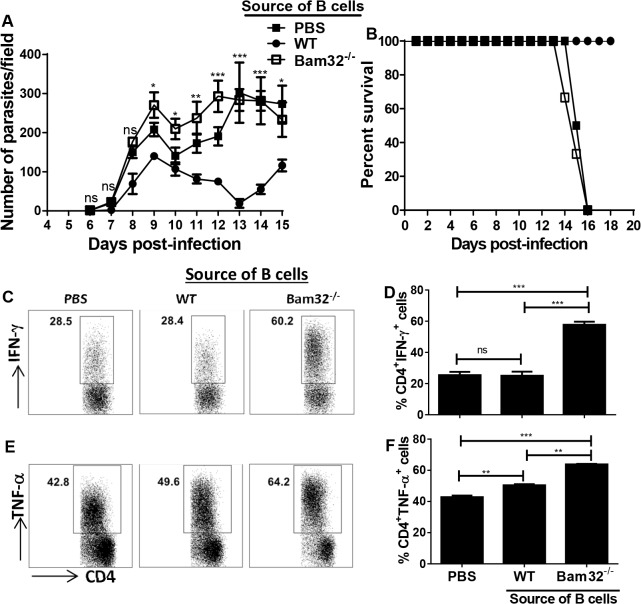
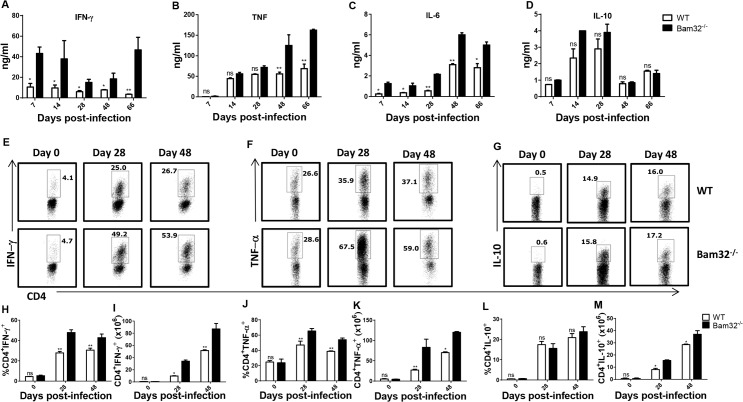
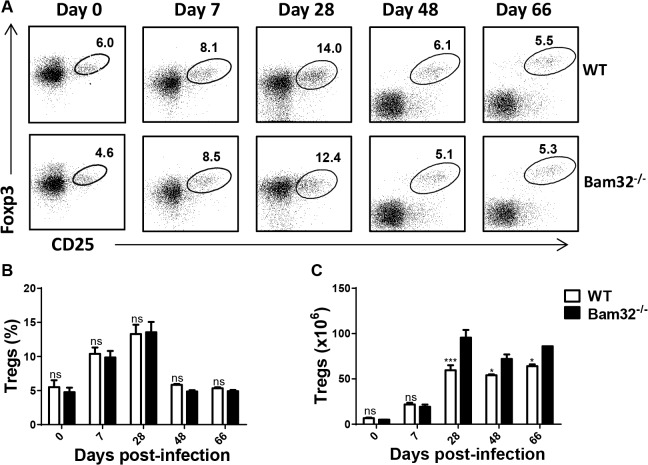
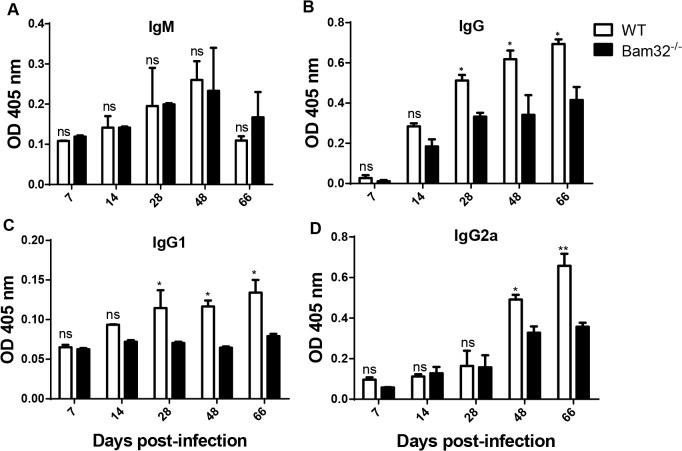
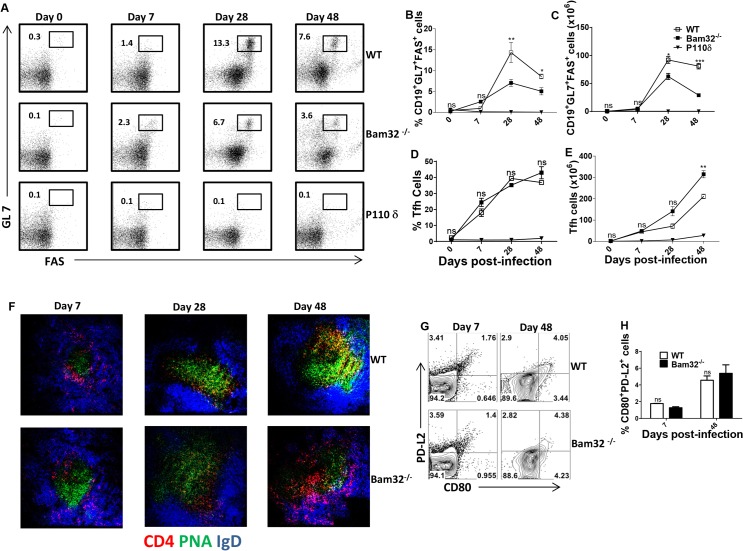
METHODOLOGY/PRINCIPAL FINDINGS: We found that T. congolense-infected Bam32-/- mice successfully control the first wave of parasitemia but then fail to control subsequent waves and ultimately succumb to their infection unlike wild type (WT) C57BL6 mice which are relatively resistant. Although infected Bam32-/- mice had significantly higher hepatomegaly and splenomegaly, their serum AST and ALT levels were not different, suggesting that increased liver pathology may not be responsible for the increased susceptibility of Bam32-/- mice to T. congolense. Using direct ex vivo flow cytometry and ELISA, we show that CD4+ T cells from infected Bam32-/- mice produced significantly increased amounts of disease-exacerbating proinflammatory cytokines (including IFN-γ, TNF-α and IL-6). However, the percentages of regulatory T cells and IL-10-producing CD4+ cells were similar in infected WT and Bam32-/- mice. While serum levels of parasite-specific IgM antibodies were normal, the levels of parasite-specific IgG, (particularly IgG1 and IgG2a) were significantly lower in Bam32-/- mice throughout infection. This was associated with impaired germinal centre response in Bam32-/- mice despite increased numbers of T follicular helper (Tfh) cells. Adoptive transfer studies indicate that intrinsic B cell defect was responsible for the enhanced susceptibility of Bam32-/- mice to T. congolense infection.
CONCLUSIONS/SIGNIFICANCE: Collectively, our data show that Bam32 is important for optimal anti-trypanosome IgG antibody response and suppression of disease-promoting proinflammatory cytokines and its deficiency leads to inability to control T. congolense infection in mice.
Bam32是一种32 kDa的衔接分子,在B细胞受体信号传导、T细胞受体信号传导以及生发中心的抗体亲和力成熟过程中发挥重要作用。由于抗锥虫变异表面糖蛋白(VSG)抗体对于控制寄生虫血症至关重要,我们推测Bam32缺陷(Bam32-/-)小鼠易受刚果锥虫感染。
方法/主要发现:我们发现,与相对具有抗性的野生型(WT)C57BL6小鼠不同,感染刚果锥虫的Bam32-/-小鼠成功控制了第一波寄生虫血症,但随后无法控制后续波次,最终死于感染。尽管感染的Bam32-/-小鼠肝肿大和脾肿大明显更严重,但其血清AST和ALT水平并无差异,这表明肝脏病理变化增加可能不是Bam32-/-小鼠对刚果锥虫易感性增加的原因。通过直接离体流式细胞术和ELISA,我们发现感染的Bam32-/-小鼠的CD4+ T细胞产生的促炎细胞因子(包括IFN-γ、TNF-α和IL-6)显著增加,这些细胞因子会加剧疾病。然而,感染的WT小鼠和Bam32-/-小鼠中调节性T细胞和产生IL-10的CD4+细胞的百分比相似。虽然寄生虫特异性IgM抗体的血清水平正常,但在整个感染过程中,Bam32-/-小鼠中寄生虫特异性IgG(特别是IgG1和IgG2a)的水平显著降低。尽管T滤泡辅助(Tfh)细胞数量增加,但这与Bam32-/-小鼠生发中心反应受损有关。过继转移研究表明,内在的B细胞缺陷是Bam32-/-小鼠对刚果锥虫感染易感性增强的原因。
结论/意义:总体而言,我们的数据表明Bam32对于最佳抗锥虫IgG抗体反应以及抑制促疾病的促炎细胞因子很重要,其缺陷导致小鼠无法控制刚果锥虫感染。