Eberson Lance S, Sanchez Pablo A, Majeed Beenish A, Tawinwung Supannikar, Secomb Timothy W, Larson Douglas F
Department of Physiology, The University of Arizona, Tucson, Arizona, United States of America; Sarver Heart Center, College of Medicine, The University of Arizona, Tucson, Arizona, United States of America.
Department of Pharmacology, The University of Arizona, Tucson, Arizona, United States of America; Sarver Heart Center, College of Medicine, The University of Arizona, Tucson, Arizona, United States of America.
PLoS One. 2015 Apr 13;10(4):e0124013. doi: 10.1371/journal.pone.0124013. eCollection 2015.
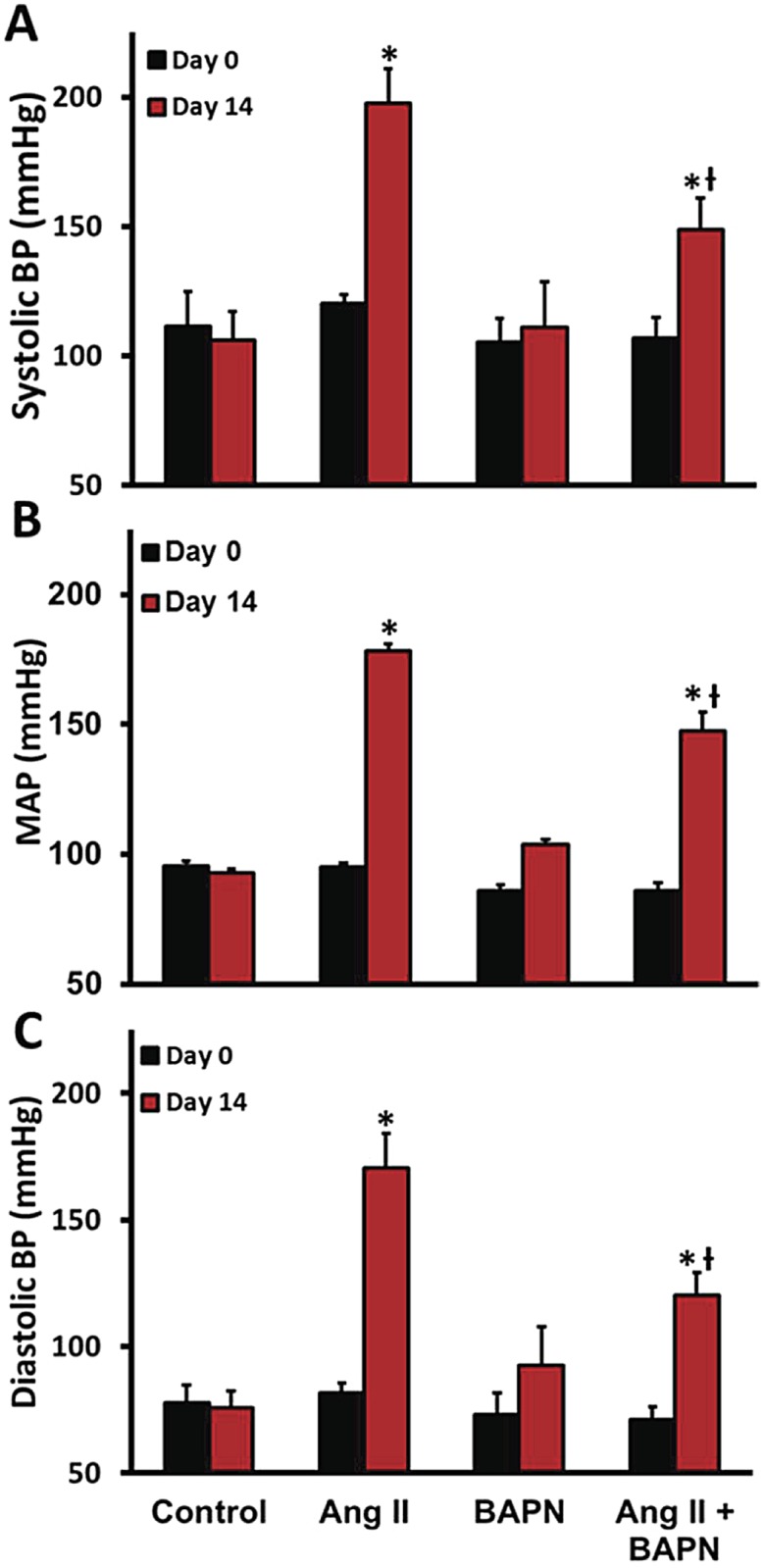
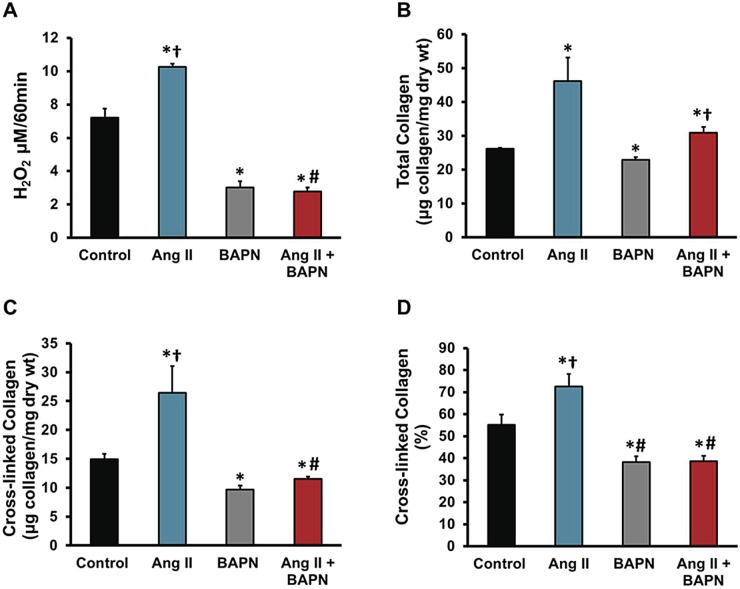
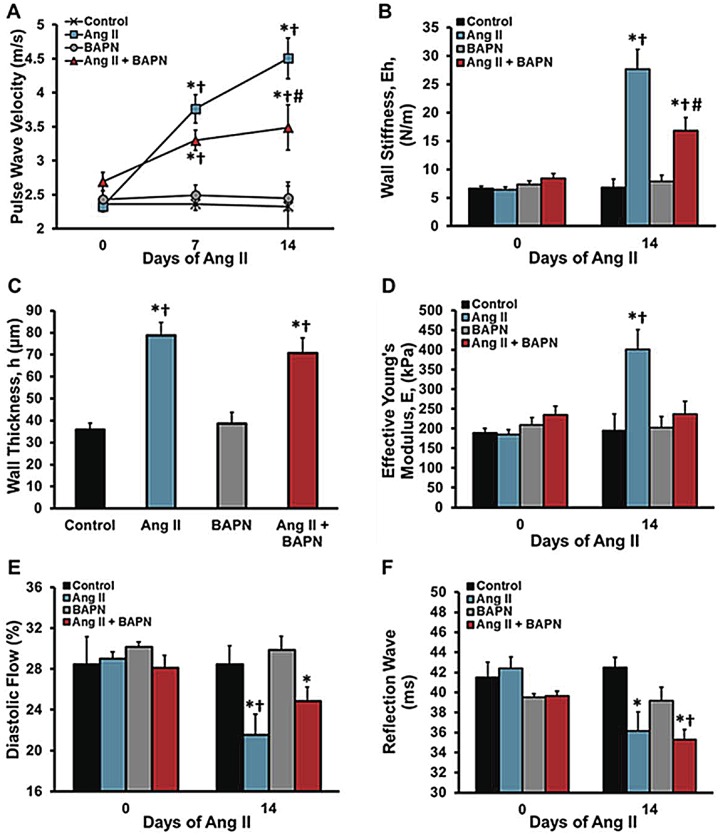
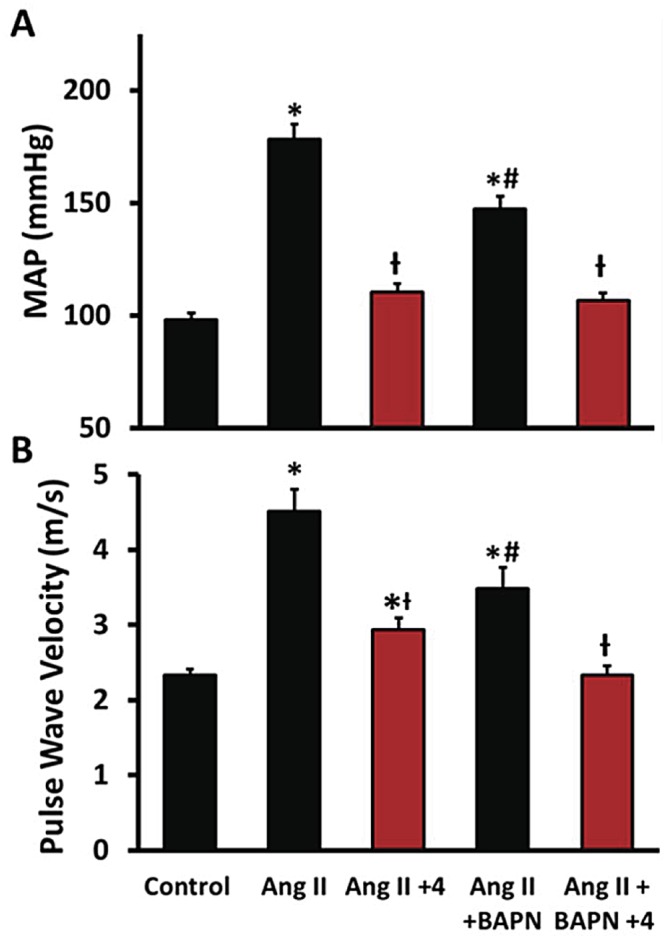
It is well accepted that angiotensin II (Ang II) induces altered vascular stiffness through responses including both structural and material remodeling. Concurrent with remodeling is the induction of the enzyme lysyl oxidase (LOX) through which ECM proteins are cross-linked. The study objective was to determine the effect of LOX mediated cross-linking on vascular mechanical properties. Three-month old mice were chronically treated with Ang II with or without the LOX blocker, β -aminopropionitrile (BAPN), for 14 days. Pulse wave velocity (PWV) from Doppler measurements of the aortic flow wave was used to quantify in vivo vascular stiffness in terms of an effective Young's modulus. The increase in effective Young's modulus with Ang II administration was abolished with the addition of BAPN, suggesting that the material properties are a major controlling element in vascular stiffness. BAPN inhibited the Ang II induced collagen cross-link formation by 2-fold and PWV by 44% (P<0.05). Consistent with this observation, morphometric analysis showed that BAPN did not affect the Ang II mediated increase in medial thickness but significantly reduced the adventitial thickness. Since the hypertensive state contributes to the measured in vivo PWV stiffness, we removed the Ang II infusion pumps on Day 14 and achieved normal arterial blood pressures. With pump removal we observed a decrease of the PWV in the Ang II group to 25% above that of the control values (P=0.002), with a complete return to control values in the Ang II plus BAPN group. In conclusion, we have shown that the increase in vascular stiffness with 14 day Ang II administration results from a combination of hypertension-induced wall strain, adventitial wall thickening and Ang II mediated LOX ECM cross-linking, which is a major material source of vascular stiffening, and that the increased PWV was significantly inhibited with co-administration of BAPN.
血管紧张素II(Ang II)通过包括结构和材料重塑在内的反应诱导血管僵硬度改变,这一点已得到广泛认可。与重塑同时发生的是赖氨酰氧化酶(LOX)的诱导,通过该酶细胞外基质(ECM)蛋白发生交联。本研究的目的是确定LOX介导的交联对血管力学性能的影响。给3个月大的小鼠长期注射Ang II,同时或不同时使用LOX阻滞剂β-氨基丙腈(BAPN),持续14天。利用主动脉血流波的多普勒测量得到的脉搏波速度(PWV),根据有效杨氏模量来量化体内血管僵硬度。添加BAPN后,Ang II给药导致的有效杨氏模量增加被消除,这表明材料特性是血管僵硬度的主要控制因素。BAPN将Ang II诱导的胶原交联形成抑制了2倍,将PWV抑制了44%(P<0.05)。与该观察结果一致,形态计量分析表明,BAPN不影响Ang II介导的中膜厚度增加,但显著降低了外膜厚度。由于高血压状态会导致所测量的体内PWV僵硬度增加,我们在第14天移除了Ang II输注泵,并使动脉血压恢复正常。移除泵后,我们观察到Ang II组的PWV下降至比对照值高25%(P=0.002),而Ang II加BAPN组则完全恢复到对照值。总之,我们已经表明,14天Ang II给药导致的血管僵硬度增加是由高血压诱导的壁应变、外膜壁增厚以及Ang II介导的LOX ECM交联共同作用的结果,其中LOX ECM交联是血管硬化的主要材料来源,并且联合使用BAPN可显著抑制PWV的增加。