Kielmanowicz Merav Gleit, Inberg Alex, Lerner Inbar Maayan, Golani Yael, Brown Nicholas, Turner Catherine Louise, Hayes Gerald J R, Ballam Joan M
Monsanto Company, Chesterfield, Missouri, United States of America.
PLoS Pathog. 2015 Apr 13;11(4):e1004816. doi: 10.1371/journal.ppat.1004816. eCollection 2015 Apr.
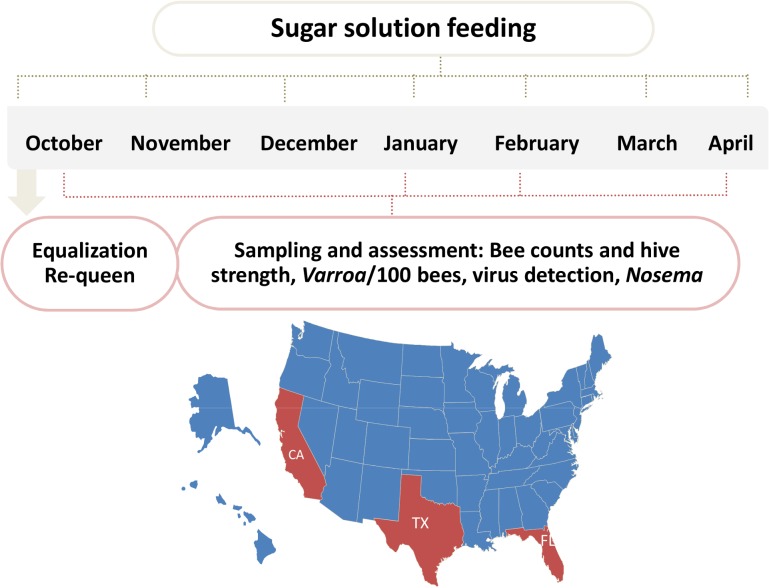
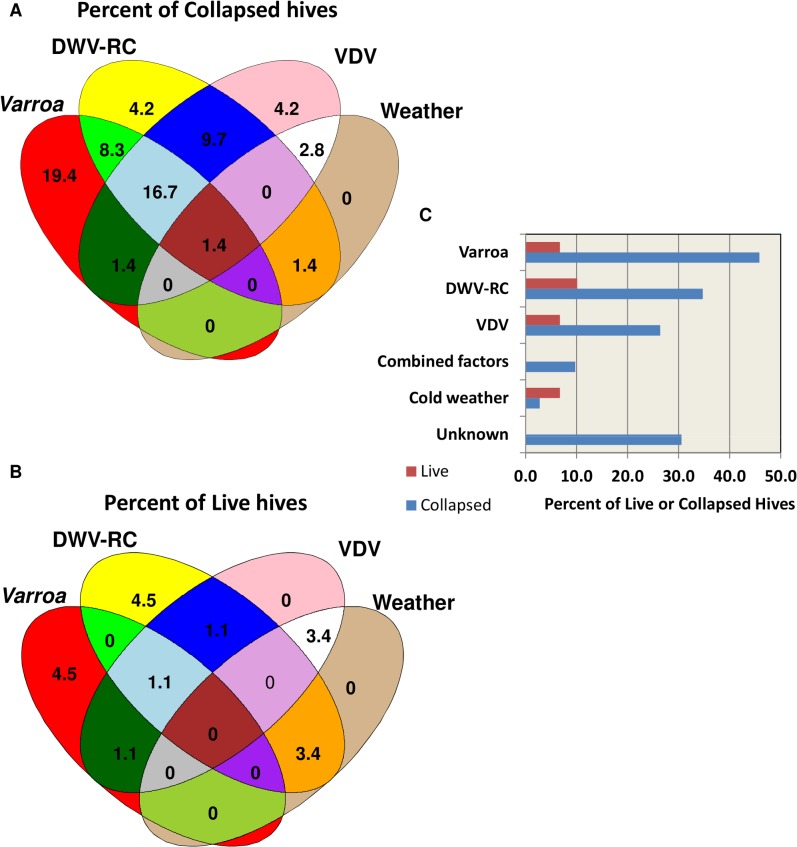
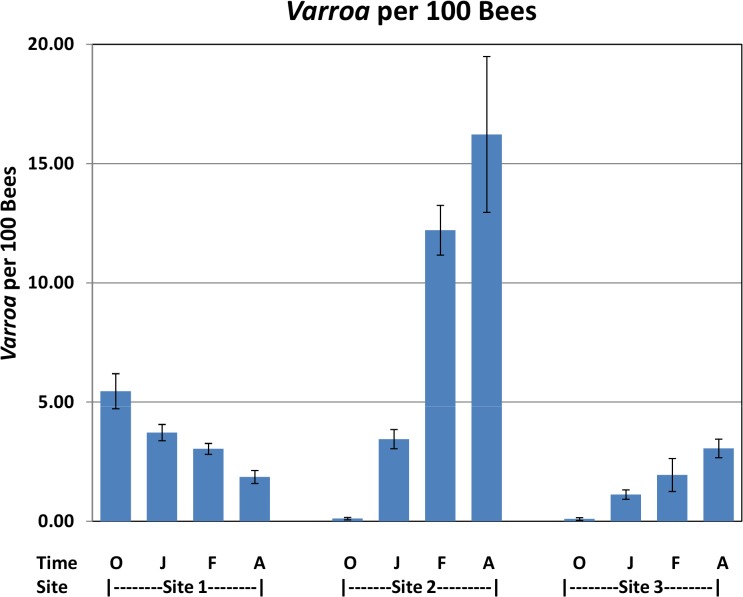
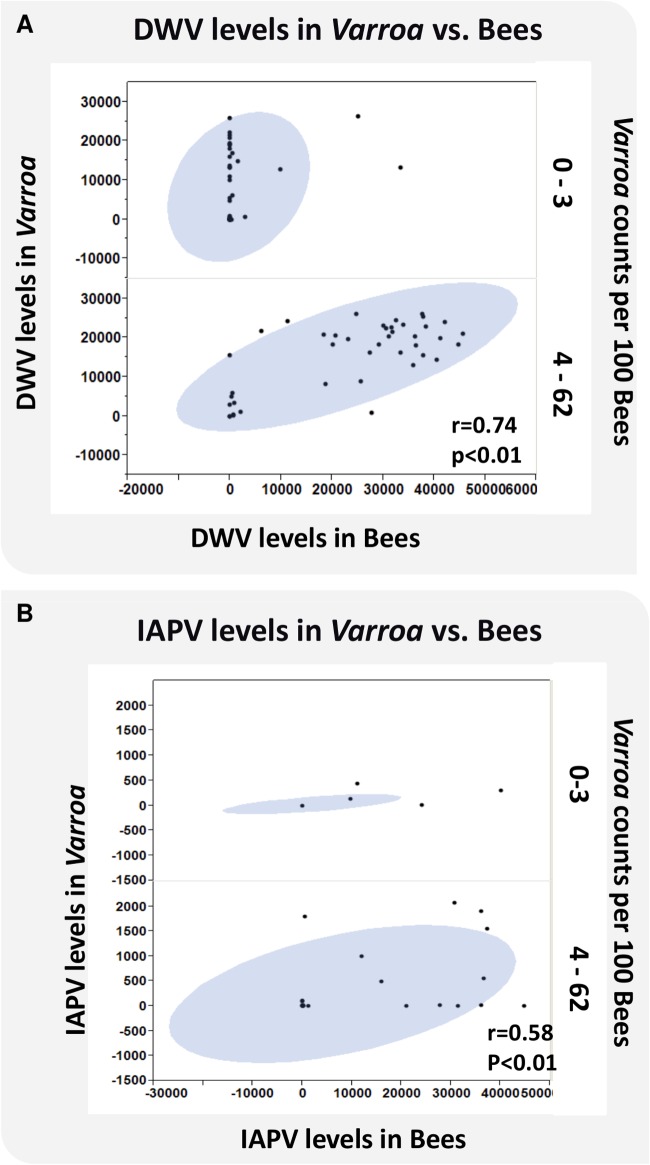
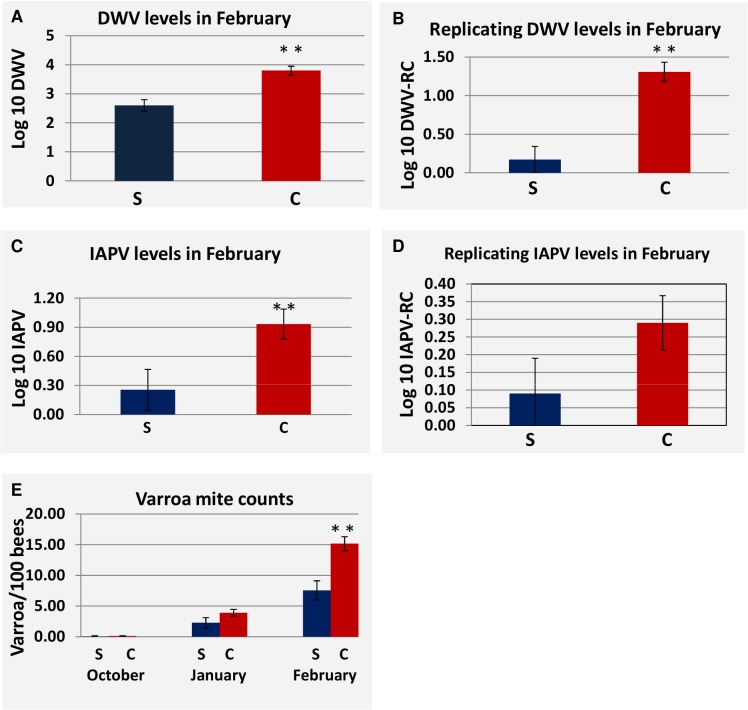
Over the last decade, unusually high losses of colonies have been reported by beekeepers across the USA. Multiple factors such as Varroa destructor, bee viruses, Nosema ceranae, weather, beekeeping practices, nutrition, and pesticides have been shown to contribute to colony losses. Here we describe a large-scale controlled trial, in which different bee pathogens, bee population, and weather conditions across winter were monitored at three locations across the USA. In order to minimize influence of various known contributing factors and their interaction, the hives in the study were not treated with antibiotics or miticides. Additionally, the hives were kept at one location and were not exposed to potential stress factors associated with migration. Our results show that a linear association between load of viruses (DWV or IAPV) in Varroa and bees is present at high Varroa infestation levels (>3 mites per 100 bees). The collection of comprehensive data allowed us to draw a predictive model of colony losses and to show that Varroa destructor, along with bee viruses, mainly DWV replication, contributes to approximately 70% of colony losses. This correlation further supports the claim that insufficient control of the virus-vectoring Varroa mite would result in increased hive loss. The predictive model also indicates that a single factor may not be sufficient to trigger colony losses, whereas a combination of stressors appears to impact hive health.
在过去十年中,美国各地的养蜂人都报告了蜂群异常高的损失情况。诸如狄斯瓦螨、蜜蜂病毒、东方蜜蜂微孢子虫、天气、养蜂方式、营养和农药等多种因素已被证明会导致蜂群损失。在此,我们描述一项大规模对照试验,在美国三个地点监测了不同的蜜蜂病原体、蜂群数量以及整个冬季的天气状况。为了尽量减少各种已知促成因素及其相互作用的影响,研究中的蜂箱未使用抗生素或杀螨剂进行处理。此外,蜂箱放置在一个地点,未暴露于与迁移相关的潜在压力因素下。我们的结果表明,在狄斯瓦螨侵扰水平较高(每100只蜜蜂中有超过3只螨虫)时,狄斯瓦螨和蜜蜂体内的病毒(DWV或IAPV)载量之间存在线性关联。综合数据的收集使我们能够绘制出蜂群损失的预测模型,并表明狄斯瓦螨以及蜜蜂病毒,主要是DWV复制,导致了约70%的蜂群损失。这种相关性进一步支持了以下观点,即对传播病毒的狄斯瓦螨控制不力会导致蜂箱损失增加。预测模型还表明,单一因素可能不足以引发蜂群损失,而多种压力源的组合似乎会影响蜂箱健康。