Lu Hsin Ying, Huang Chun Yao, Shih Chun Ming, Chang Wei Hung, Tsai Chein Sung, Lin Feng Yen, Shih Chun Che
Institute of Clinical Medicine, National Yang-Ming University, Taipei, Taiwan.
Department of Internal Medicine, School of Medicine, College of Medicine, Taipei Medical University, Taipei, Taiwan; Division of Cardiology, Department of Internal Medicine, Taipei Medical University Hospital, Taipei, Taiwan.
PLoS One. 2015 Apr 14;10(4):e0121077. doi: 10.1371/journal.pone.0121077. eCollection 2015.
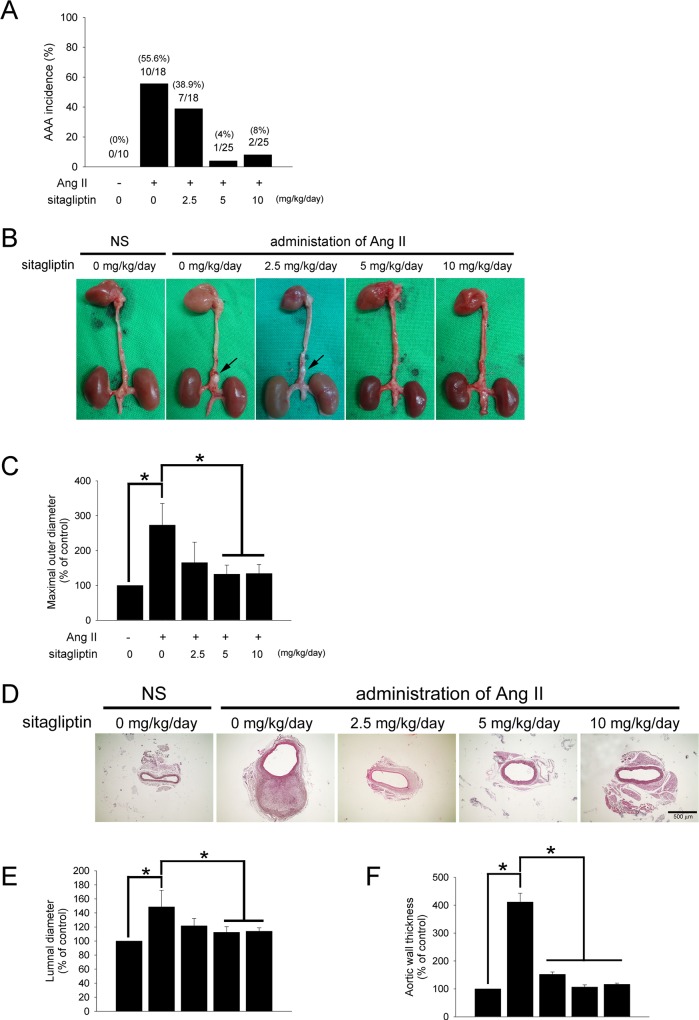
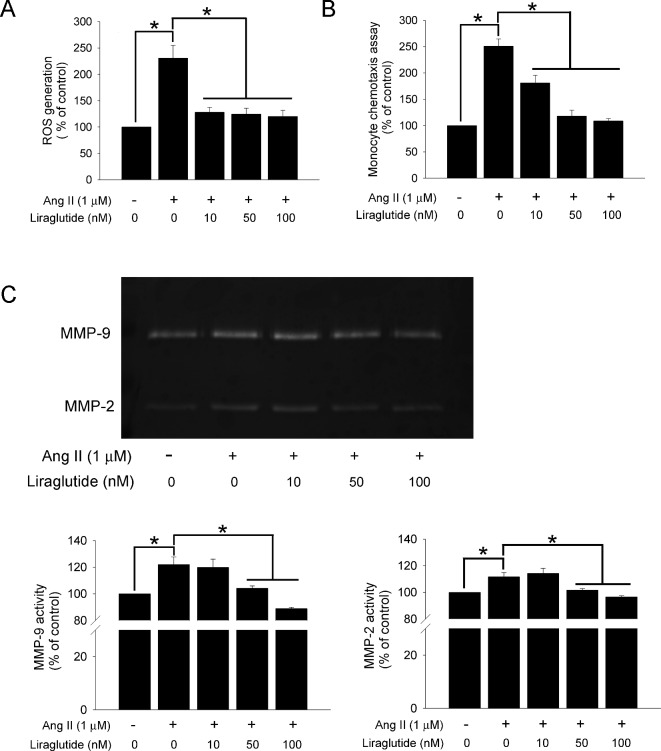
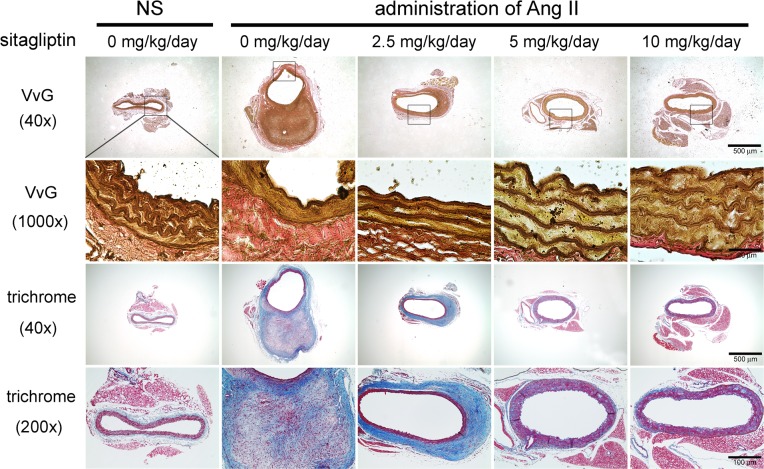
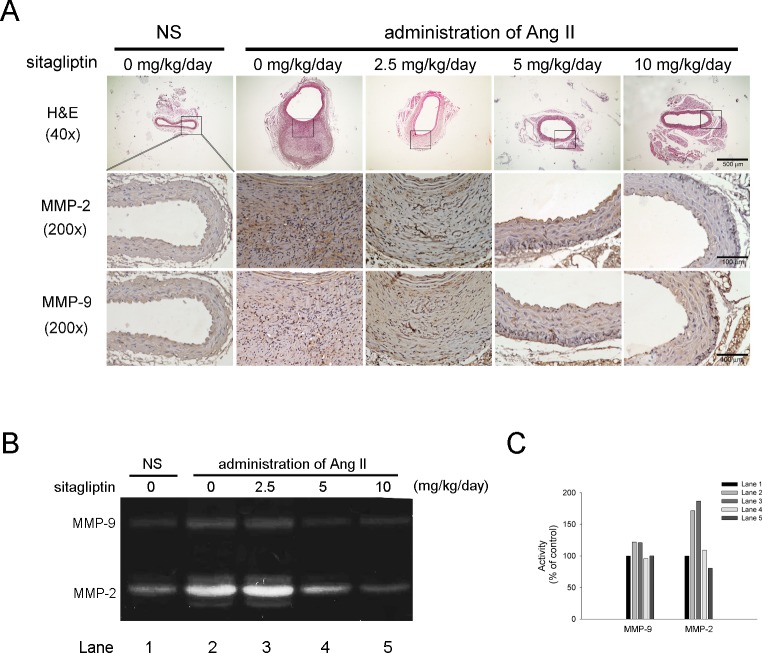
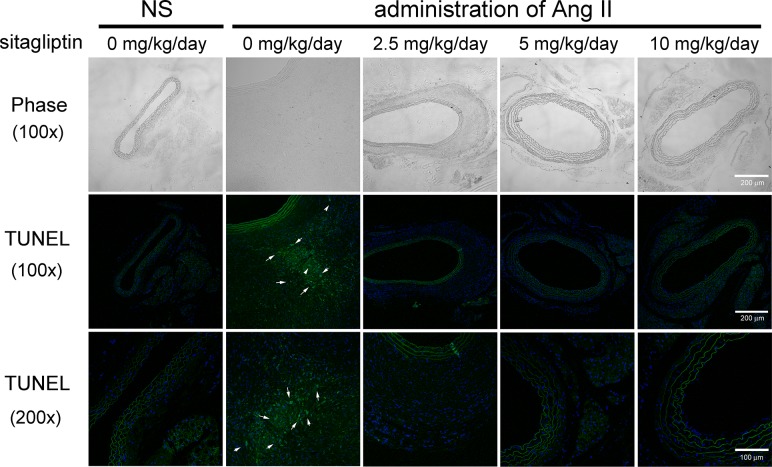
Abdominal aortic aneurysm (AAA) is a life-threatening situation affecting almost 10% of elders. There has been no effective medication for AAA other than surgical intervention. Dipeptidyl peptidase-4 (DPP-4) inhibitors have been shown to have a protective effect on cardiovascular disease. Whether DPP-4 inhibitors may be beneficial in the treatment of AAA is unclear. We investigated the effects of DPP-4 inhibitor sitagliptin on the angiotensin II (Ang II)-infused AAA formation in apoE-deficient (apoE-/-) mice. Mice with induced AAA were treated with placebo or 2.5, 5 or 10 mg/kg/day sitagliptin. Ang II-infused apoE-/- mice exhibited a 55.6% incidence of AAA formation, but treatment with sitagliptin decreased AAA formation. Specifically, administered sitagliptin in Ang II-infused mice exhibited decreased expansion of the suprarenal aorta, reduced elastin lamina degradation of the aorta, and diminished vascular inflammation by macrophage infiltration. Treatment with sitagliptin decreased gelatinolytic activity and apoptotic cells in aorta tissues. Sitaglipitn, additionally, was associated with increased levels of plasma active glucagon-like peptide-1 (GLP-1). In vitro studies, GLP-1 decreased reactive oxygen species (ROS) production, cell migration, and MMP-2 as well as MMP-9 activity in Ang II-stimulated monocytic cells. The results conclude that oral administration of sitagliptin can prevent abdominal aortic aneurysm formation in Ang II-infused apoE-/-mice, at least in part, by increasing of GLP-1 activity, decreasing MMP-2 and MMP-9 production from macrophage infiltration. The results indicate that sitagliptin may have therapeutic potential in preventing the development of AAA.
腹主动脉瘤(AAA)是一种危及生命的疾病,影响着近10%的老年人。除了手术干预外,目前尚无治疗AAA的有效药物。二肽基肽酶-4(DPP-4)抑制剂已被证明对心血管疾病具有保护作用。DPP-4抑制剂是否对AAA治疗有益尚不清楚。我们研究了DPP-4抑制剂西他列汀对血管紧张素II(Ang II)灌注的载脂蛋白E缺陷(apoE-/-)小鼠AAA形成的影响。诱导产生AAA的小鼠接受安慰剂或2.5、5或10 mg/kg/天的西他列汀治疗。Ang II灌注的apoE-/-小鼠AAA形成的发生率为55.6%,但西他列汀治疗可减少AAA的形成。具体而言,在Ang II灌注的小鼠中给予西他列汀可使肾上腺上主动脉扩张减少、主动脉弹性蛋白层降解减少,并减少巨噬细胞浸润引起的血管炎症。西他列汀治疗可降低主动脉组织中的明胶酶活性和凋亡细胞。此外,西他列汀与血浆活性胰高血糖素样肽-1(GLP-1)水平升高有关。体外研究表明,GLP-1可降低Ang II刺激的单核细胞中的活性氧(ROS)产生、细胞迁移以及MMP-2和MMP-9活性。结果表明,口服西他列汀至少部分通过增加GLP-1活性、减少巨噬细胞浸润产生的MMP-2和MMP-9,可预防Ang II灌注的apoE-/-小鼠腹主动脉瘤的形成。结果表明西他列汀在预防AAA发展方面可能具有治疗潜力。