Bancovik Jasna, Moreira Dayson F, Carrasco Daniel, Yao Jun, Porter Dale, Moura Ricardo, Camargo Anamaria, Fontes-Oliveira Cibely C, Malpartida Miguel G, Carambula Silvia, Vannier Edouard, Strauss Bryan E, Wakamatsu Alda, Alves Venancio Af, Logullo Angela F, Soares Fernando A, Polyak Kornelia, Belizário José E
Department of Pharmacology, Institute of Biomedical Sciences - University of São Paulo, Av Lineu Prestes 1524, 05508-900, São Paulo, SP, Brazil.
Jerome Lipper Multiple Myeloma Disease Center, Dana-Farber Cancer Institute - Harvard Medical School, 450 Brookline Ave. D740C, Boston, MA, 02215, USA.
BMC Cancer. 2015 Feb 19;15:70. doi: 10.1186/s12885-015-1022-6.
We previously identified dermicidin (DCD), which encodes a growth and survival factor, as a gene amplified and overexpressed in a subset of breast tumors. Patients with DCD-positive breast cancer have worse prognostic features. We therefore searched for specific molecular signatures in DCD-positive breast carcinomas from patients and representative cell lines.
DCD expression was evaluated by qRT-PCR, immunohistochemical and immunoblot assays in normal and neoplastic tissues and cell lines. To investigate the role of DCD in breast tumorigenesis, we analyzed the consequences of its downregulation in human breast cancer cell lines using three specific shRNA lentiviral vectors. Genes up- and down-regulated by DCD were identified using Affymetrix microarray and analyzed by MetaCore Platform.
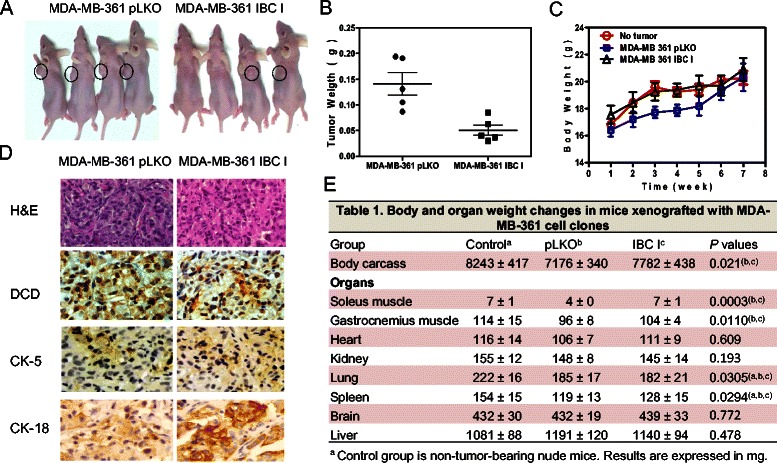
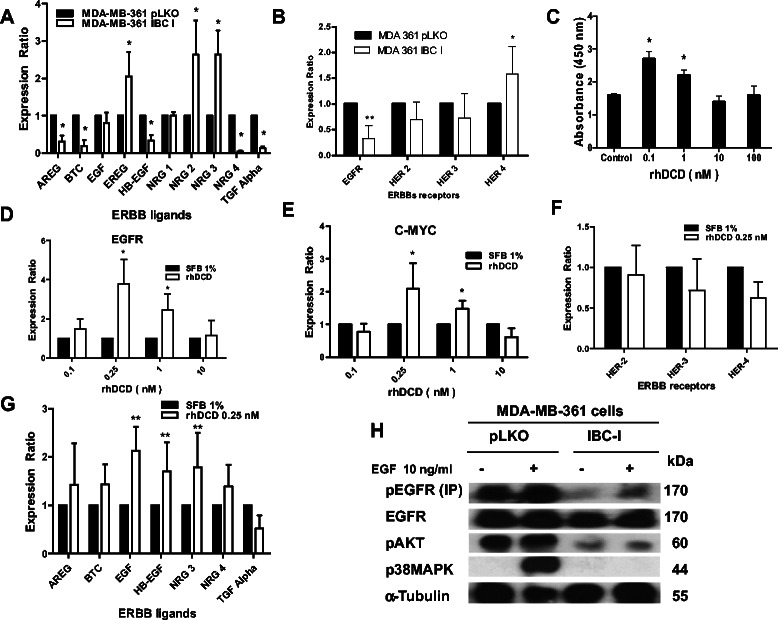
We identified DCD splice variant (DCD-SV) that is co-expressed with DCD in primary invasive breast carcinomas and in other tissue types and cell lines. DCD expression in breast tumors from patients with clinical follow up data correlated with high histological grade, HER2 amplification and luminal subtype. We found that loss of DCD expression led to reduced cell proliferation, resistance to apoptosis, and suppressed tumorigenesis in immunodeficient mice. Network analysis of gene expression data revealed perturbed ERBB signaling following DCD shRNA expression including changes in the expression of ERBB receptors and their ligands.
These findings imply that DCD promotes breast tumorigenesis via modulation of ERBB signaling pathways. As ERBB signaling is also important for neural survival, HER2+ breast tumors may highjack DCD's neural survival-promoting functions to promote tumorigenesis.
我们之前鉴定出编码一种生长和存活因子的皮肤杀菌素(DCD),它是在一部分乳腺肿瘤中扩增并过表达的基因。DCD阳性乳腺癌患者具有更差的预后特征。因此,我们在患者的DCD阳性乳腺癌以及代表性细胞系中寻找特定的分子特征。
通过qRT-PCR、免疫组织化学和免疫印迹分析评估正常组织、肿瘤组织及细胞系中DCD的表达。为了研究DCD在乳腺肿瘤发生中的作用,我们使用三种特异性shRNA慢病毒载体分析其在人乳腺癌细胞系中下调的后果。使用Affymetrix微阵列鉴定受DCD上调和下调的基因,并通过MetaCore平台进行分析。
我们鉴定出在原发性浸润性乳腺癌以及其他组织类型和细胞系中与DCD共表达的DCD剪接变体(DCD-SV)。有临床随访数据的患者乳腺肿瘤中DCD表达与高组织学分级、HER2扩增和管腔亚型相关。我们发现DCD表达缺失导致细胞增殖减少、对凋亡的抗性增加,并抑制免疫缺陷小鼠中的肿瘤发生。基因表达数据的网络分析显示,DCD shRNA表达后ERBB信号受到干扰,包括ERBB受体及其配体表达的变化。
这些发现表明DCD通过调节ERBB信号通路促进乳腺肿瘤发生。由于ERBB信号对神经存活也很重要,HER2+乳腺肿瘤可能利用DCD促进神经存活的功能来促进肿瘤发生。