Department of Translational Genomics, Keck School of Medicine, University of Southern California, Los Angeles, California.
Department of Pathology, Keck School of Medicine, University of Southern California, Los Angeles, California.
Clin Cancer Res. 2023 Nov 1;29(21):4492-4503. doi: 10.1158/1078-0432.CCR-23-0290.
Limited effective treatments are currently available for central nervous system (CNS) metastasis (CM). This is largely driven by the inability of current therapeutics to penetrate the blood brain barrier (BBB) and the lack of preclinical models for testing new therapies. Here we study the efficacy of AZD1390, a BBB penetrating ataxia-telangiectasia mutated inhibitor, as a radiosensitizer for breast cancer CM treatment.
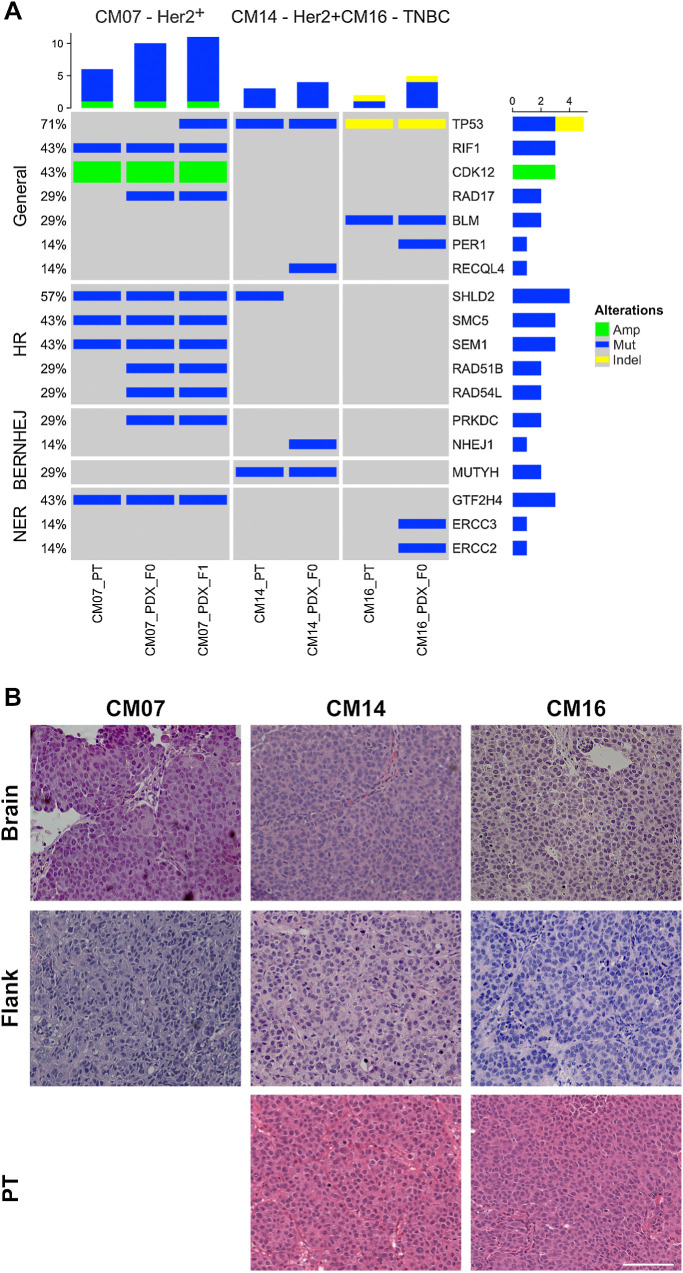
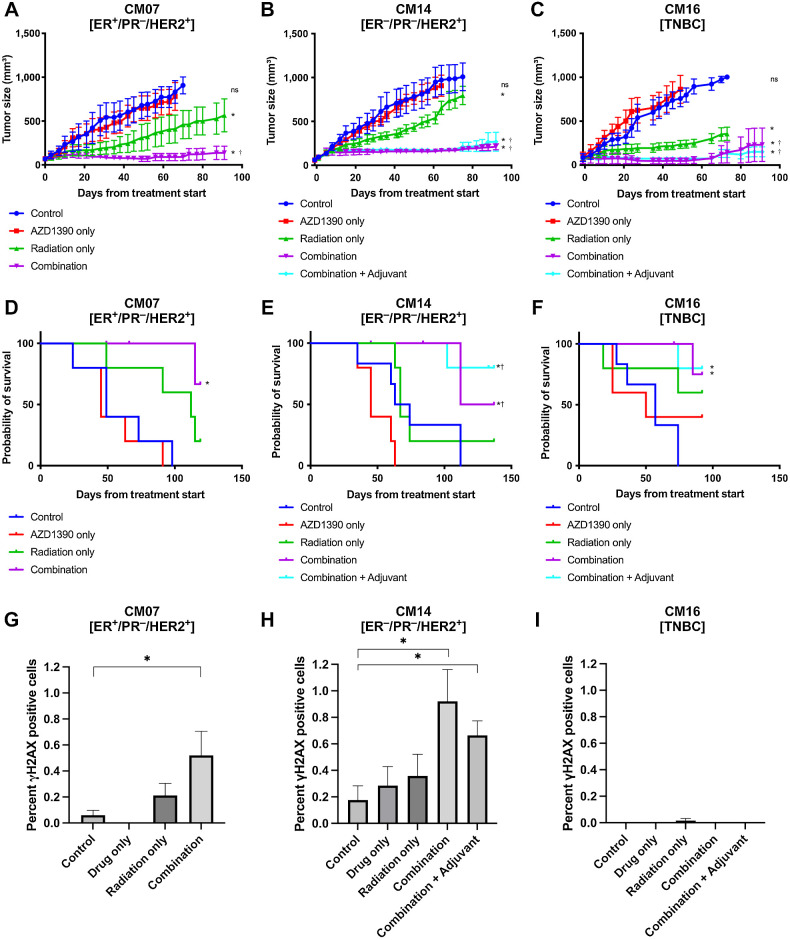
Three patient-derived xenograft (PDX) tumors including 2 HER2+ and 1 triple-negative breast cancer harboring DNA damage response (DDR) gene mutations, were implanted subcutaneously in the flank of mice to assess tumor growth inhibition by AZD1390 combined with radiation. Animal survival was further assessed by implanting the best responding PDX model orthotopically in the brain.
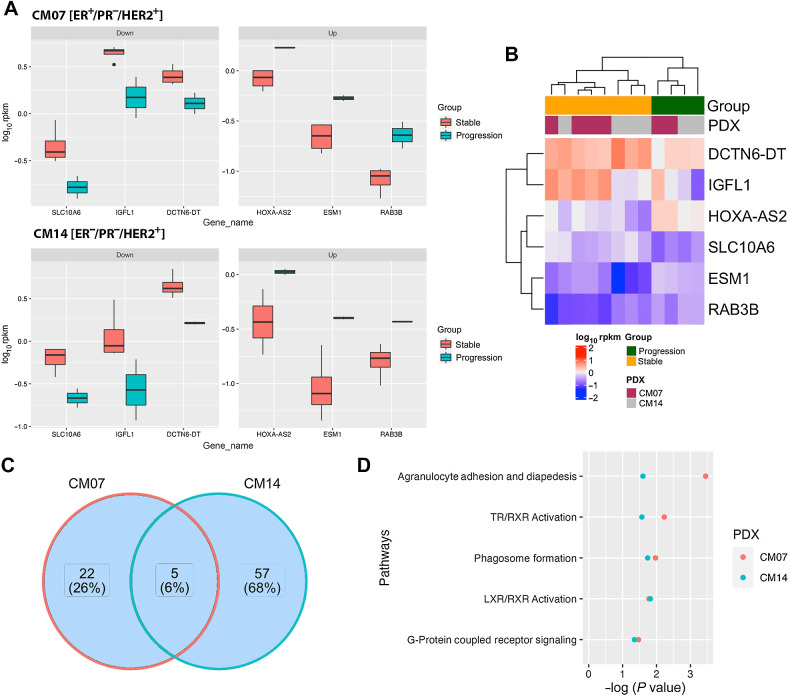
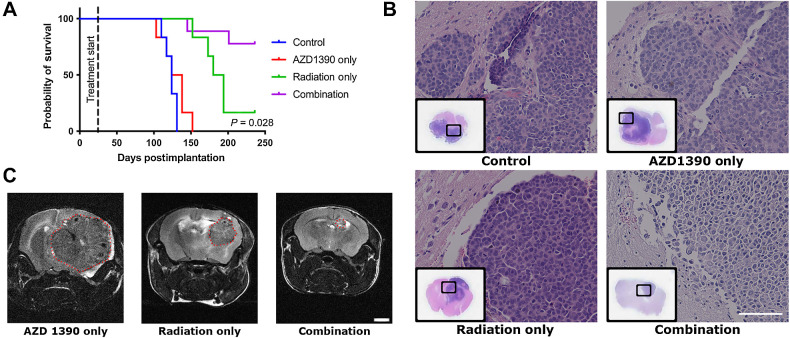
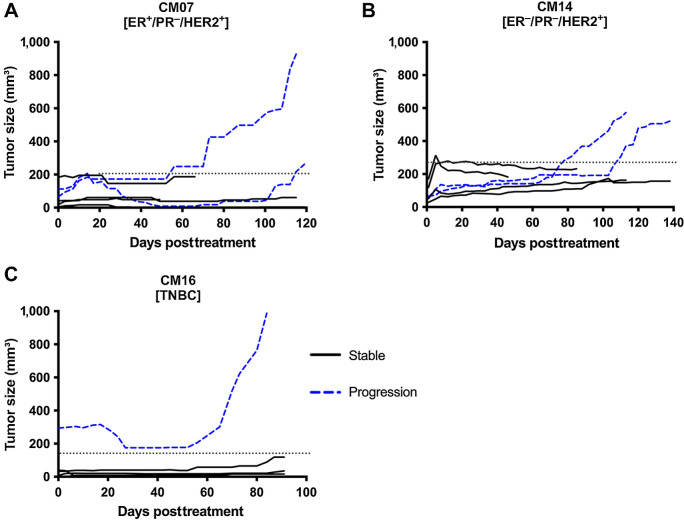
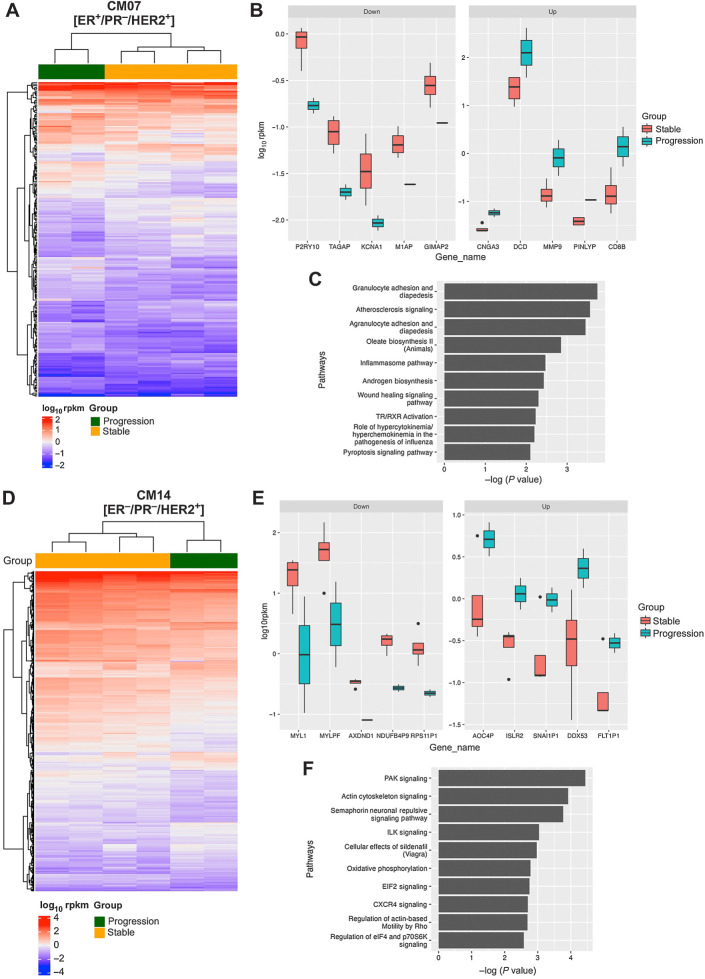
Pretreatment with AZD1390 followed by radiation therapy inhibited growth of PDX tumors implanted in the flank, and improved survival in orthotopic models with average survival of 222 days compared with 123 days in controls. Administration of AZD1390 posttreatment for 21 days had no further benefits. While the combination therapy resulted in sustained tumor inhibition, sporadic regrowth was observed in some mice 50 to 100 days posttreatment in all models. Gene expression comparing these tumors with complete responders demonstrated changes in upregulation of oncogenic proteins, which are potential drivers of tumor growth after treatment.
Our results demonstrate that AZD1390 effectively sensitizes breast cancer CM to radiation therapy in DDR mutant tumors. This study demonstrates the potential of using AZD1390 as a novel therapeutic agent for patients with breast cancer CM.
目前针对中枢神经系统(CNS)转移(CM)的有效治疗方法有限。这主要是由于当前治疗方法无法穿透血脑屏障(BBB),以及缺乏用于测试新疗法的临床前模型。在这里,我们研究了 AZD1390(一种穿透血脑屏障的共济失调毛细血管扩张突变抑制剂)作为乳腺癌 CM 治疗放射增敏剂的疗效。
包括 2 个 HER2+和 1 个三阴性乳腺癌在内的 3 个患者来源的异种移植(PDX)肿瘤,这些肿瘤均携带 DNA 损伤反应(DDR)基因突变,被植入小鼠的侧腹以评估 AZD1390 联合辐射对肿瘤生长的抑制作用。通过将反应最佳的 PDX 模型原位植入大脑,进一步评估动物的存活情况。
AZD1390 预处理后进行放射治疗,抑制了侧腹植入的 PDX 肿瘤的生长,并改善了原位模型的存活,平均存活时间为 222 天,而对照组为 123 天。在治疗后 21 天给予 AZD1390 治疗没有进一步的益处。虽然联合治疗导致持续的肿瘤抑制,但在所有模型中,在治疗后 50 至 100 天,一些小鼠仍观察到肿瘤偶有复发。对这些与完全缓解者比较的肿瘤进行基因表达分析表明,致癌蛋白的上调发生了变化,这些蛋白是治疗后肿瘤生长的潜在驱动因素。
我们的结果表明,AZD1390 可有效增强 DDR 突变肿瘤对乳腺癌 CM 的放射敏感性。这项研究表明,AZD1390 作为一种新型治疗剂,具有用于治疗乳腺癌 CM 患者的潜力。