Bullard Kristen M, Broccardo Carolyn, Keenan Susan M
School of Biological Sciences, University of Northern Colorado, Greeley, CO, 80639, USA.
Proteomics and Metabolomics Facility, Colorado State University, Fort ColliHns, CO, 80523, USA.
Malar J. 2015 Apr 8;14:147. doi: 10.1186/s12936-015-0655-x.
The 2013 Malaria World Report indicated that in 2012 there were approximately 207 million cases of malaria, which resulted in an estimated 627,000 malaria-related deaths. Due to the alarming resistance of these parasites to traditional anti-malarial treatments there is a pressing need to not only identify new anti-malarial compounds, but also to characterize the effect of compounds known to have an effect on the parasite life cycle. This study reports on effects of kinase inhibitor Purvalanol B administration on the growth and protein expression of Plasmodium falciparum late-stage trophozoites.
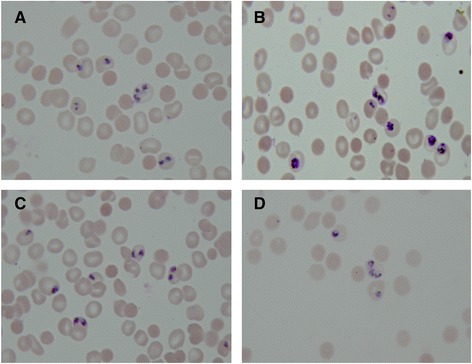
A SYBR® Green I parasite growth assay was used to measure the IC50 of Purvalanol B with P. falciparum (strain W2). Purvalanol B or DMSO control were applied to synchronized parasites 36 hours post invasion and parasites were incubated for 12 hours. Giemsa-stained blood smears were used to determine the effect of Purvalanol B on parasite growth, global quantitative proteomic analysis was used to examine differences in protein expression between Purvalanol B-treated and control parasites and results were confirmed by qPCR.
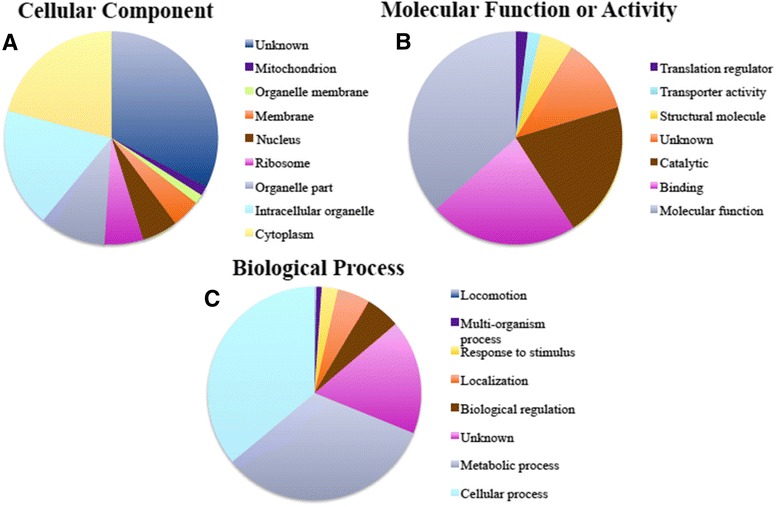
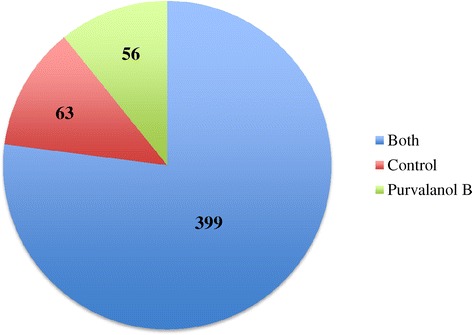
There were no differences in parasitaemia between inhibitor-treated and control parasites. However, the ability of Purvalanol B-treated parasites to form schizonts was significantly reduced. Proteomic analysis detected 76 human proteins and 518 P. falciparum proteins (63 in control cultures only, 56 proteins in Purvalanol B cultures only, and 399 proteins in both cultures). Quantitative analysis of protein extracts revealed eight proteins that were up-regulated in the inhibitor-treated cultures, including several components of the parasite's proteasome complex and thioredoxin reductase. Two proteins appeared to be down-regulated, including a helicase and an RNA-binding protein.
Purvalanol B application decreases the ability of late-stage P. falciparum trophozoites to form multinucleated schizonts and up-regulates proteasome subunits and proteins that contribute to redox homeostasis, which may indicate an increase in oxidative stress as a result of inhibitor application. While the efficacy of Purvalanol B is relatively low for use as an anti-malarial therapy, quantitative proteomic analysis may serve as a method of examining the action of drugs on the parasite and indicate the likelihood of future resistance development.
《2013年疟疾世界报告》指出,2012年约有2.07亿疟疾病例,估计有62.7万人死于疟疾相关疾病。由于这些疟原虫对传统抗疟治疗产生了惊人的耐药性,因此迫切需要不仅识别新的抗疟化合物,而且要表征已知对疟原虫生命周期有影响的化合物的作用。本研究报告了激酶抑制剂Purvalanol B对恶性疟原虫晚期滋养体生长和蛋白质表达的影响。
使用SYBR® Green I疟原虫生长测定法测量Purvalanol B对恶性疟原虫(W2株)的半数抑制浓度(IC50)。在入侵后36小时将Purvalanol B或二甲基亚砜(DMSO)对照应用于同步化的疟原虫,并将疟原虫孵育12小时。使用吉姆萨染色血涂片确定Purvalanol B对疟原虫生长的影响,使用全局定量蛋白质组分析检查Purvalanol B处理的疟原虫与对照疟原虫之间蛋白质表达的差异,并通过定量聚合酶链反应(qPCR)进行验证。
抑制剂处理的疟原虫与对照疟原虫之间的疟原虫血症没有差异。然而,Purvalanol B处理的疟原虫形成裂殖体的能力显著降低。蛋白质组分析检测到76种人类蛋白质和518种恶性疟原虫蛋白质(仅在对照培养物中有63种,仅在Purvalanol B培养物中有56种蛋白质,两种培养物中均有399种蛋白质)。蛋白质提取物的定量分析显示,在抑制剂处理的培养物中有8种蛋白质上调,包括疟原虫蛋白酶体复合物的几个组分和硫氧还蛋白还原酶。两种蛋白质似乎下调,包括一种解旋酶和一种RNA结合蛋白。
应用Purvalanol B会降低恶性疟原虫晚期滋养体形成多核裂殖体的能力,并上调蛋白酶体亚基和有助于氧化还原稳态的蛋白质,这可能表明由于应用抑制剂导致氧化应激增加。虽然Purvalanol B作为抗疟疗法的疗效相对较低,但定量蛋白质组分析可作为一种检查药物对疟原虫作用的方法,并表明未来产生耐药性的可能性。