Nicolás Francisco E, Vila Ana, Moxon Simon, Cascales María D, Torres-Martínez Santiago, Ruiz-Vázquez Rosa M, Garre Victoriano
Department of Genetics and Microbiology, Faculty of Biology, University of Murcia, 30100, Murcia, Spain.
The Genome Analysis Centre, Norwich, NR4 7UH, UK.
BMC Genomics. 2015 Mar 25;16(1):237. doi: 10.1186/s12864-015-1443-2.
RNA interference (RNAi) is a conserved mechanism of genome defence that can also have a role in the regulation of endogenous functions through endogenous small RNAs (esRNAs). In fungi, knowledge of the functions regulated by esRNAs has been hampered by lack of clear phenotypes in most mutants affected in the RNAi machinery. Mutants of Mucor circinelloides affected in RNAi genes show defects in physiological and developmental processes, thus making Mucor an outstanding fungal model for studying endogenous functions regulated by RNAi. Some classes of Mucor esRNAs map to exons (ex-siRNAs) and regulate expression of the genes from which they derive. To have a broad picture of genes regulated by the silencing machinery during vegetative growth, we have sequenced and compared the mRNA profiles of mutants in the main RNAi genes by using RNA-seq. In addition, we have achieved a more complete phenotypic characterization of silencing mutants.
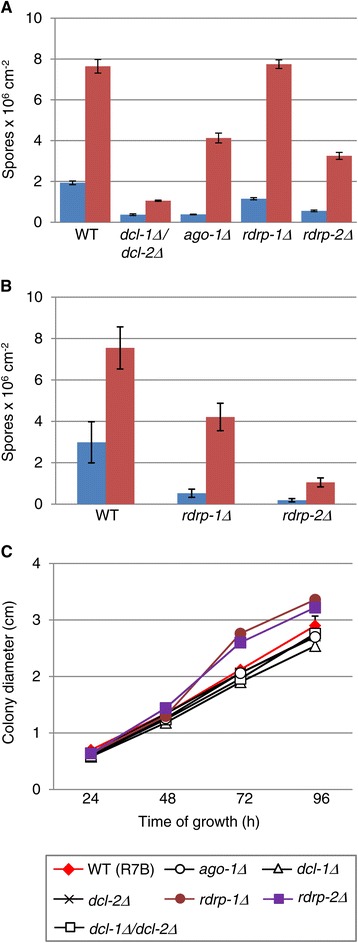
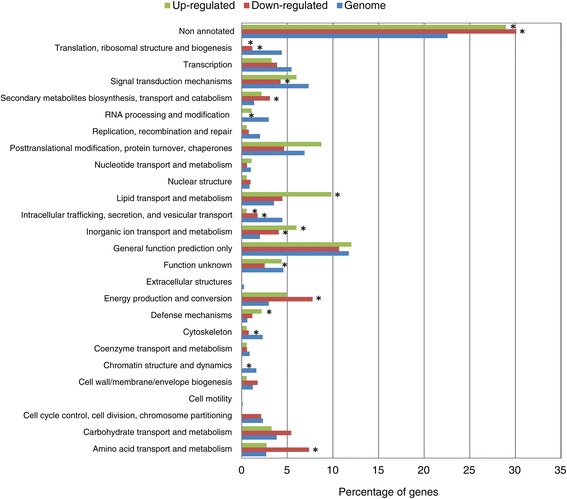
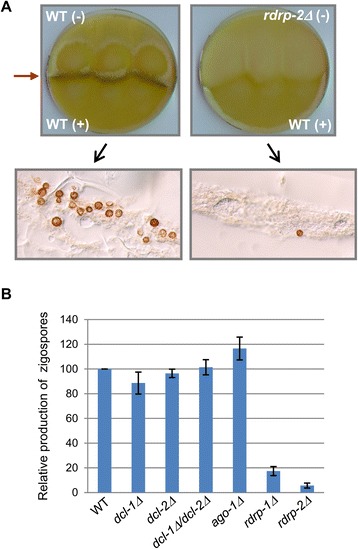
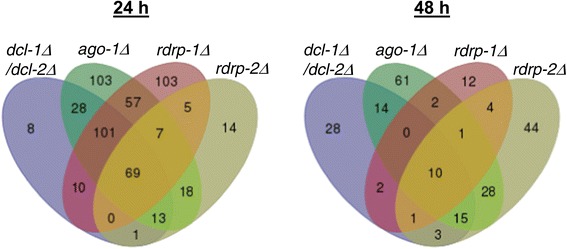
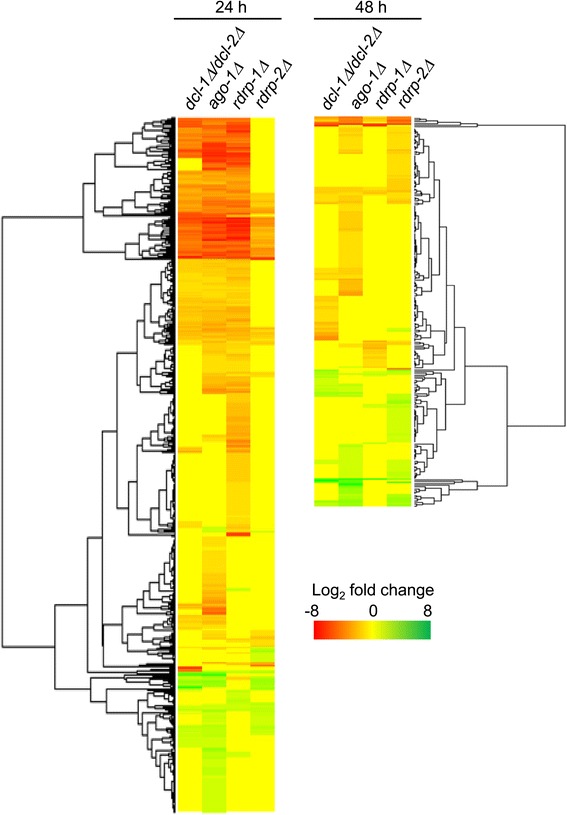
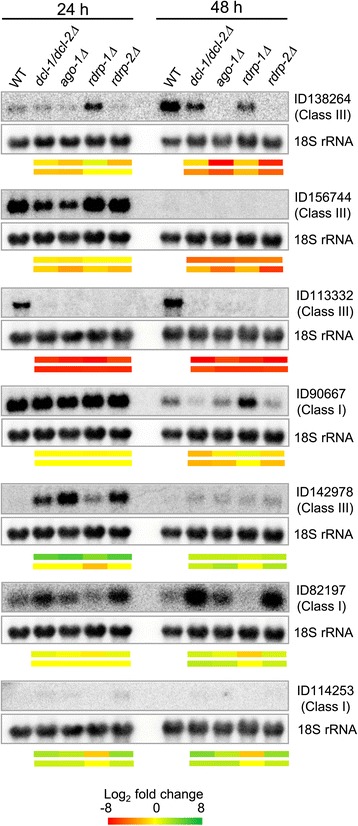
Deletion of any main RNAi gene provoked a deep impact in mRNA accumulation at exponential and stationary growth. Genes showing increased mRNA levels, as expected for direct ex-siRNAs targets, but also genes with decreased expression were detected, suggesting that, most probably, the initial ex-siRNA targets regulate the expression of other genes, which can be up- or down-regulated. Expression of 50% of the genes was dependent on more than one RNAi gene in agreement with the existence of several classes of ex-siRNAs produced by different combinations of RNAi proteins. These combinations of proteins have also been involved in the regulation of different cellular processes. Besides genes regulated by the canonical RNAi pathway, this analysis identified processes, such as growth at low pH and sexual interaction that are regulated by a dicer-independent non-canonical RNAi pathway.
This work shows that the RNAi pathways play a relevant role in the regulation of a significant number of endogenous genes in M. circinelloides during exponential and stationary growth phases and opens up an important avenue for in-depth study of genes involved in the regulation of physiological and developmental processes in this fungal model.
RNA干扰(RNAi)是一种保守的基因组防御机制,也可通过内源性小RNA(esRNA)在内源性功能调控中发挥作用。在真菌中,由于大多数RNAi机制相关突变体缺乏明确的表型,阻碍了我们对esRNA调控功能的了解。毛霉属的RNAi基因相关突变体在生理和发育过程中表现出缺陷,因此使毛霉成为研究RNAi调控内源性功能的优秀真菌模型。毛霉的某些esRNA类别定位于外显子(外显子来源的小干扰RNA,ex-siRNA),并调控其来源基因的表达。为全面了解营养生长期间由沉默机制调控的基因,我们通过RNA测序对主要RNAi基因的突变体mRNA谱进行了测序和比较。此外,我们对沉默突变体进行了更全面的表型特征分析。
任何主要RNAi基因的缺失都会对指数生长期和稳定期的mRNA积累产生深远影响。我们检测到了如预期的直接ex-siRNA靶标那样mRNA水平升高的基因,也检测到了表达降低的基因,这表明最初的ex-siRNA靶标很可能调控其他基因的表达,这些基因可能上调或下调。50%的基因表达依赖于多个RNAi基因,这与由RNAi蛋白不同组合产生的几类ex-siRNA的存在相一致。这些蛋白组合也参与了不同细胞过程的调控。除了由经典RNAi途径调控的基因外,该分析还鉴定出了如低pH条件下生长和有性相互作用等由不依赖于Dicer的非经典RNAi途径调控的过程。
这项工作表明,RNAi途径在指数生长期和稳定期毛霉大量内源基因的调控中发挥着重要作用,并为深入研究该真菌模型中参与生理和发育过程调控的基因开辟了重要途径。