Guay Claudiane, Menoud Véronique, Rome Sophie, Regazzi Romano
Department of Fundamental Neurosciences, University of Lausanne, Rue du Bugnon 9, Lausanne, Switzerland.
CarMeN Laboratory (INSERM U.1060/INRA 1397, INSA), University of Lyon, Faculty of Medicine Lyon-Sud, Ouillons, France.
Cell Commun Signal. 2015 Mar 19;13:17. doi: 10.1186/s12964-015-0097-7.
Diabetes mellitus is a common metabolic disorder characterized by dysfunction of insulin-secreting pancreatic beta-cells. MicroRNAs are important regulators of beta-cell activities. These non-coding RNAs have recently been discovered to exert their effects not only inside the cell producing them but, upon exosome-mediated transfer, also in other recipient cells. This novel communication mode remains unexplored in pancreatic beta-cells. In the present study, the microRNA content of exosomes released by beta-cells in physiological and physiopathological conditions was analyzed and the biological impact of their transfer to recipient cells investigated.
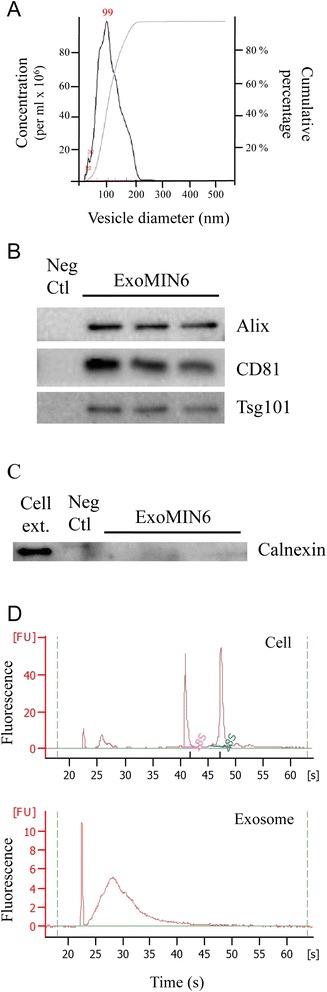
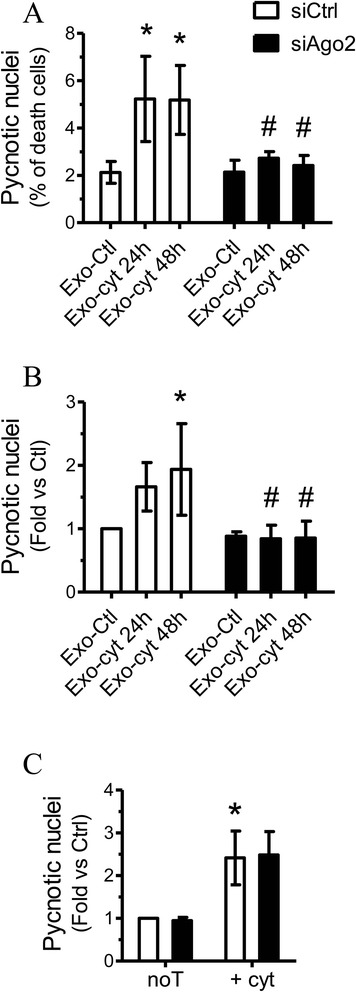
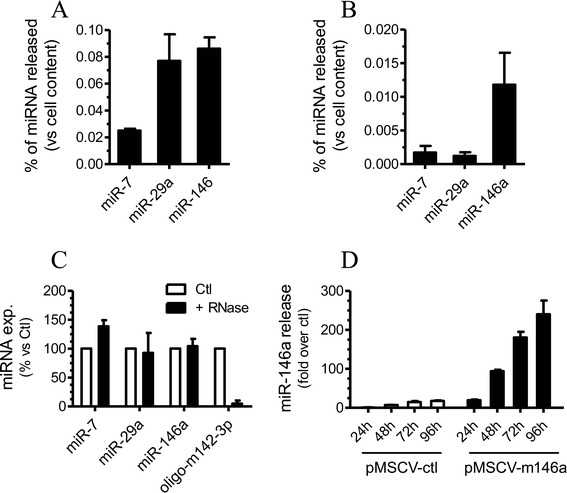
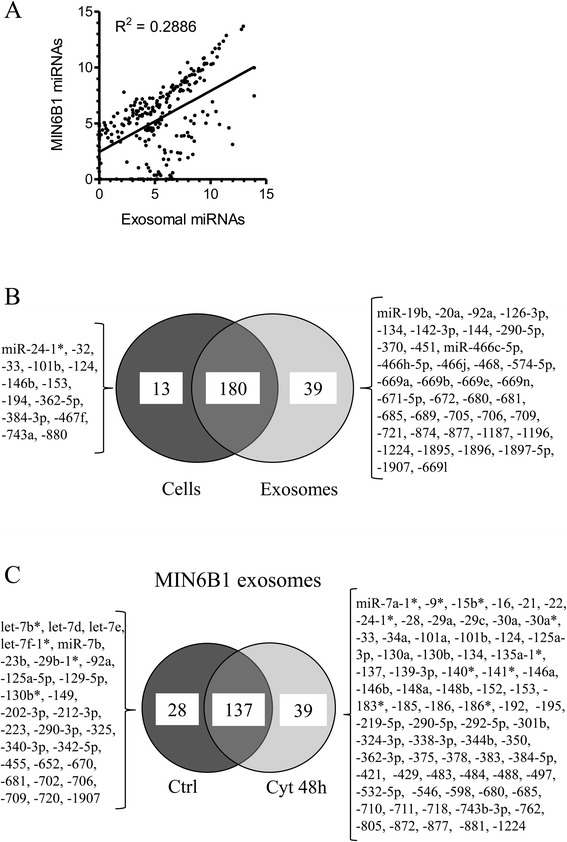
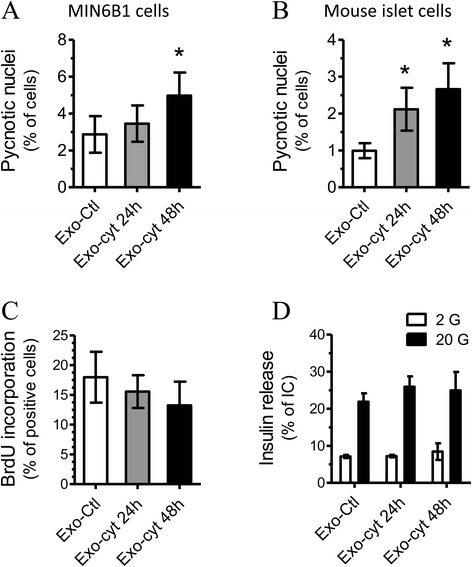
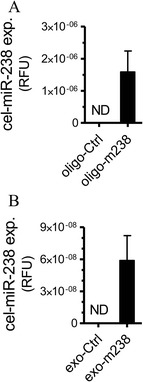
Exosomes were isolated from the culture media of MIN6B1 and INS-1 derived 832/13 beta-cell lines and from mice, rat or human islets. Global profiling revealed that the microRNAs released in MIN6B1 exosomes do not simply reflect the content of the cells of origin. Indeed, while a subset of microRNAs was preferentially released in exosomes others were selectively retained in the cells. Moreover, exposure of MIN6B1 cells to inflammatory cytokines changed the release of several microRNAs. The dynamics of microRNA secretion and their potential transfer to recipient cells were next investigated. As a proof-of-concept, we demonstrate that if cel-miR-238, a C. Elegans microRNA not present in mammalian cells, is expressed in MIN6B1 cells a fraction of it is released in exosomes and is transferred to recipient beta-cells. Furthermore, incubation of untreated MIN6B1 or mice islet cells in the presence of microRNA-containing exosomes isolated from the culture media of cytokine-treated MIN6B1 cells triggers apoptosis of recipient cells. In contrast, exosomes originating from cells not exposed to cytokines have no impact on cell survival. Apoptosis induced by exosomes produced by cytokine-treated cells was prevented by down-regulation of the microRNA-mediating silencing protein Ago2 in recipient cells, suggesting that the effect is mediated by the non-coding RNAs.
Taken together, our results suggest that beta-cells secrete microRNAs that can be transferred to neighboring beta-cells. Exposure of donor cells to pathophysiological conditions commonly associated with diabetes modifies the release of microRNAs and affects survival of recipient beta-cells. Our results support the concept that exosomal microRNAs transfer constitutes a novel cell-to-cell communication mechanism regulating the activity of pancreatic beta-cells.
糖尿病是一种常见的代谢紊乱疾病,其特征为胰岛素分泌性胰腺β细胞功能障碍。微小RNA是β细胞活动的重要调节因子。最近发现这些非编码RNA不仅在产生它们的细胞内发挥作用,而且在外泌体介导的转移后,也能在其他受体细胞中发挥作用。这种新型的通讯模式在胰腺β细胞中尚未得到探索。在本研究中,分析了生理和病理生理条件下β细胞释放的外泌体中的微小RNA含量,并研究了其转移至受体细胞后的生物学影响。
外泌体从MIN6B1和INS-1衍生的832/13β细胞系以及小鼠、大鼠或人类胰岛的培养基中分离得到。全局分析显示,MIN6B1外泌体中释放的微小RNA并不仅仅反映其来源细胞的含量。实际上,虽然一部分微小RNA优先在外泌体中释放,但其他一些则被选择性地保留在细胞中。此外,将MIN6B1细胞暴露于炎性细胞因子会改变几种微小RNA的释放。接下来研究了微小RNA分泌的动态过程及其向受体细胞的潜在转移。作为概念验证,我们证明,如果在MIN6B1细胞中表达线虫微小RNA cel-miR-238(一种不存在于哺乳动物细胞中的微小RNA),它的一部分会在外泌体中释放并转移至受体β细胞。此外,将未处理的MIN6B1或小鼠胰岛细胞与从细胞因子处理的MIN6B1细胞培养基中分离得到的含微小RNA的外泌体一起孵育,会触发受体细胞的凋亡。相反,来自未暴露于细胞因子的细胞的外泌体对细胞存活没有影响。通过下调受体细胞中微小RNA介导的沉默蛋白Ago2可阻止细胞因子处理的细胞产生的外泌体诱导的凋亡,这表明该效应是由非编码RNA介导的。
综上所述,我们的结果表明β细胞分泌的微小RNA可以转移至相邻的β细胞。供体细胞暴露于通常与糖尿病相关的病理生理条件下会改变微小RNA的释放,并影响受体β细胞的存活。我们的结果支持外泌体微小RNA转移构成一种调节胰腺β细胞活性的新型细胞间通讯机制的概念。