Rivera-Pagán Aixa F, Rivera-Aponte David E, Melnik-Martínez Katya V, Zayas-Santiago Astrid, Kucheryavykh Lilia Y, Martins Antonio H, Cubano Luis A, Skatchkov Serguei N, Eaton Misty J
Department of Biochemistry, Universidad Central del Caribe, Bayamón, Puerto Rico, United States of America.
Department of Physiology, Universidad Central del Caribe, Bayamón, Puerto Rico, United States of America.
PLoS One. 2015 Apr 17;10(4):e0125195. doi: 10.1371/journal.pone.0125195. eCollection 2015.
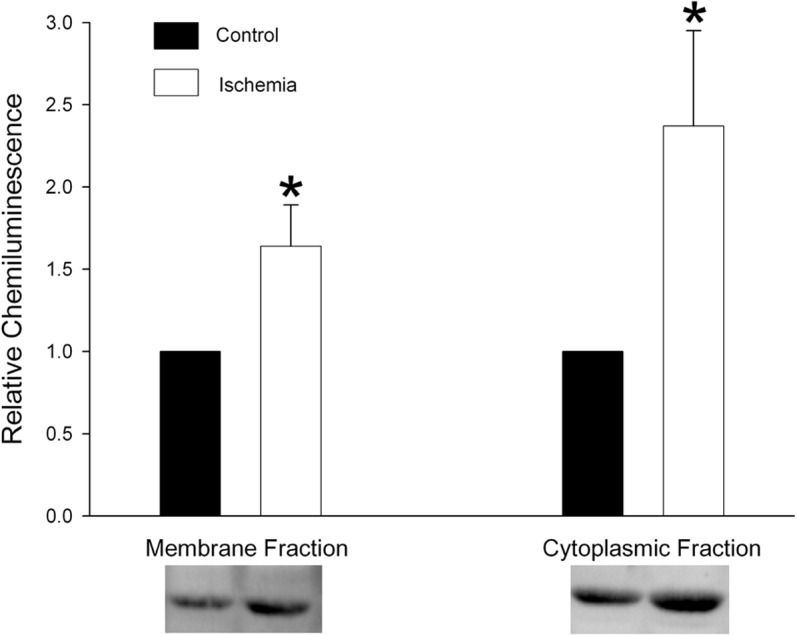
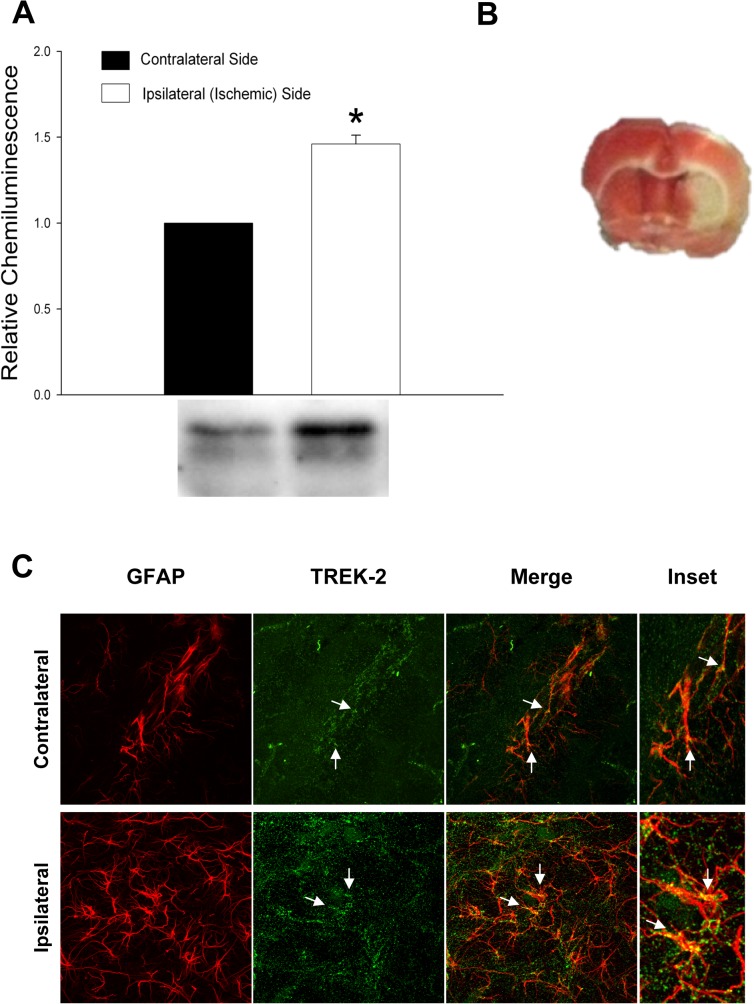
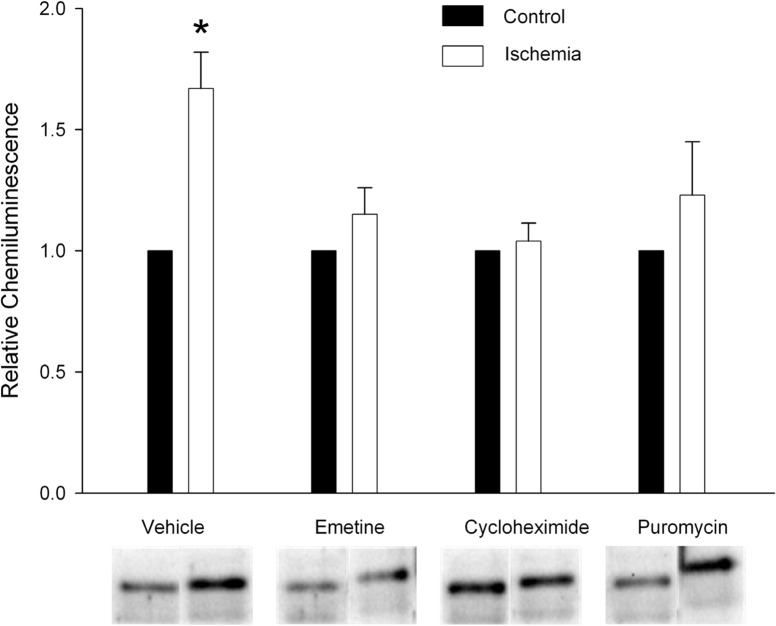
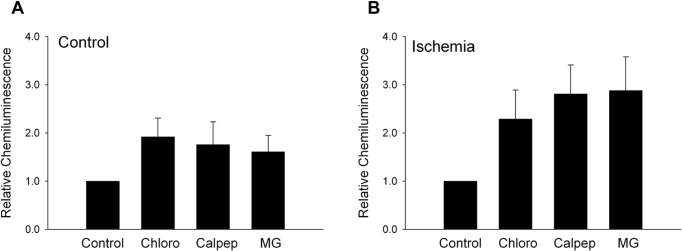
Excitotoxicity due to glutamate receptor over-activation is one of the key mediators of neuronal death after an ischemic insult. Therefore, a major function of astrocytes is to maintain low extracellular levels of glutamate. The ability of astrocytic glutamate transporters to regulate the extracellular glutamate concentration depends upon the hyperpolarized membrane potential of astrocytes conferred by the presence of K+ channels in their membranes. We have previously shown that TREK-2 potassium channels in cultured astrocytes are up-regulated by ischemia and may support glutamate clearance by astrocytes during ischemia. Thus, herein we determine the mechanism leading to this up-regulation and assess the localization of TREK-2 channels in astrocytes after transient middle cerebral artery occlusion. By using a cell surface biotinylation assay we confirmed that functional TREK-2 protein is up-regulated in the astrocytic membrane after ischemic conditions. Using real time RT-PCR, we determined that the levels of TREK-2 mRNA were not increased in response to ischemic conditions. By using Western blot and a variety of protein synthesis inhibitors, we demonstrated that the increase of TREK-2 protein expression requires De novo protein synthesis, while protein degradation pathways do not contribute to TREK-2 up-regulation after ischemic conditions. Immunohistochemical studies revealed TREK-2 localization in astrocytes together with increased expression of the selective glial marker, glial fibrillary acidic protein, in brain 24 hours after transient middle cerebral occlusion. Our data indicate that functional TREK-2 channels are up-regulated in the astrocytic membrane during ischemia through a mechanism requiring De novo protein synthesis. This study provides important information about the mechanisms underlying TREK-2 regulation, which has profound implications in neurological diseases such as ischemia where astrocytes play an important role.
由于谷氨酸受体过度激活导致的兴奋性毒性是缺血性损伤后神经元死亡的关键介质之一。因此,星形胶质细胞的一个主要功能是维持细胞外低水平的谷氨酸。星形胶质细胞谷氨酸转运体调节细胞外谷氨酸浓度的能力取决于其膜上钾通道赋予的星形胶质细胞超极化膜电位。我们之前已经表明,培养的星形胶质细胞中的TREK-2钾通道在缺血时会上调,并且可能在缺血期间支持星形胶质细胞清除谷氨酸。因此,在本文中,我们确定了导致这种上调的机制,并评估了短暂性大脑中动脉闭塞后星形胶质细胞中TREK-2通道的定位。通过细胞表面生物素化测定,我们证实了在缺血条件下,功能性TREK-2蛋白在星形胶质细胞膜中上调。使用实时RT-PCR,我们确定TREK-2 mRNA水平在缺血条件下没有增加。通过蛋白质印迹和各种蛋白质合成抑制剂,我们证明TREK-2蛋白表达的增加需要从头合成蛋白质,而蛋白质降解途径在缺血条件下对TREK-2上调没有贡献。免疫组织化学研究显示,在短暂性大脑中动脉闭塞后24小时,TREK-2在星形胶质细胞中的定位以及选择性胶质细胞标志物胶质纤维酸性蛋白的表达增加。我们的数据表明,在缺血期间,功能性TREK-2通道通过一种需要从头合成蛋白质的机制在星形胶质细胞膜中上调。这项研究提供了关于TREK-2调节机制的重要信息,这对星形胶质细胞起重要作用的缺血等神经疾病具有深远意义。