Di Ianni Francesco, Dodi Pier Luigi, Cabassi Clotilde Silvia, Pelizzone Igor, Sala Andrea, Cavirani Sandro, Parmigiani Enrico, Quintavalla Fausto, Taddei Simone
Dipartimento di Scienze Medico-Veterinarie, Università di Parma, via del Taglio 10, 43126, Parma, Italy.
BMC Vet Res. 2015 Apr 10;11:91. doi: 10.1186/s12917-015-0405-x.
In captive breed turtles and tortoises conjunctival disease is common. Our aim was to investigate the bacterial and fungal flora present in the eyes of healthy and pathological chelonians and to compare findings in turtles with those in tortoises.
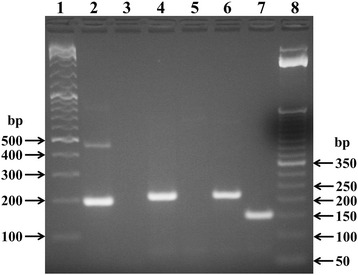
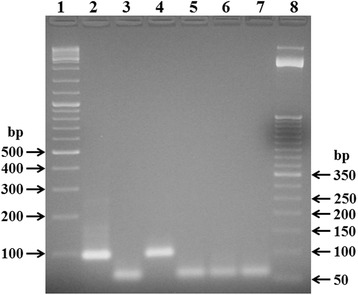
Samples were taken from the conjunctival sacs of 34, diseased and healthy, chelonians (18 tortoises and 16 turtles) and submitted to bacterial and fungal investigation. All samples showed bacterial growth. Thirteen animals (38%), harboured a single bacterial species as sole isolate and twenty-one animals (62%) harboured more than one species. Detection of multiple bacterial infection was clearly greater in tortoises compared to turtles. Most frequently isolated bacterial species were Bacillus spp. (13 isolates), Staphylococcus xylosus (10 isolates), Sphingomonas paucimobilis (6 isolates), Staphylococcus sciuri and Aeromonas hydrophila/caviae (each 5 isolates), Ochrobactrum anthropi (3 isolates), Citrobacter freundii, Enterobacter cloacae and Pseudomonas luteola (each 2 isolates). Only one isolate of Kocuria varians/rosea, Staphylococcus aureus, Staphylococcus auricularis, Staphylococcus haemolyticus, Staphylococcus lentus, Morganella morganii, Pasteurella multocida, Pasteurella pneumotropica/haemolytica, Proteus spp., Pseudomonas putida, Salmonella enterica ssp. arizonae, Stenotrophomonas maltophilia and Vibrio parahaemolyticus was evidenced. The presence in 8 animals of Mycoplasma spp. and in 1 animal with severe conjunctivitis of Chlamydia spp. was detected by PCR. Candida spp. was also isolated from two healthy animals.
A clear predominance of Gram positive isolates in tortoises and Gram negative isolates in turtles was found. However, we cannot ascribe the observed difference to the diversity of animal species, as other factors, including especially different characteristics of the living environments, may play a role. Almost all bacterial species isolated may have clinical significance, mostly as opportunistic pathogens, both for humans and animals. That chelonians are often carrier of bacteria with zoonotic potential is a well-known fact, in particular with regard to Salmonella spp. Therefore, it is not surprising the detection of a strain of Salmonella enterica ssp. arizonae in the eye of one of the animals tested. Worthy of note is the finding of Chlamydia spp. in a severe case of conjunctivitis, though we cannot epidemiologically assess a cause-effect relationship between presence of chlamydia and disease.
在人工养殖的龟鳖类动物中,结膜疾病很常见。我们的目的是调查健康和患病龟鳖类动物眼睛中的细菌和真菌菌群,并比较龟和鳖的调查结果。
从34只患病和健康的龟鳖类动物(18只鳖和16只龟)的结膜囊中采集样本,并进行细菌和真菌调查。所有样本均显示有细菌生长。13只动物(38%)仅分离出单一细菌物种,21只动物(62%)分离出不止一种细菌物种。与龟相比,鳖中多重细菌感染的检出率明显更高。最常分离出的细菌物种是芽孢杆菌属(13株)、木糖葡萄球菌(10株)、少动鞘氨醇单胞菌(6株)、松鼠葡萄球菌和气单胞菌/豚鼠气单胞菌(各5株)、嗜水气单胞菌(3株)、弗氏柠檬酸杆菌、阴沟肠杆菌和浅黄金色假单胞菌(各2株)。仅发现1株变异库克菌/玫瑰色库克菌、金黄色葡萄球菌、耳葡萄球菌、溶血葡萄球菌、缓慢葡萄球菌、摩根摩根菌、多杀巴斯德菌、嗜肺巴斯德菌/溶血巴斯德菌、变形杆菌属、恶臭假单胞菌、亚利桑那沙门氏菌、嗜麦芽窄食单胞菌和副溶血性弧菌。通过PCR检测到8只动物中有支原体属,1只患有严重结膜炎的动物中有衣原体属。还从两只健康动物中分离出念珠菌属。
发现鳖中革兰氏阳性菌分离株明显占优势,龟中革兰氏阴性菌分离株明显占优势。然而,我们不能将观察到的差异归因于动物物种的多样性,因为其他因素,特别是生活环境的不同特征,可能起作用。几乎所有分离出的细菌物种都可能具有临床意义,主要作为人和动物的机会性病原体。龟鳖类动物常常是具有人畜共患病潜力细菌的携带者,这是一个众所周知的事实,尤其是关于沙门氏菌属。因此,在所检测的一只动物的眼睛中检测到亚利桑那沙门氏菌菌株并不奇怪。值得注意的是,在一例严重结膜炎病例中发现了衣原体属,尽管我们无法从流行病学角度评估衣原体的存在与疾病之间的因果关系。