Sharma Nikhil, Verma Ruhi, Kumawat Kanhaiya Lal, Basu Anirban, Singh Sunit K
Laboratory of Neurovirology and Inflammation Biology, CSIR-Centre for Cellular and Molecular Biology (CCMB), Uppal Road, 500007, Hyderabad, AP, India.
National Brain Research Centre, Haryana-122050, Manesar, Haryana, India.
J Neuroinflammation. 2015 Feb 18;12:30. doi: 10.1186/s12974-015-0249-0.
Japanese encephalitis virus (JEV) is the causative agent of Japanese encephalitis which is more prevalent in South and Southeast Asia. JEV is a neurotropic virus which infiltrates into the brain through vascular endothelial cells. JEV infects neurons and microglial cells which causes neuronal damage and inflammation. However, JEV also evades the cellular immune response to survive in host cells. Viruses are known to modulate the expression of microRNAs, which in turn modulate cellular immune response by targeting expression of antiviral genes. The aim of this study is to understand the anti-inflammatory role of miR-146a during JEV infection, which facilitates immune evasion.
Human brain microglial cells (CHME3) were infected by JEV: JaOArS982 and P20778 strain, and expression of miR-146a were analyzed. Overexpression and knockdown studies of miR-146a were done to see the effect on NF-κB pathway and antiviral Jak-STAT pathway. Regulatory role of miR-146a on expression of interferon-stimulated genes was determined by real-time PCR and luciferase assays.
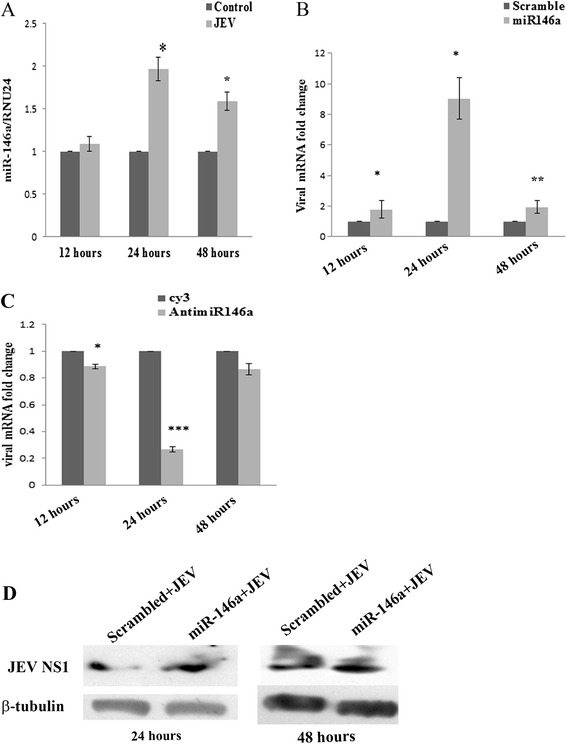
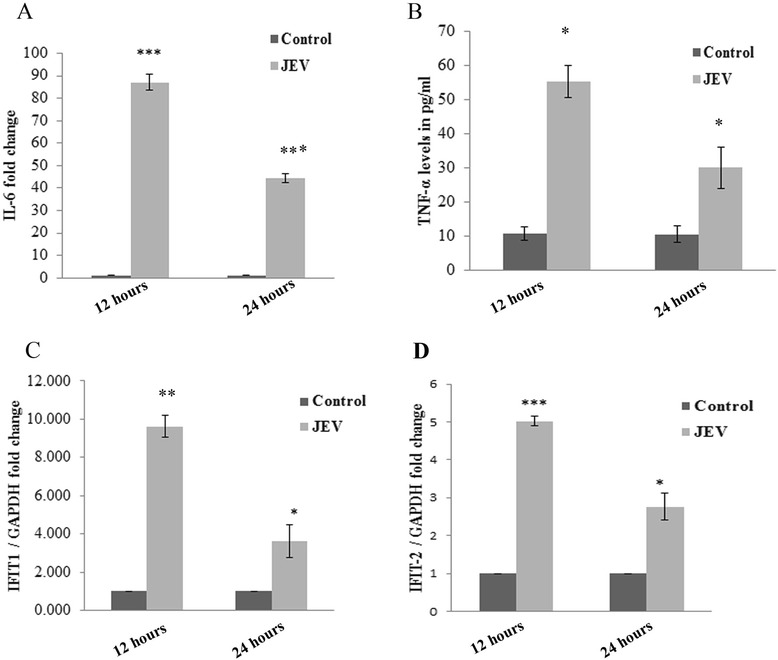
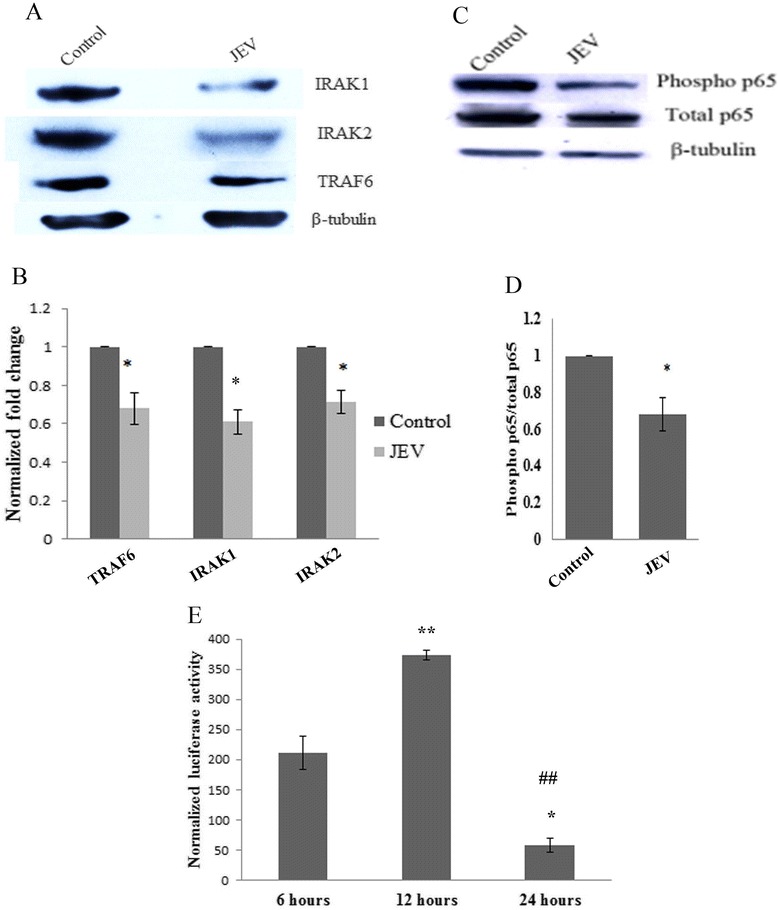
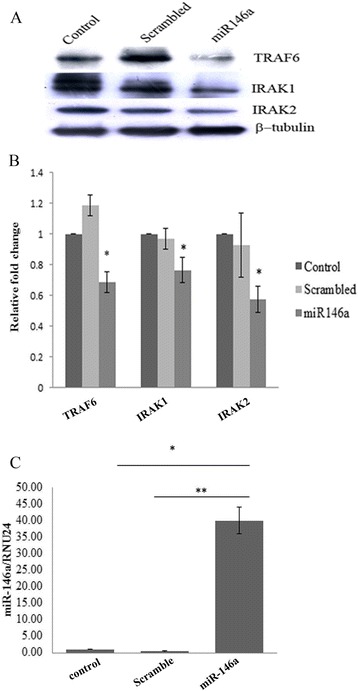
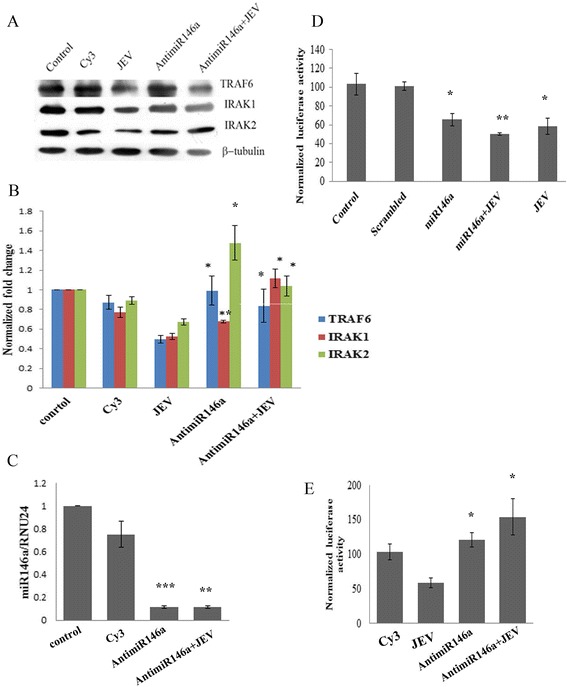
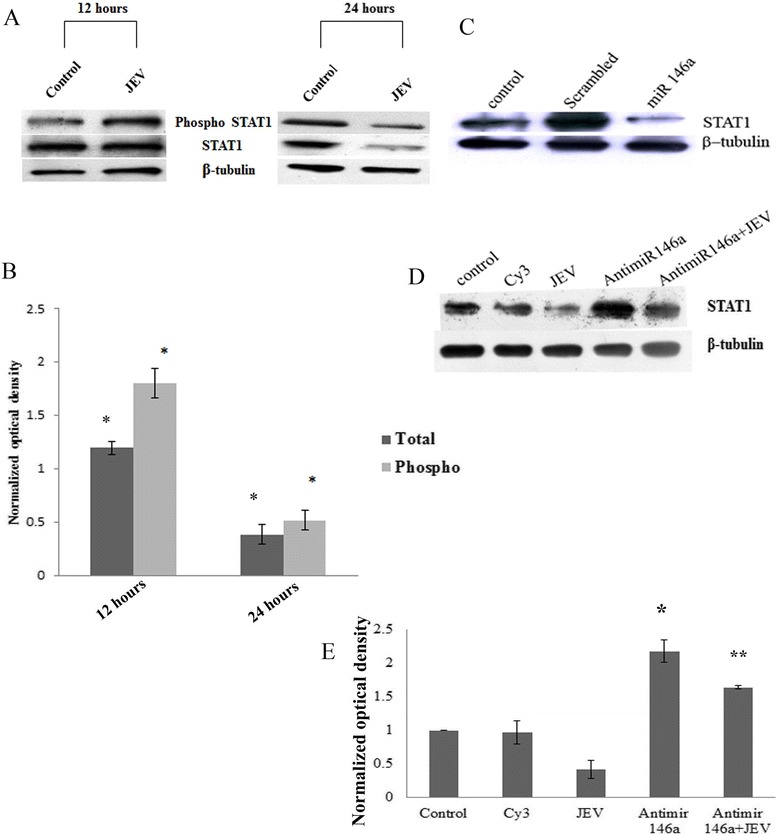
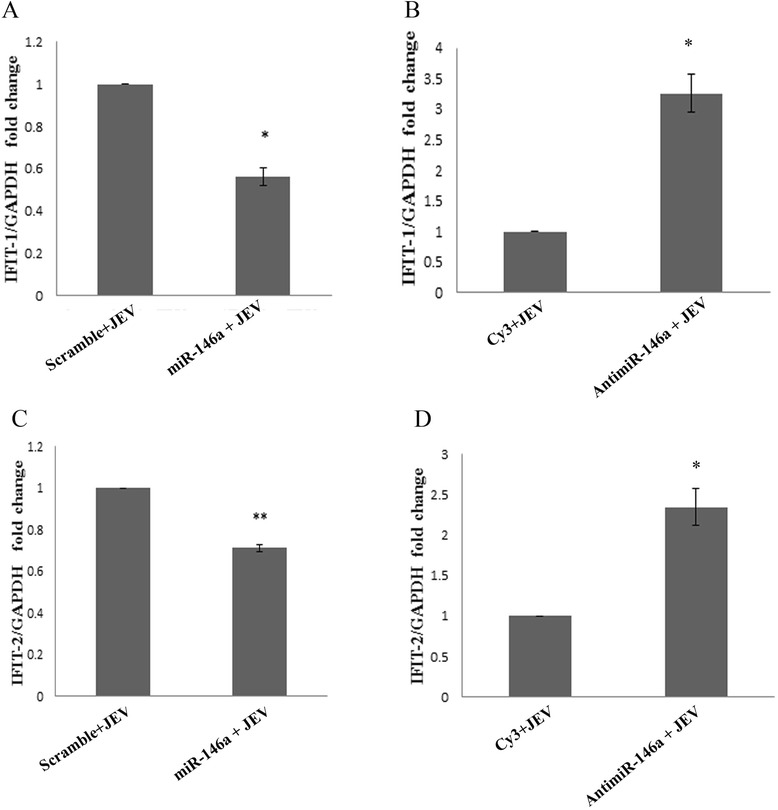
JEV infection elevated the expression of miR-146a in JaOArS982 strain which caused downregulation of TRAF6, IRAK1, IRAK2, and STAT1 genes. Exogenous overexpression of miR-146a led to suppression of NF-κB activation and abrogation of Jak-STAT pathway upon JEV infection which led to downregulation of interferon-stimulated genes (IFIT-1 and IFIT-2) and facilitated viral replication. JEV infection initially upregulated cytokine production and activated STAT1 activity but STAT1 levels reduced at later time point, which led to the downregulation of interferon-stimulated genes.
Upregulation of miR-146a by JEV JaOArS982 strain leads to suppression of NF-κB activity and disruption of antiviral Jak-STAT signaling which helps the virus to evade the cellular immune response. This effect of JEV infection on miR-146a expression was found to be strain specific.
日本脑炎病毒(JEV)是日本脑炎的病原体,在南亚和东南亚更为流行。JEV是一种嗜神经性病毒,通过血管内皮细胞侵入大脑。JEV感染神经元和小胶质细胞,导致神经元损伤和炎症。然而,JEV也能逃避细胞免疫反应以在宿主细胞中存活。已知病毒可调节微小RNA的表达,而微小RNA又通过靶向抗病毒基因的表达来调节细胞免疫反应。本研究的目的是了解miR-146a在JEV感染期间的抗炎作用,这种作用有助于免疫逃逸。
用人脑小胶质细胞(CHME3)感染JEV的JaOArS982和P20778毒株,并分析miR-146a的表达。对miR-146a进行过表达和敲低研究,以观察其对NF-κB途径和抗病毒Jak-STAT途径的影响。通过实时PCR和荧光素酶测定确定miR-146a对干扰素刺激基因表达的调节作用。
JEV感染使JaOArS982毒株中miR-146a的表达升高,导致TRAF6、IRAK1、IRAK2和STAT1基因下调。miR-146a的外源性过表达导致JEV感染时NF-κB激活受到抑制,Jak-STAT途径被废除,从而导致干扰素刺激基因(IFIT-1和IFIT-2)下调并促进病毒复制。JEV感染最初上调细胞因子产生并激活STAT1活性,但在后期STAT1水平降低,导致干扰素刺激基因下调。
JEV JaOArS982毒株使miR-146a上调,导致NF-κB活性受到抑制,抗病毒Jak-STAT信号传导中断,这有助于病毒逃避细胞免疫反应。发现JEV感染对miR-146a表达的这种影响具有毒株特异性。