Gutknecht Michael, Geiger Julian, Joas Simone, Dörfel Daniela, Salih Helmut R, Müller Martin R, Grünebach Frank, Rittig Susanne M
Department of Internal Medicine II, Oncology, Hematology, Immunology, Rheumatology and Pulmology, University of Tübingen, Otfried-Müller-Str. 10, 72076, Tübingen, Germany.
Cell Commun Signal. 2015 Mar 24;13:19. doi: 10.1186/s12964-015-0099-5.
Dendritic cells (DC) are the most potent antigen-presenting cells (APC) with the unique ability to activate naïve T cells and to initiate and maintain primary immune responses. Immunosuppressive and anti-inflammatory stimuli on DC such as the cytokine IL-10 suppress the activity of the transcription factor NF-κB what results in downregulation of costimulatory molecules, MHC and cytokine production. Glycoprotein NMB (GPNMB) is a transmembrane protein, which acts as a coinhibitory molecule strongly inhibiting T cell responses if present on APC. Interestingly, its expression on human monocyte-derived dendritic cells (moDC) is dramatically upregulated upon treatment with IL-10 but also by the BCR-ABL tyrosine kinase inhibitors (TKI) imatinib, nilotinib or dasatinib used for the treatment of chronic myeloid leukemia (CML). However, the molecular mechanisms responsible for GPNMB overexpression are yet unknown.
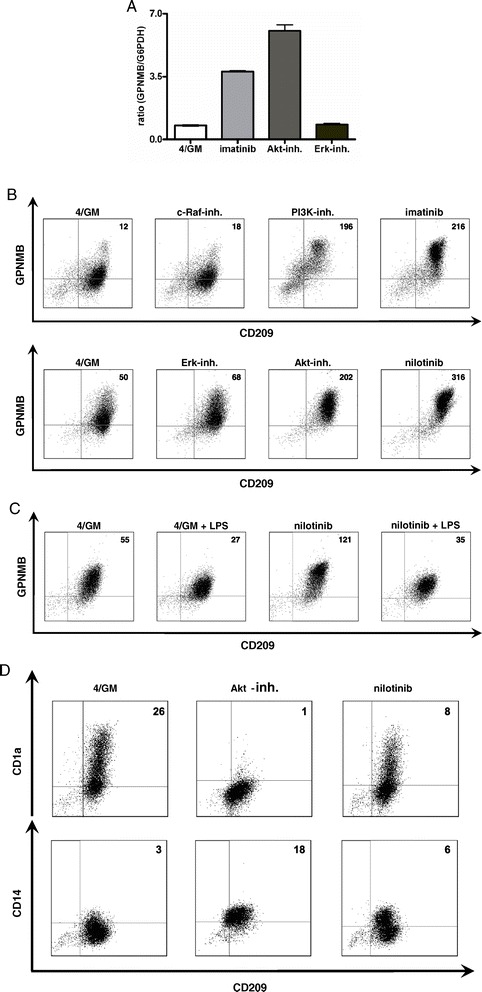
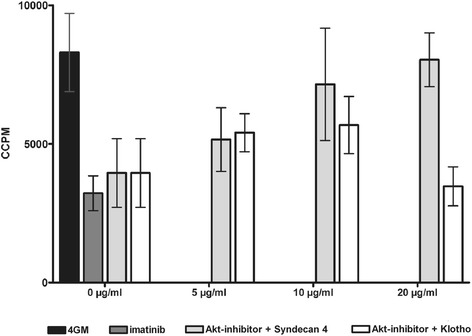
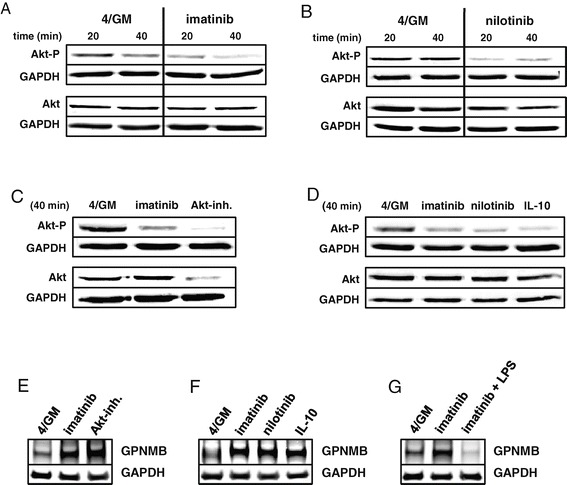
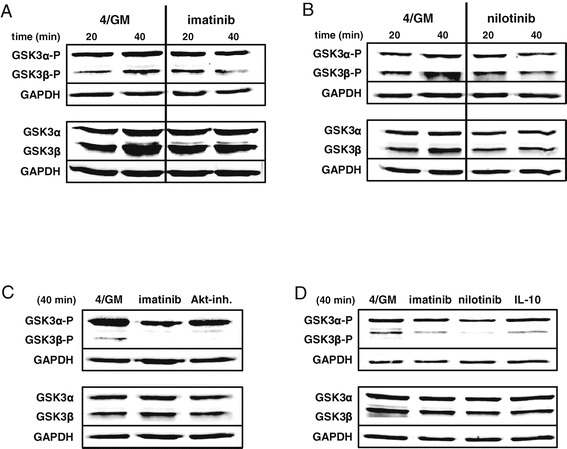
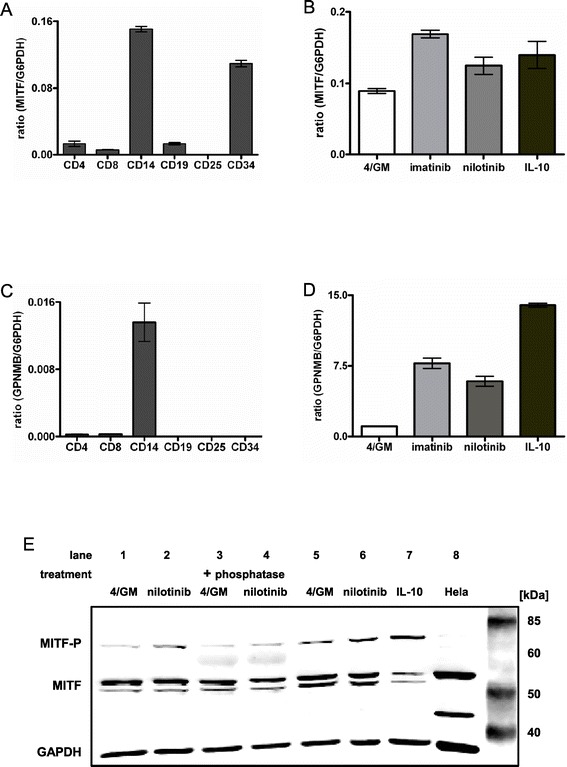
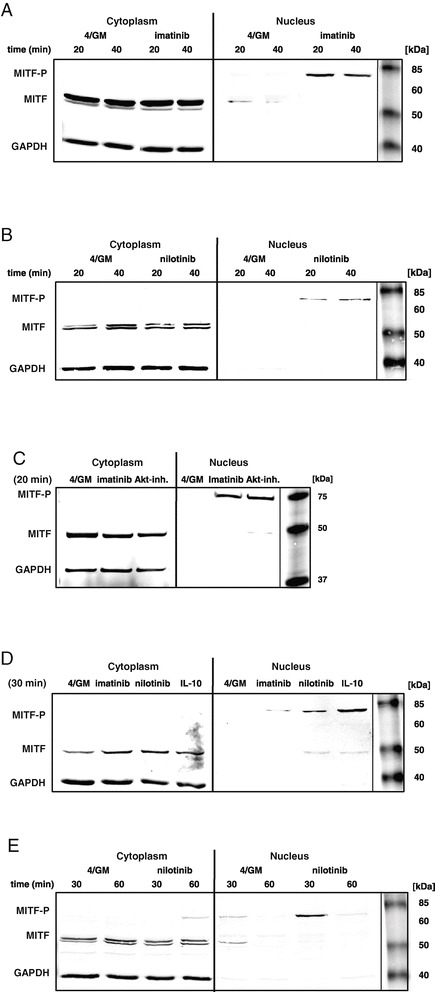
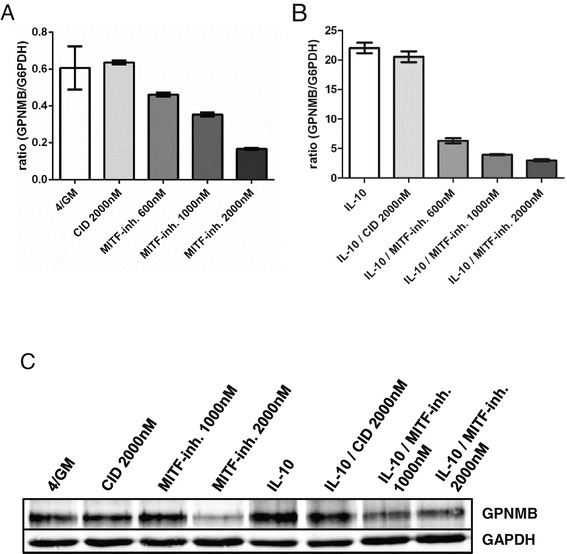
The immunosuppressive cytokine IL-10 and the BCR-ABL TKI imatinib or nilotinib, that were examined here, concordantly inhibit the PI3K/Akt signaling pathway, thereby activating the downstream serine/threonine protein kinase GSK3ß, and subsequently the microphthalmia-associated transcription factor (MITF) that is phosphorylated and translocated into the nucleus. Treatment of moDC with a small molecule inhibitor of MITF activity reduced the expression of GPNMB at the level of mRNA and protein, indicating that GPNMB expression is in fact facilitated by MITF activation. In line with these findings, PI3K/Akt inhibition was found to result in GPNMB overexpression accompanied by reduced stimulatory capacity of moDC in mixed lymphocyte reactions (MLR) with allogeneic T cells that could be restored by addition of the GPNMB T cell ligand syndecan-4 (SD-4).
In summary, imatinib, nilotinib or IL-10 congruently inhibit the PI3K/Akt signaling pathway thereby activating MITF in moDC, resulting in a tolerogenic phenotype. These findings extend current knowledge on the molecular mechanisms balancing activating and inhibitory signals in human DC and may facilitate the targeted manipulation of T cell responses in the context of DC-based immunotherapeutic interventions.
树突状细胞(DC)是最强大的抗原呈递细胞(APC),具有激活初始T细胞以及启动和维持初级免疫反应的独特能力。细胞因子IL-10等对DC的免疫抑制和抗炎刺激会抑制转录因子NF-κB的活性,导致共刺激分子、MHC和细胞因子产生下调。糖蛋白NMB(GPNMB)是一种跨膜蛋白,若存在于APC上,它作为共抑制分子强烈抑制T细胞反应。有趣的是,在用IL-10处理后,其在人单核细胞衍生树突状细胞(moDC)上的表达显著上调,在用治疗慢性髓性白血病(CML)的BCR-ABL酪氨酸激酶抑制剂(TKI)伊马替尼、尼罗替尼或达沙替尼处理后也会上调。然而,导致GPNMB过表达的分子机制尚不清楚。
本文研究的免疫抑制细胞因子IL-10以及BCR-ABL TKI伊马替尼或尼罗替尼一致抑制PI3K/Akt信号通路,从而激活下游丝氨酸/苏氨酸蛋白激酶GSK3β,随后激活被磷酸化并转运到细胞核中的小眼相关转录因子(MITF)。用MITF活性小分子抑制剂处理moDC会降低GPNMB在mRNA和蛋白水平的表达,表明GPNMB表达实际上是由MITF激活促进的。与这些发现一致,发现PI3K/Akt抑制导致GPNMB过表达,同时moDC在与同种异体T细胞的混合淋巴细胞反应(MLR)中的刺激能力降低,添加GPNMB T细胞配体Syndecan-4(SD-4)可恢复这种能力。
总之,伊马替尼、尼罗替尼或IL-10一致抑制PI3K/Akt信号通路,从而激活moDC中的MITF,导致产生耐受性表型。这些发现扩展了当前关于平衡人DC中激活和抑制信号的分子机制的知识,并可能有助于在基于DC的免疫治疗干预背景下对T细胞反应进行靶向操纵。