Thorell Maria, Fridorff-Jens Peter Kindt, Lassen Pia, Lange Theis, Kayser Lars
Centre for Online and Blended Learning, Faculty Administration, University of Copenhagen, Blegdamsvej 3 B, 2200, København N, Denmark.
Center of Evaluation, Faculty Administration, University of Copenhagen, Blegdamsvej 3 B, 2200, København N, Denmark.
BMC Med Educ. 2015 Mar 14;15:48. doi: 10.1186/s12909-015-0330-5.
Little is known of students' Information and Communication Technology (ICT) readiness in a learning context. Information about students' capabilities and resources is an important prerequisite for designing meaningful teaching and learning activities that engage and motivate students. To learn about health science students' usage of digital equipment, familiarity with software, online behavior and communication with the university, we have conducted a survey focusing on these areas.
A digital questionnaire was sent to 9134 health science students, of whom 1165 responded (12.8%).
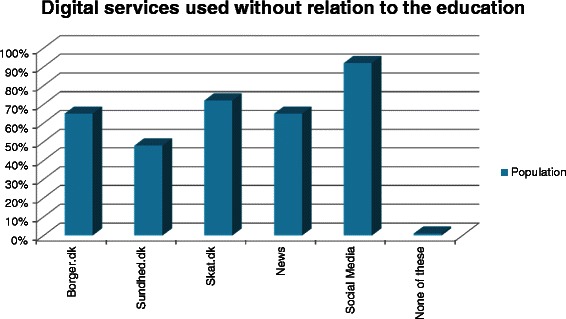
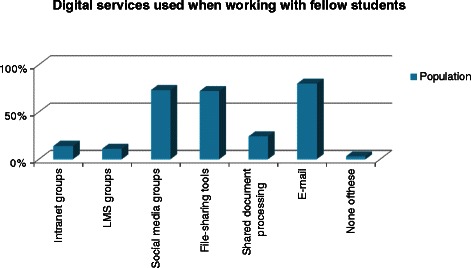
Almost all students owned a laptop (98.3%) and a smartphone (86.5%) and used these for internet access. The students were most familiar with typical office programs like word processing and spread sheets. Students used social media in their private lives but to a lesser extent in relation to their studies; they also experienced that their teachers made limited use of these media. The most commonly used tool for working with fellow students was email (80%) and for communication, SMS (47.6%). An age difference was found in relation to the way students communicated with each other. The mean age of chat users was 23.8 (Standard deviation 3.7) years, SMS users, 25 (Standard deviation 4.2) years and email users, 27.9 (Standard deviation 6.5) years. Over half of the students (53.4%) found that the degree of ICT incorporated in the teaching and learning activities was insufficient to provide them with the skills necessary in their future profession.
Although a large percentage of the students had access to the internet, reported familiarity with basic software and used online services in their private lives, they were unfamiliar with the software and services they were expected to use in their studies. The students experienced that teachers did not use internet resources, which apparently influenced their perception of the importance of, and thereby their usage of, these services. The way the younger students communicate differs from the way communication takes place at the university, and it is recommended that the institutions should look into how they can meet the students in ways they are familiar with.
在学习环境中,对于学生的信息通信技术(ICT)准备情况了解甚少。有关学生能力和资源的信息是设计有意义的教学活动以吸引和激励学生的重要前提。为了了解健康科学专业学生对数字设备的使用情况、对软件的熟悉程度、在线行为以及与大学的沟通情况,我们针对这些领域开展了一项调查。
向9134名健康科学专业学生发送了一份数字问卷,其中1165人回复(12.8%)。
几乎所有学生都拥有一台笔记本电脑(98.3%)和一部智能手机(86.5%),并使用它们访问互联网。学生们最熟悉诸如文字处理和电子表格等典型办公程序。学生们在私人生活中使用社交媒体,但在学习方面使用程度较低;他们还发现老师对这些媒体的使用有限。与同学协作最常用的工具是电子邮件(80%),用于交流的是短信(47.6%)。在学生相互交流的方式上发现了年龄差异。使用聊天工具的学生平均年龄为23.8岁(标准差3.7),使用短信的学生平均年龄为25岁(标准差4.2),使用电子邮件的学生平均年龄为27.9岁(标准差6.5)。超过一半的学生(53.4%)认为教学活动中融入的ICT程度不足以让他们获得未来职业所需的技能。
尽管很大比例 的学生能够访问互联网,报告称熟悉基本软件并在私人生活中使用在线服务,但他们不熟悉预期在学习中使用的软件和服务。学生们发现老师不使用互联网资源,这显然影响了他们对这些服务重要性的认知,进而影响了他们对这些服务的使用。年轻学生的交流方式与大学中的交流方式不同,建议院校研究如何以学生熟悉的方式与他们接触。