Galenkamp Koen Mo, Carriba Paulina, Urresti Jorge, Planells-Ferrer Laura, Coccia Elena, Lopez-Soriano Joaquín, Barneda-Zahonero Bruna, Moubarak Rana S, Segura Miguel F, Comella Joan X
Cell Signaling and Apoptosis Group, Fundacio Institut de Recerca de l'Hospital Universitari de la Vall d'Hebron, Edifici Collserola, Passeig Vall d'Hebron 119-129, 08035, Barcelona, Spain.
Laboratory of Translational Research in Pediatric Cancer, Fundacio Institut de Recerca de l'Hospital Universitari de la Vall d'Hebron, Edifici Collserola, Passeig Vall d'Hebron 119-129, 08035, Barcelona, Spain.
Mol Cancer. 2015 Mar 19;14:62. doi: 10.1186/s12943-015-0329-x.
Patients with high-risk neuroblastoma (NBL) tumors have a high mortality rate. Consequently, there is an urgent need for the development of new treatments for this condition. Targeting death receptor signaling has been proposed as an alternative to standard chemo- and radio-therapies in various tumors. In NBL, this therapeutic strategy has been largely disregarded, possibly because ~50-70% of all human NBLs are characterized by caspase-8 silencing. However, the expression of caspase-8 is detected in a significant group of NBL patients, and they could therefore benefit from treatments that induce cell death through death receptor activation. Given that cytokines, such as TNFα, are able to upregulate Fas expression, we sought to address the therapeutic relevance of co-treatment with TNFα and FasL in NBL.
For the purpose of the study we used a set of eight NBL cell lines. Here we explore the cell death induced by TNFα, FasL, cisplatin, and etoposide, or a combination thereof by Hoechst staining and calcein viability assay. Further assessment of the signaling pathways involved was performed by caspase activity assays and Western blot experiments. Characterization of Fas expression levels was achieved by qRT-PCR, cell surface biotinylation assays, and cytometry.
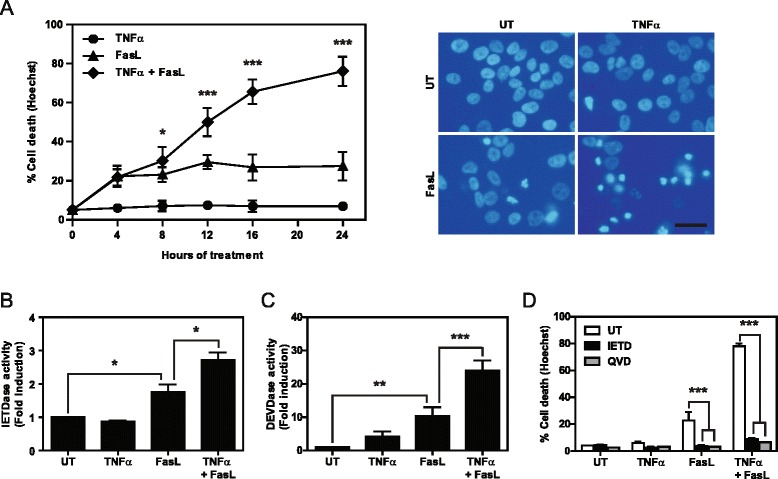
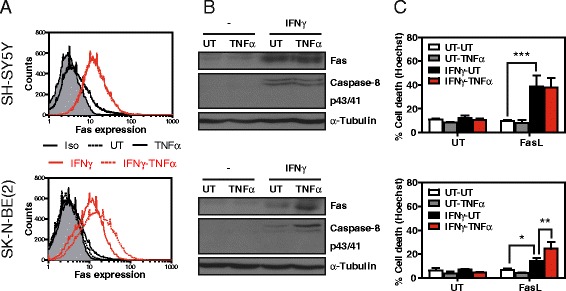
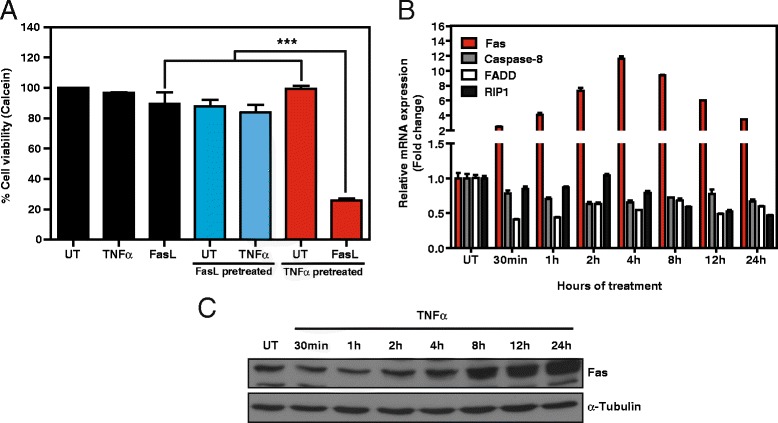
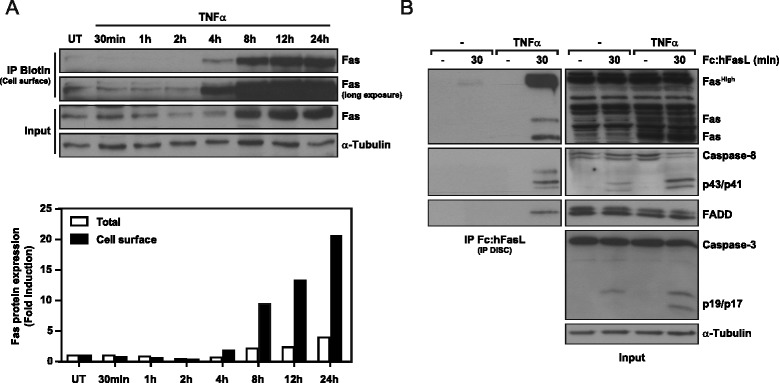
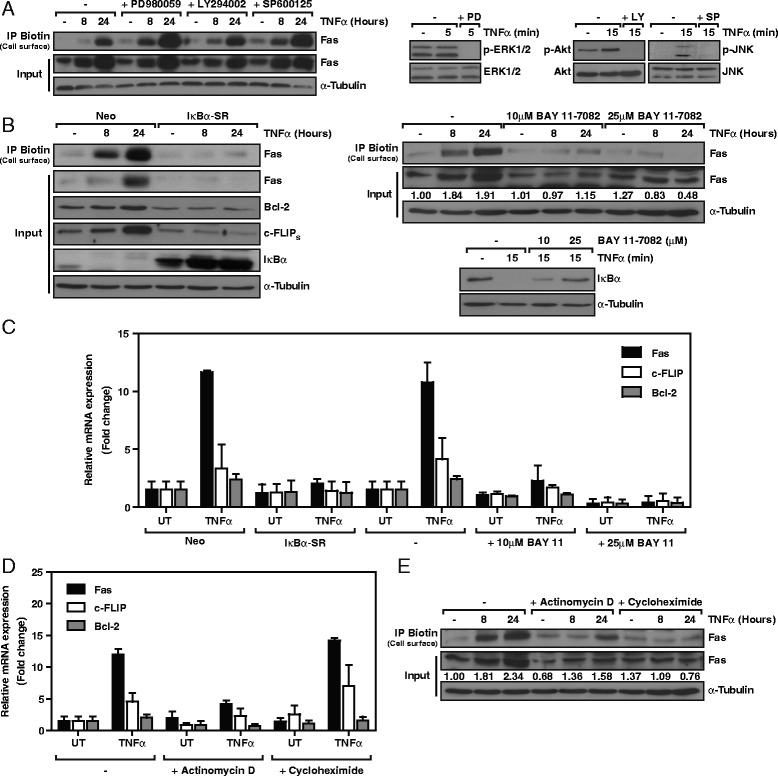
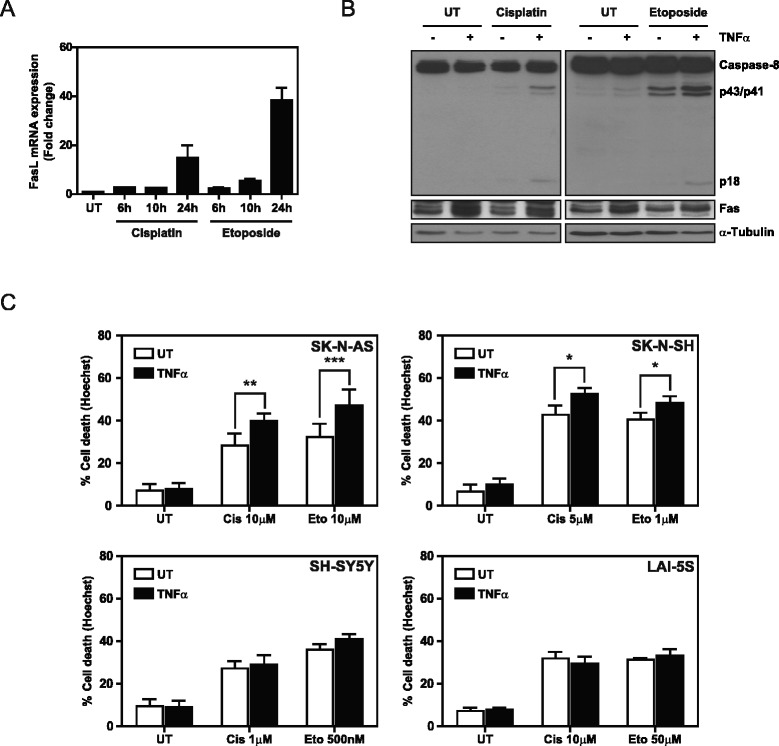
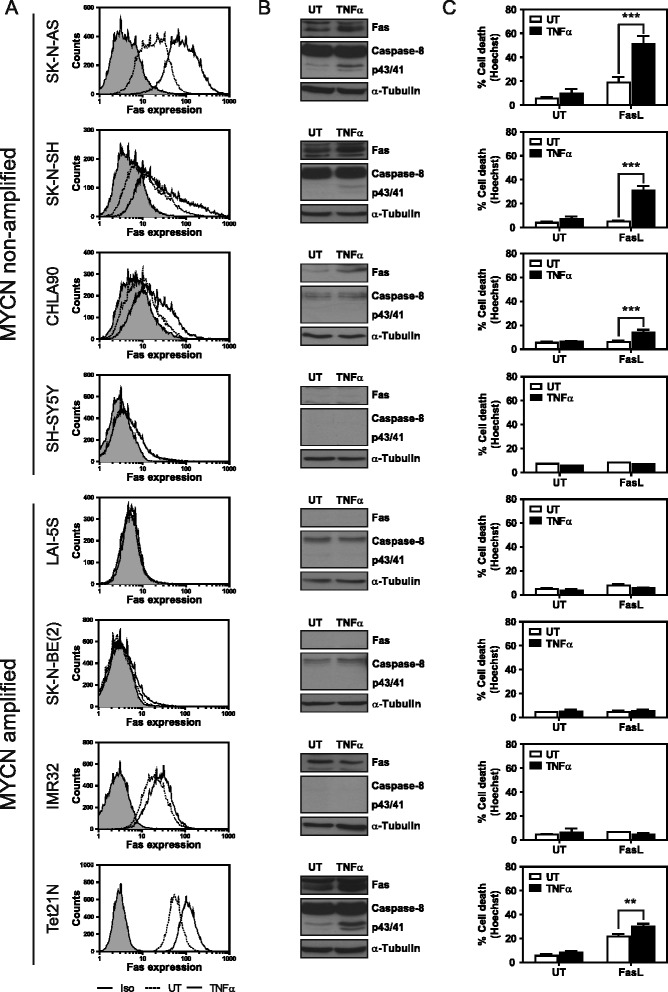
We have found that TNFα is able to increase FasL-induced cell death by a mechanism that involves the NF-κB-mediated induction of the Fas receptor. Moreover, TNFα sensitized NBL cells to DNA-damaging agents (i.e. cisplatin and etoposide) that induce the expression of FasL. Priming to FasL-, cisplatin-, and etoposide-induced cell death could only be achieved in NBLs that display TNFα-induced upregulation of Fas. Further analysis denotes that the high degree of heterogeneity between NBLs is also manifested in Fas expression and modulation thereof by TNFα.
In summary, our findings reveal that TNFα sensitizes NBL cells to FasL-induced cell death by NF-κB-mediated upregulation of Fas and unveil a new mechanism through which TNFα enhances the efficacy of currently used NBL treatments, cisplatin and etoposide.
高危神经母细胞瘤(NBL)患者死亡率很高。因此,迫切需要开发针对这种疾病的新疗法。在各种肿瘤中,靶向死亡受体信号传导已被提议作为标准化学疗法和放射疗法的替代方案。在NBL中,这种治疗策略在很大程度上被忽视了,可能是因为约50-70%的人类NBL的特征是半胱天冬酶-8沉默。然而,在相当一部分NBL患者中检测到了半胱天冬酶-8的表达,因此他们可能受益于通过激活死亡受体诱导细胞死亡的治疗方法。鉴于细胞因子(如TNFα)能够上调Fas表达,我们试图探讨TNFα和FasL联合治疗在NBL中的治疗相关性。
为了进行这项研究,我们使用了一组8种NBL细胞系。在这里,我们通过Hoechst染色和钙黄绿素活力测定法,探索TNFα、FasL、顺铂和依托泊苷或它们的组合诱导的细胞死亡。通过半胱天冬酶活性测定和蛋白质印迹实验,对所涉及的信号通路进行了进一步评估。通过qRT-PCR、细胞表面生物素化测定和细胞计数法对Fas表达水平进行了表征。
我们发现TNFα能够通过一种涉及NF-κB介导的Fas受体诱导的机制,增加FasL诱导的细胞死亡。此外,TNFα使NBL细胞对诱导FasL表达的DNA损伤剂(即顺铂和依托泊苷)敏感。只有在显示TNFα诱导Fas上调的NBL中,才能引发对FasL、顺铂和依托泊苷诱导的细胞死亡。进一步分析表明,NBL之间的高度异质性也体现在Fas表达及其被TNFα调节方面。
总之,我们的研究结果表明,TNFα通过NF-κB介导的Fas上调使NBL细胞对FasL诱导的细胞死亡敏感,并揭示了TNFα增强目前使用的NBL治疗药物顺铂和依托泊苷疗效的新机制。