Ma Si-Min, Chen Long-Xia, Lin Yi-Feng, Yan Hu, Lv Jing-Wen, Xiong Man, Li Jin, Cheng Guo-Qiang, Yang Yi, Qiu Zi-Long, Zhou Wen-Hao
Department of Neonatology, Children's Hospital of Fudan University, Shanghai, China; Key Laboratory of Neonatal Diseases, Ministry of Health, Children's Hospital of Fudan University, Shanghai, China.
Key Laboratory of Birth Defect, Children's Hospital of Fudan University, Shanghai, China; Key Laboratory of Neonatal Diseases, Ministry of Health, Children's Hospital of Fudan University, Shanghai, China.
PLoS One. 2015 Apr 20;10(4):e0123585. doi: 10.1371/journal.pone.0123585. eCollection 2015.
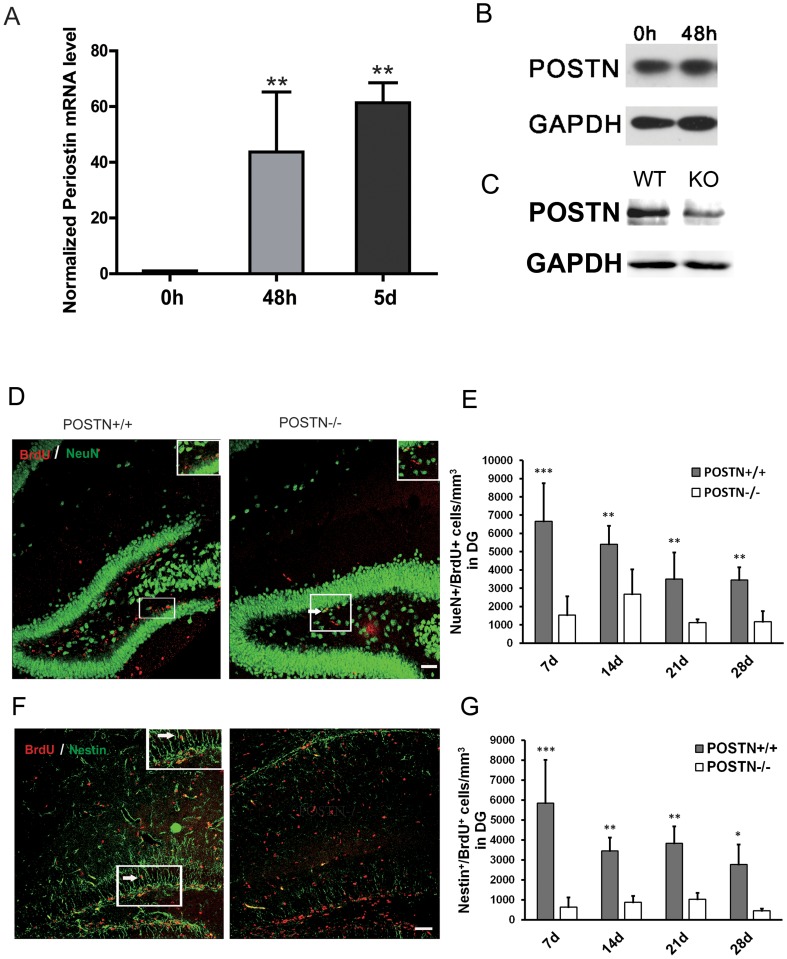
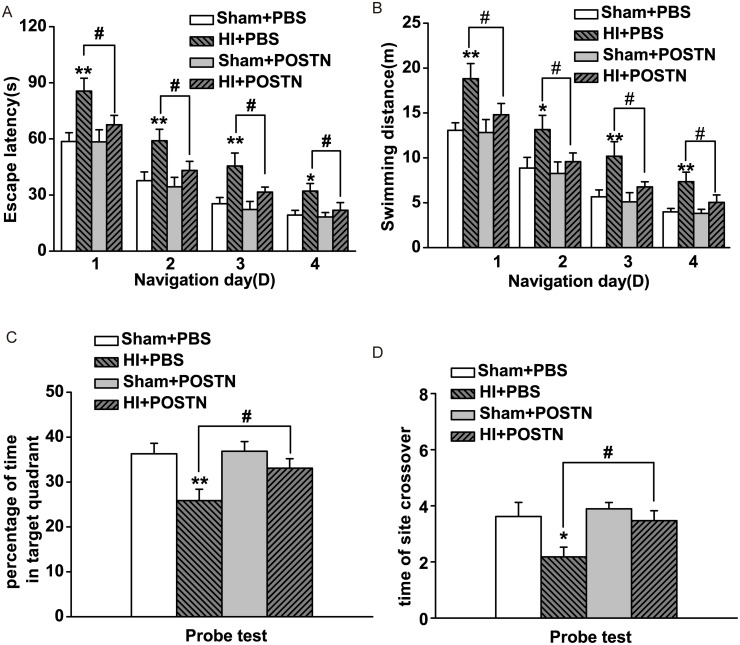
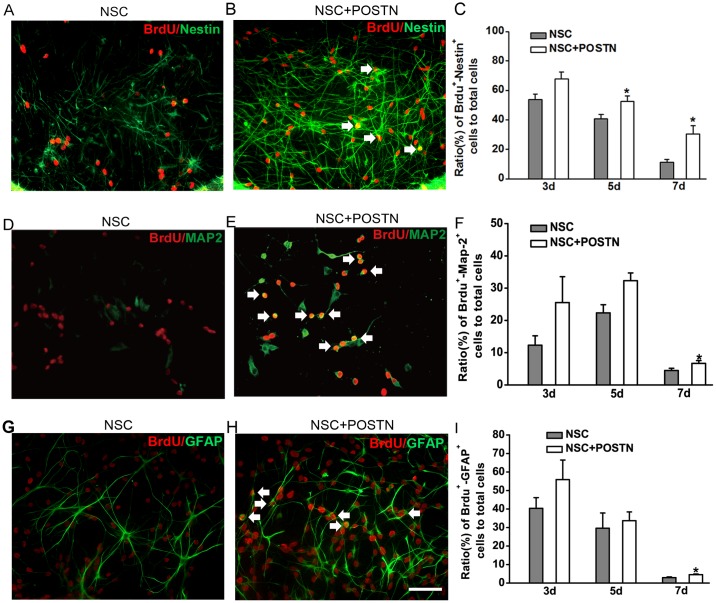
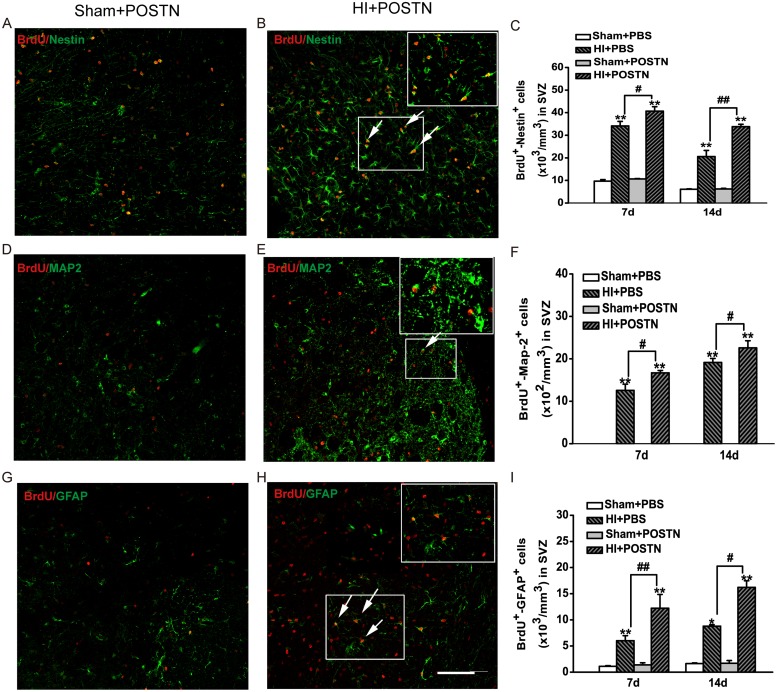
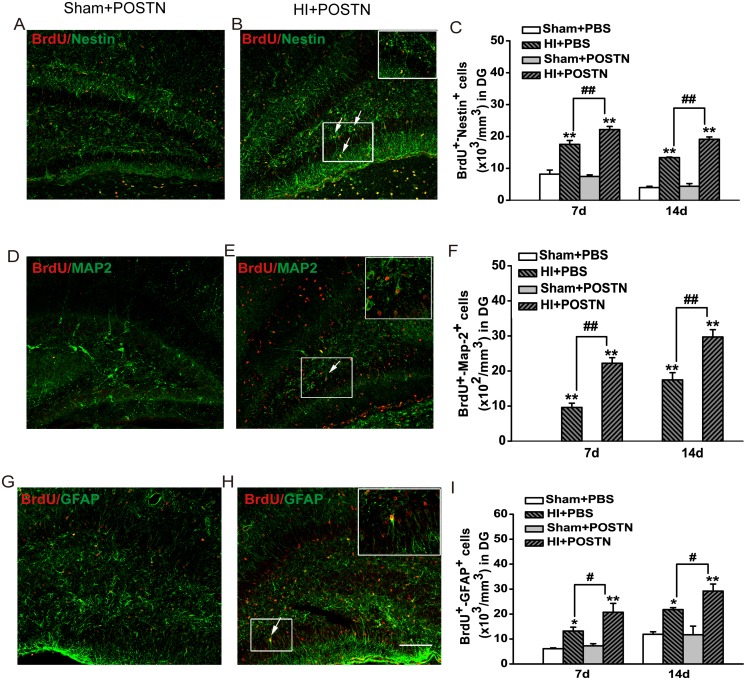
Neural stem cell (NSC) proliferation and differentiation are required to replace neurons damaged or lost after hypoxic-ischemic events and recover brain function. Periostin (POSTN), a novel matricellular protein, plays pivotal roles in the survival, migration, and regeneration of various cell types, but its function in NSCs of neonatal rodent brain is still unknown. The purpose of this study was to investigate the role of POSTN in NSCs following hypoxia-ischemia (HI). We found that POSTN mRNA levels significantly increased in differentiating NSCs. The proliferation and differentiation of NSCs in the hippocampus is compromised in POSTN knockout mice. Moreover, NSC proliferation and differentiation into neurons and astrocytes significantly increased in cultured NSCs treated with recombinant POSTN. Consistently, injection of POSTN into neonatal hypoxic-ischemic rat brains stimulated NSC proliferation and differentiation in the subventricular and subgranular zones after 7 and 14 days of brain injury. Lastly, POSTN treatment significantly improved the spatial learning deficits of rats subjected to HI. These results suggest that POSTN significantly enhances NSC proliferation and differentiation after HI, and provides new insights into therapeutic strategies for the treatment of hypoxic-ischemic encephalopathy.
神经干细胞(NSC)的增殖和分化对于替代缺氧缺血性事件后受损或丢失的神经元以及恢复脑功能是必需的。骨膜蛋白(POSTN)是一种新型的基质细胞蛋白,在各种细胞类型的存活、迁移和再生中起关键作用,但其在新生啮齿动物脑NSC中的功能仍不清楚。本研究的目的是探讨POSTN在缺氧缺血(HI)后NSC中的作用。我们发现,在分化的NSC中,POSTN mRNA水平显著升高。在POSTN基因敲除小鼠中,海马区NSC的增殖和分化受到损害。此外,用重组POSTN处理的培养NSC中,NSC增殖以及向神经元和星形胶质细胞的分化显著增加。同样,在新生缺氧缺血大鼠脑内注射POSTN可在脑损伤7天和14天后刺激脑室下区和颗粒下区的NSC增殖和分化。最后,POSTN治疗显著改善了HI大鼠的空间学习缺陷。这些结果表明,POSTN显著增强了HI后NSC的增殖和分化,并为缺氧缺血性脑病的治疗策略提供了新的见解。