Kipfmueller Florian, Schneider Jessica, Prusseit Julia, Dimitriou Ioanna, Zur Berndt, Franz Axel R, Bartmann Peter, Mueller Andreas
Department of Neonatology and Pediatric Critical Care, University Children's Hospital Bonn, Bonn, Germany.
Department of Medical Biometry, Informatics and Epidemiology, University Hospital Bonn, Bonn, Germany.
PLoS One. 2015 Apr 20;10(4):e0124634. doi: 10.1371/journal.pone.0124634. eCollection 2015.
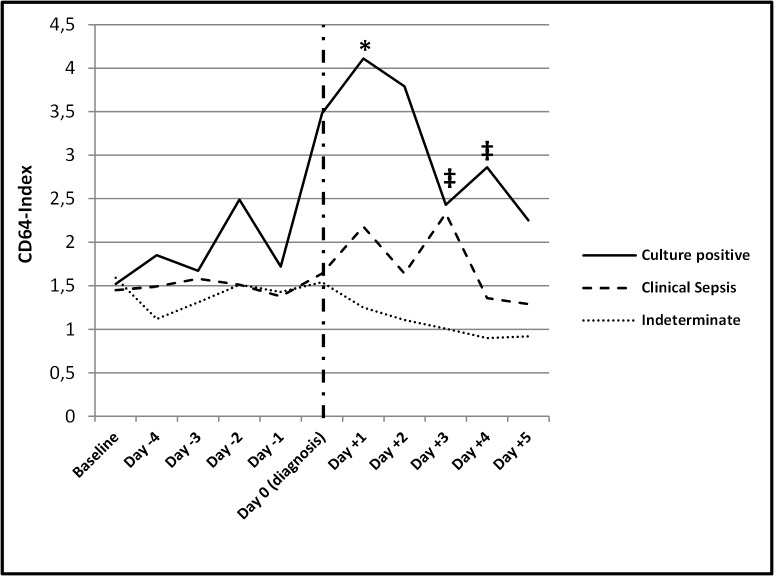
The role of CD64 in late onset sepsis (LOS) in preterm infants has been described in several studies. Aim of this study was to investigate whether CD64 expression is increased in the days before clinical manifestation of LOS.
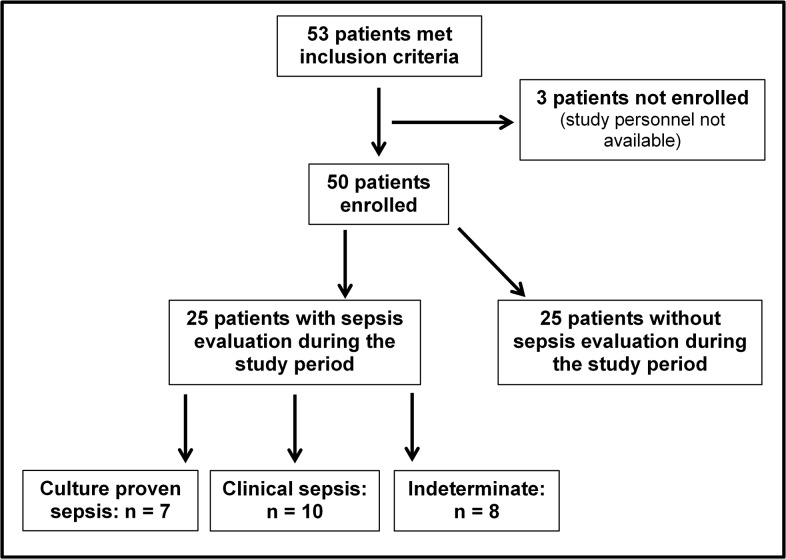
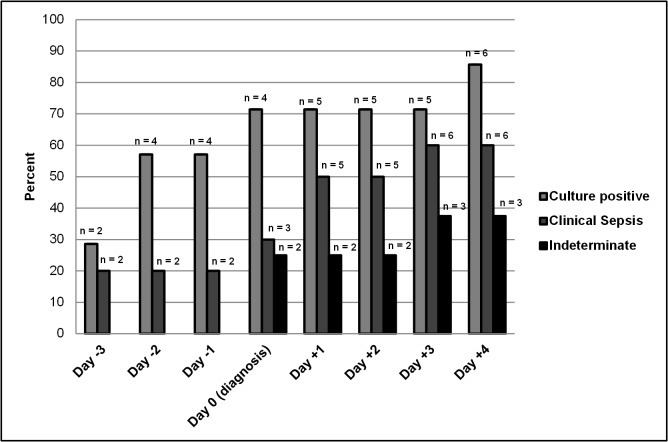
Patients with birth weight below 1,500 g were eligible for study participation. During routine blood sampling CD64 index was determined between day of life 4 and 28. Patients were allocated to one of four groups: (1) blood-culture positive sepsis, (2) clinical sepsis, (3) symptoms of infection without biochemical evidence of infection, or (4) patients without suspected infection. Kinetics of CD64 expression were compared during a period before and after the day of infection in the respective groups.
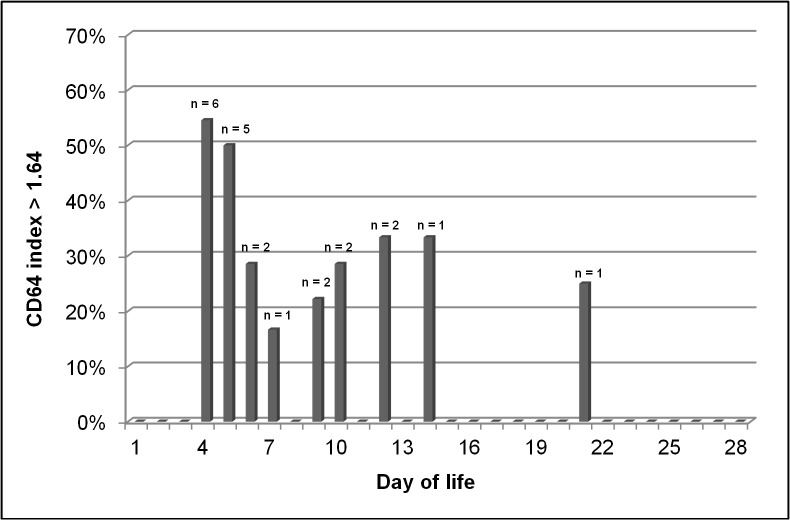
50 infants were prospectively enrolled and allocated to each group as follows: group (1) n = 7; group (2) n = 10; group (3) n = 8; and group (4) n = 25. CD64 index was elevated in 57% of patients in group (1) at least two days before infection. In contrast only 20% in the clinical sepsis group and 0% in group (3) had an elevated CD64 index in the days before infection. 10 of the 25 patients in the control group (4) presented increased CD64 index values during the study period.
The CD64 index might be a promising marker to detect LOS before infants demonstrate signs or symptoms of infection. However, larger prospective studies are needed to define optimal cut-off values and to investigate the role of non-infectious inflammation in this patient group.
多项研究描述了CD64在早产儿晚发性败血症(LOS)中的作用。本研究的目的是调查在LOS临床表现出现前的几天内CD64表达是否增加。
出生体重低于1500克的患者符合研究参与条件。在出生后第4天至28天进行常规血液采样时测定CD64指数。患者被分为四组之一:(1)血培养阳性败血症,(2)临床败血症,(3)有感染症状但无感染生化证据,或(4)无疑似感染的患者。比较各相应组在感染日之前和之后一段时间内CD64表达的动力学。
前瞻性纳入50例婴儿并按如下方式分配到每组:组(1)n = 7;组(2)n = 10;组(3)n = 8;组(4)n = 25。组(1)中57%的患者在感染前至少两天CD64指数升高。相比之下,临床败血症组中只有20%,组(3)中0%在感染前几天CD64指数升高。对照组(4)的25例患者中有10例在研究期间CD64指数值升高。
CD64指数可能是在婴儿出现感染体征或症状之前检测LOS的一个有前景的标志物。然而,需要更大规模的前瞻性研究来确定最佳临界值,并调查非感染性炎症在该患者群体中的作用。