Seo Kazunori, Kitazawa Takatoshi, Yoshino Yusuke, Koga Ichiro, Ota Yasuo
Department of Internal Medicine, Teikyo University, Tokyo, Japan.
PLoS One. 2015 Apr 20;10(4):e0123358. doi: 10.1371/journal.pone.0123358. eCollection 2015.
Endocan is a newly recognized biomarker of sepsis. However, there have been no studies of the trends in endocan levels during infection and their associations with other clinical factors. The aim of this study was to assess the time course of endocan levels and the associations of endocan with clinical factors during infection by comparison with other biomarkers.
Serum samples and blood cultures were obtained from patients who were diagnosed with infection from June 2013 to March 2014. Serum endocan, C-reactive protein (CRP), and procalcitonin (PCT) levels during four periods during infection were measured (day 0, day 1-2, day 3-5, and day 6-10).
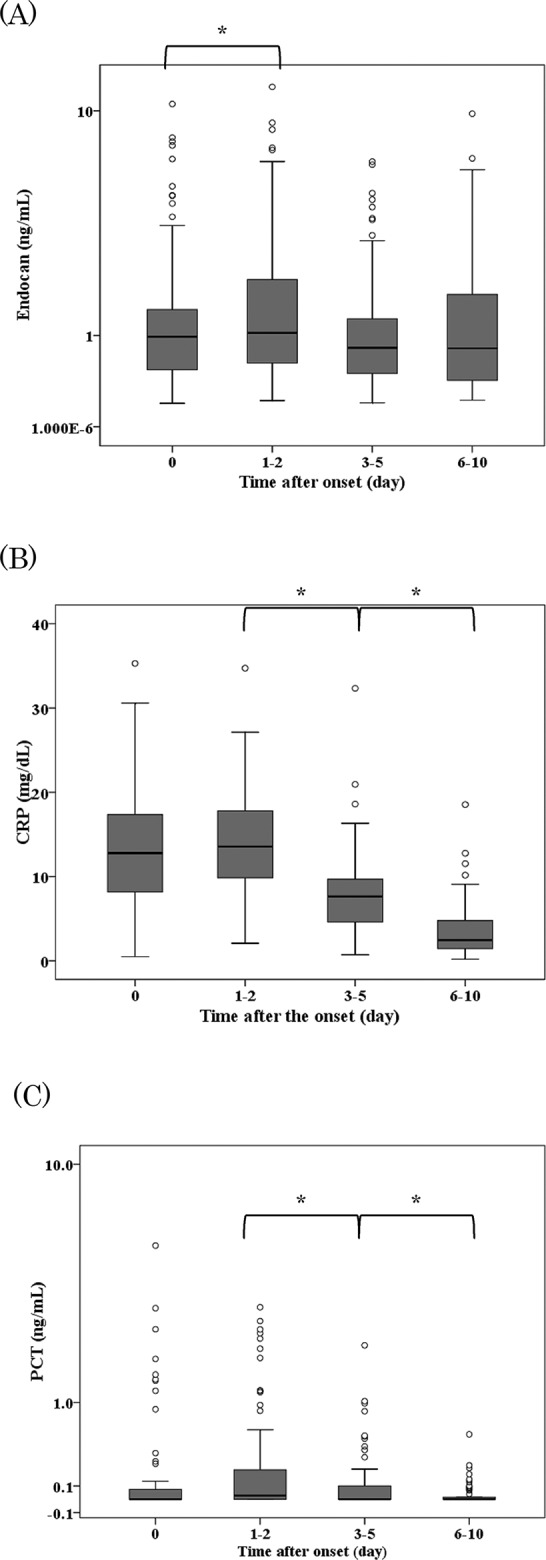
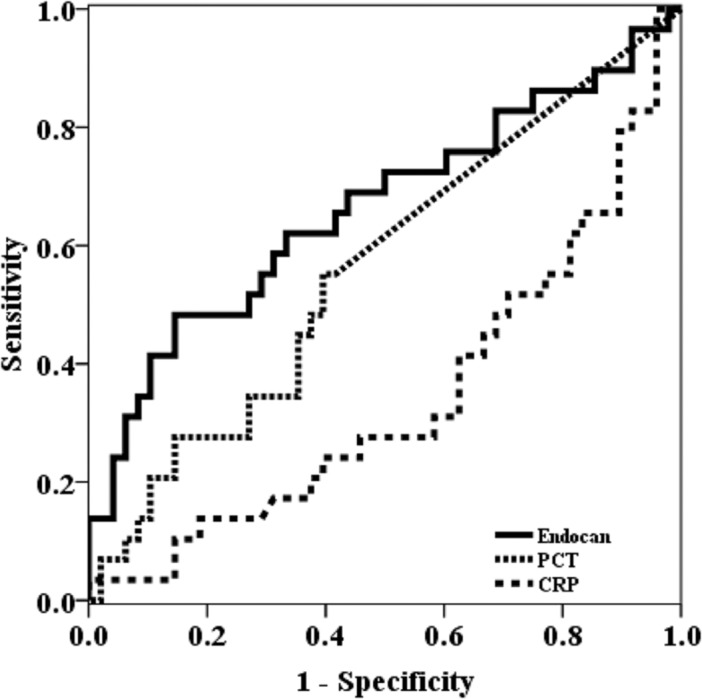
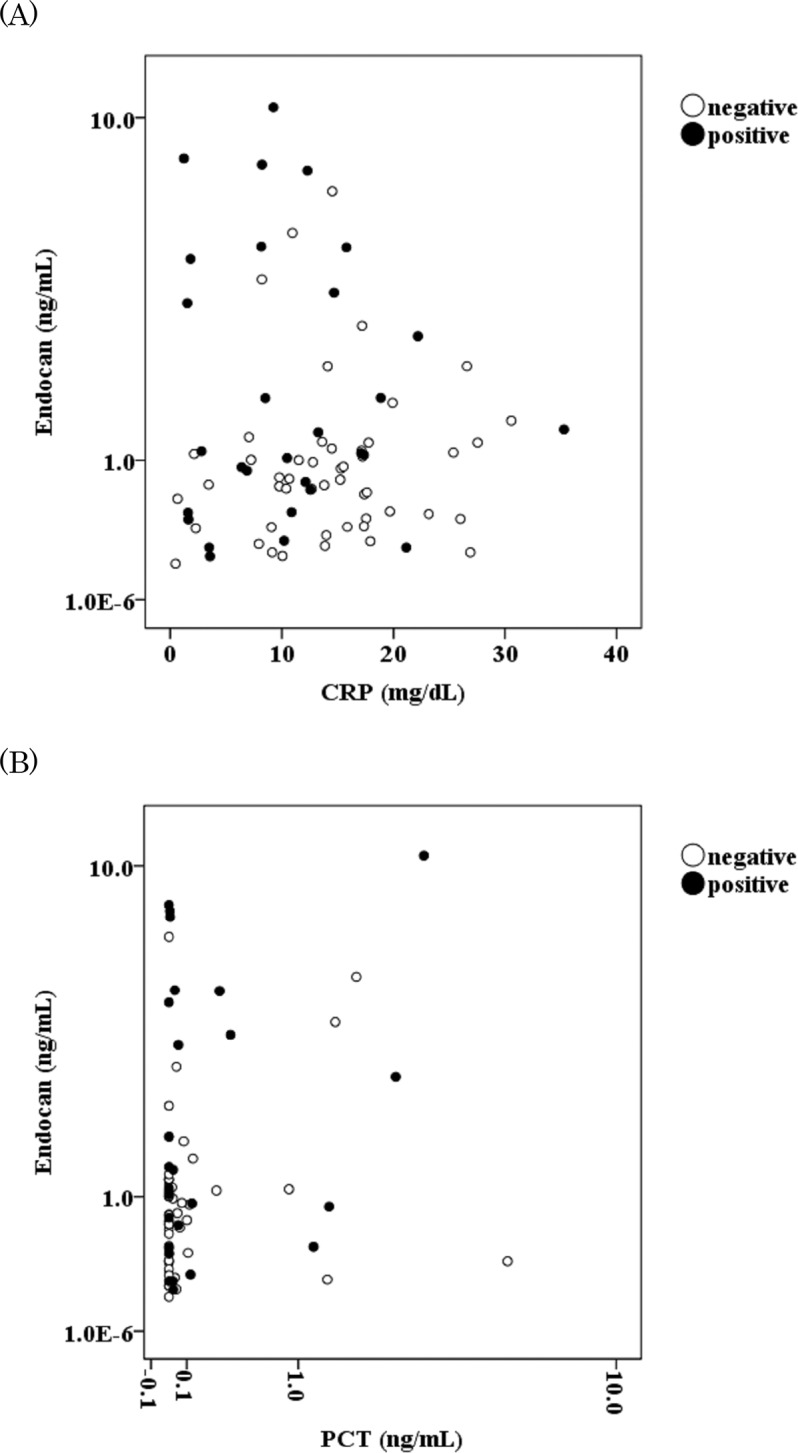
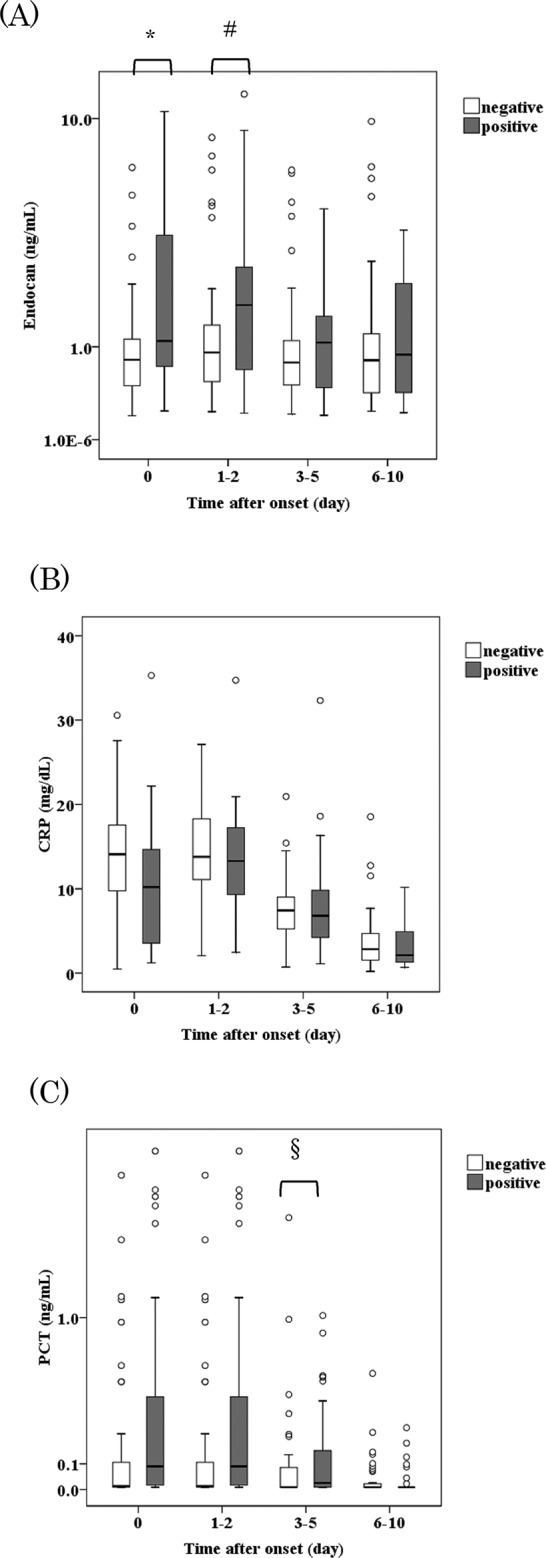
A total of 78 patients were enrolled in this study. The median endocan level decreased by only 23% during infection, whereas both serum CRP and PCT levels decreased by more than 80%. Endocan levels were correlated to neither CRP levels nor PCT levels in each period. Endocan levels at day 0 in patients with bacteremia were higher than those without bacteremia (1.09 ng/mL vs 0.82 ng/mL, P=0.002), but neither CRP levels nor PCT levels at day 0 were different between the two groups. Areas under the receiver operator characteristic (ROC) curves of endocan, CRP, and PCT at day 0 were 0.662, 0.343, and 0.563, respectively. Positive blood cultures tended to be related to high endocan levels, but not significantly (odds ratio: 4.24, 95% CI: 0.99-10.34, P=0.05).
In bacteremic cases, serum endocan levels in bacteremia tended to be higher than in non-bacteremic cases. Although endocan level was not identified as a prognostic factor of bacteremia, further prospective study concerning the relationship between serum endocan level and bacteremia would be needed.
内皮糖蛋白是一种新发现的脓毒症生物标志物。然而,尚未有关于感染期间内皮糖蛋白水平变化趋势及其与其他临床因素相关性的研究。本研究旨在通过与其他生物标志物比较,评估感染期间内皮糖蛋白水平的时间进程以及内皮糖蛋白与临床因素的相关性。
采集2013年6月至2014年3月期间诊断为感染的患者的血清样本和血培养标本。检测感染期间四个时间段(第0天、第1 - 2天、第3 - 5天和第6 - 10天)的血清内皮糖蛋白、C反应蛋白(CRP)和降钙素原(PCT)水平。
本研究共纳入78例患者。感染期间内皮糖蛋白水平中位数仅下降23%,而血清CRP和PCT水平下降超过80%。各时间段内皮糖蛋白水平与CRP水平及PCT水平均无相关性。菌血症患者第0天的内皮糖蛋白水平高于无菌血症患者(1.09 ng/mL对0.82 ng/mL,P = 0.002),但两组第0天的CRP水平和PCT水平均无差异。第0天内皮糖蛋白、CRP和PCT的受试者工作特征(ROC)曲线下面积分别为0.662、0.343和0.563。血培养阳性倾向于与高内皮糖蛋白水平相关,但无显著相关性(比值比:4.24,95%可信区间:0.99 - 10.34,P = 0.05)。
在菌血症病例中,菌血症患者的血清内皮糖蛋白水平往往高于非菌血症患者。虽然内皮糖蛋白水平未被确定为菌血症的预后因素,但仍需要进一步进行关于血清内皮糖蛋白水平与菌血症关系的前瞻性研究。