Utheim Nils Christian, Josefsen Roger, Nakstad Per Hjalmar, Solgaard Torfinn, Roise Olav
Department of Neurosurgery, Division of Surgery and Neuroscience, Oslo University Hospital, Oslo, Norway.
Department of Neuroradiology, Division of Diagnostics and Intervention, Oslo University Hospital, Oslo, Norway ; Institute of Clinical Medicine, Faculty of Medicine, University of Oslo, Oslo, Norway.
J Trauma Manag Outcomes. 2015 Apr 11;9:2. doi: 10.1186/s13032-015-0024-3. eCollection 2015.
Lower cranial nerve (IX-XII) palsy is a rare condition with numerous causes, usually non-traumatic. In the literature it has been described only a few times after trauma, mostly accompanied by a fracture of the occipital condyle. Although these types of fractures have rarely been reported one could suspect they have been under-diagnosed. During the past decade they have been seen more frequently, most probably due to increased use of CT- and MRI-scanning. The purpose of this review is to increase the awareness of complications following injuries in the craniocervical region.
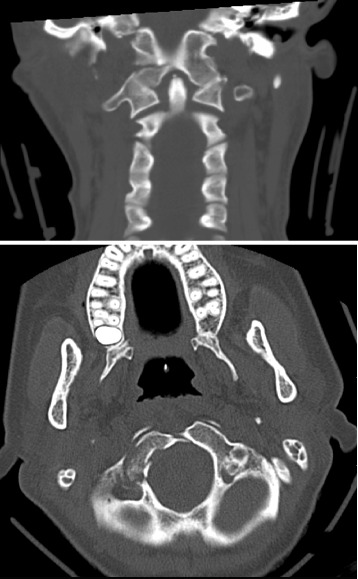
We based this article on a retrospective review of the medical record of a 24-year old woman admitted to our trauma center after being involved in a car accident and a review of the literature on occipital condyle fractures associated with lower cranial nerve palsy.
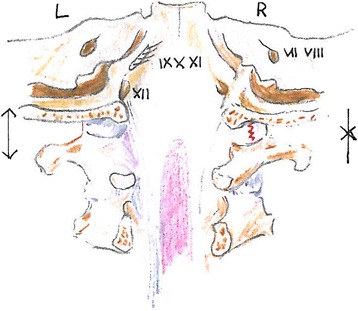
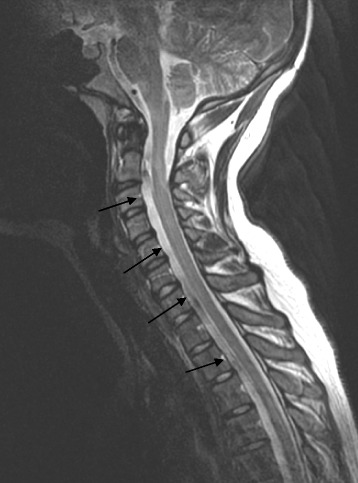
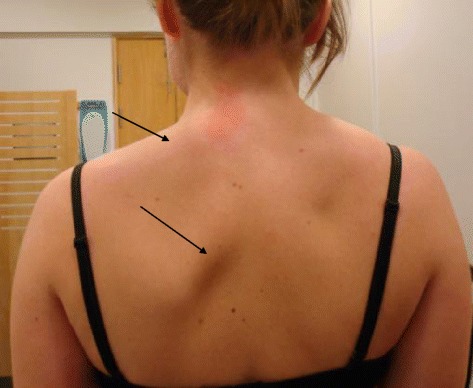
The multitraumatized patient had suffered a dislocated occipital condyle fracture. Months later she was diagnosed with palsy to cranial nerve IX-XII. Literature review shows that occipital condyle fractures are rare as isolated injuries and are in many cases accompanied by further injuries to the cervical spine and soft tissue structures, in many cases ending with severe disability. The exact mechanism leading to these injuries cannot always be explained.
Recognition of soft tissue injuries in patients with blunt head trauma is important. CT findings involving the craniocervical junction in these patients advocates further investigations including a thorough neurological examination and liberal use of MRI.
低位脑神经(IX - XII)麻痹是一种病因众多的罕见病症,通常为非创伤性病因。在文献中,创伤后仅被描述过几次,大多伴有枕髁骨折。尽管这类骨折鲜有报道,但有人怀疑它们可能诊断不足。在过去十年中,此类骨折的发现更为频繁,很可能是由于CT和MRI扫描的使用增加。本综述的目的是提高对颅颈区域损伤后并发症的认识。
本文基于对一名24岁女性的病历回顾,该女性在车祸后被送入我们的创伤中心,同时还回顾了与低位脑神经麻痹相关的枕髁骨折的文献。
这位多发伤患者发生了枕髁脱位骨折。数月后,她被诊断为脑神经IX - XII麻痹。文献回顾表明,枕髁骨折作为孤立损伤较为罕见,在许多情况下还伴有颈椎和软组织结构的进一步损伤,很多情况下会导致严重残疾。导致这些损伤的确切机制并不总是能解释清楚。
认识钝性头部创伤患者的软组织损伤很重要。这些患者中涉及颅颈交界区的CT表现提倡进一步检查,包括全面的神经学检查和广泛使用MRI。