Kim Hye-Ryoung, Kwon Yong-Kuk, Jang Il, Lee Youn-Jeong, Kang Hyun-Mi, Lee Eun-Kyoung, Song Byung-Min, Lee Hee-Soo, Joo Yi-Seok, Lee Kyung-Hyun, Lee Hyun-Kyoung, Baek Kang-Hyun, Bae You-Chan
Emerg Infect Dis. 2015 May;21(5):775-80. doi: 10.3201/eid2105.141967.
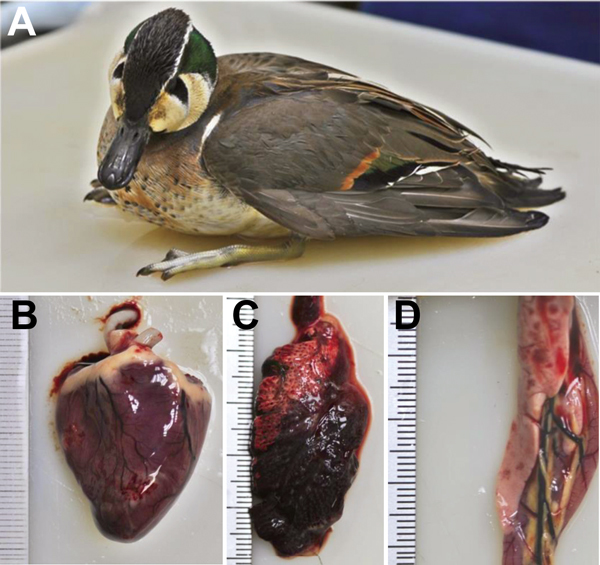
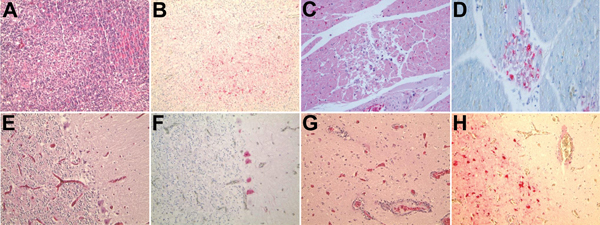
In January 2014, an outbreak of infection with highly pathogenic avian influenza (HPAI) A(H5N8) virus began on a duck farm in South Korea and spread to other poultry farms nearby. During this outbreak, many sick or dead wild birds were found around habitats frequented by migratory birds. To determine the causes of death, we examined 771 wild bird carcasses and identified HPAI A(H5N8) virus in 167. Gross and histologic lesions were observed in pancreas, lung, brain, and kidney of Baikal teals, bean geese, and whooper swans but not mallard ducks. Such lesions are consistent with lethal HPAI A(H5N8) virus infection. However, some HPAI-positive birds had died of gunshot wounds, peritonitis, or agrochemical poisoning rather than virus infection. These findings suggest that susceptibility to HPAI A(H5N8) virus varies among species of migratory birds and that asymptomatic migratory birds could be carriers of this virus.
2014年1月,高致病性禽流感A(H5N8)病毒感染疫情在韩国一家鸭场暴发,并蔓延至附近的其他家禽养殖场。在此次疫情期间,在候鸟经常出没的栖息地周围发现了许多生病或死亡的野生鸟类。为了确定死亡原因,我们检查了771具野生鸟类尸体,在167具中检测出高致病性禽流感A(H5N8)病毒。在斑背潜鸭、豆雁和大天鹅的胰腺、肺、脑和肾中观察到大体和组织学病变,但绿头鸭未出现此类病变。这些病变与高致病性禽流感A(H5N8)病毒致死性感染一致。然而,一些高致病性禽流感阳性鸟类死于枪伤、腹膜炎或农药中毒,而非病毒感染。这些发现表明,候鸟对高致病性禽流感A(H5N8)病毒的易感性因物种而异,无症状的候鸟可能是该病毒的携带者。