Terbeck S, Kahane G, McTavish S, McCutcheon R, Hewstone M, Savulescu J, Chesterman L P, Cowen P J, Norbury R
Department of Psychology, University of Plymouth, Drake Circus, Plymouth, PL48AA, UK,
Psychopharmacology (Berl). 2015 Aug;232(16):2951-8. doi: 10.1007/s00213-015-3929-7. Epub 2015 Apr 22.
The beta-adrenoceptor antagonist propranolol is known to reduce peripheral and central activity of noradrenaline. A recent study found that intervention with propranolol diminished negative implicit racial bias.
The current study used functional magnetic resonance imaging (fMRI) in order to determine the neural correlates of this effect. Healthy volunteers (N = 40) of white ethnic origin received a single oral dose (40 mg) of propranolol, in a randomised, double-blind, parallel group, placebo-controlled design, before viewing unfamiliar faces of same and other race.
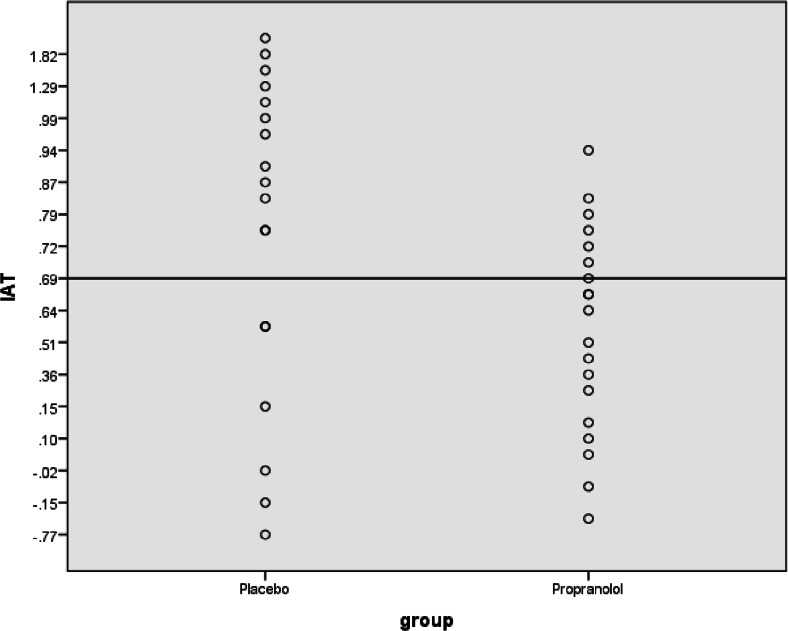
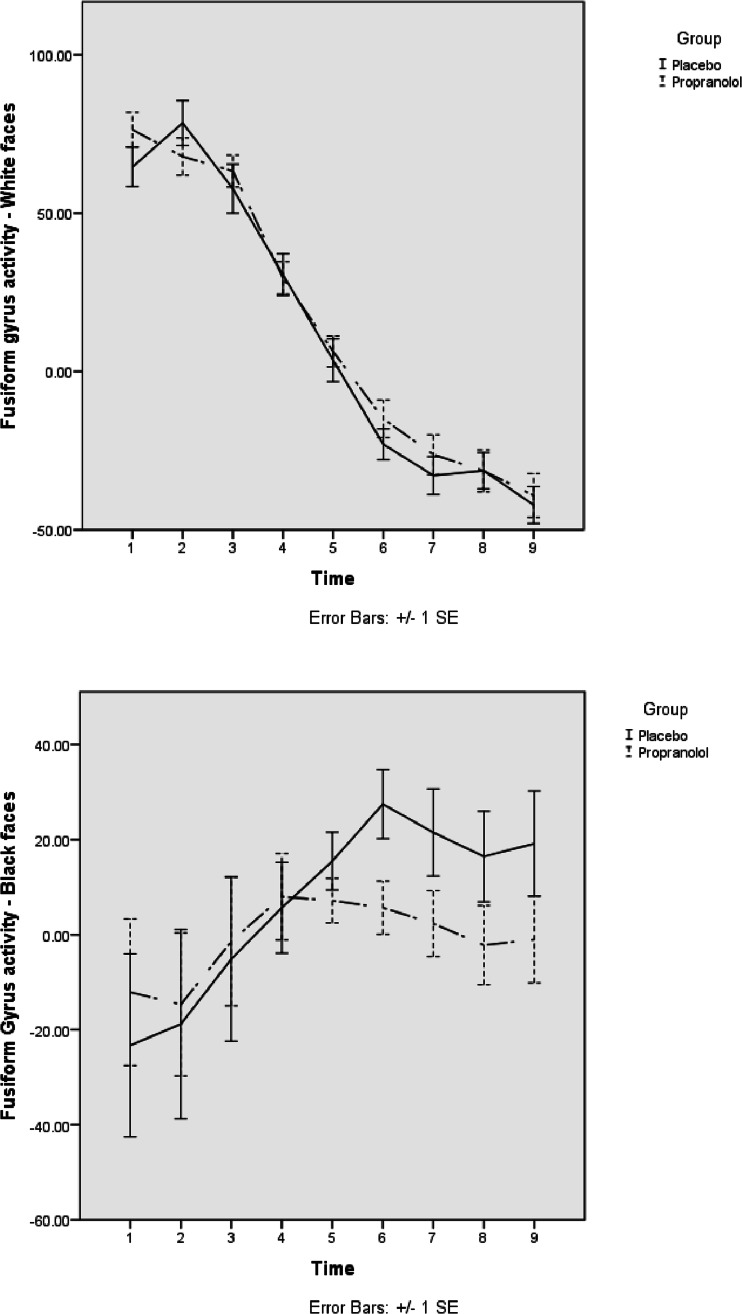
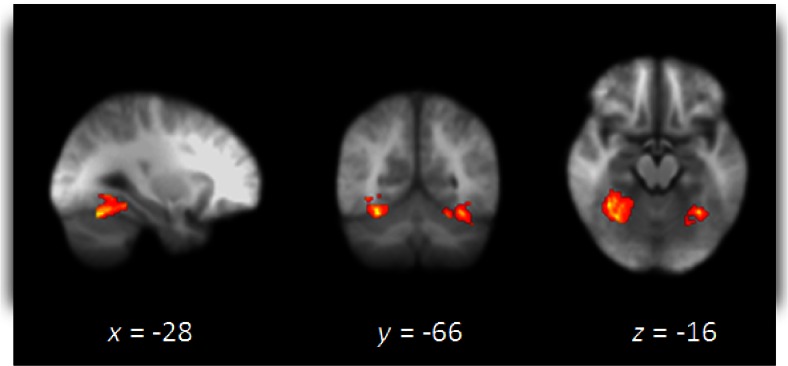
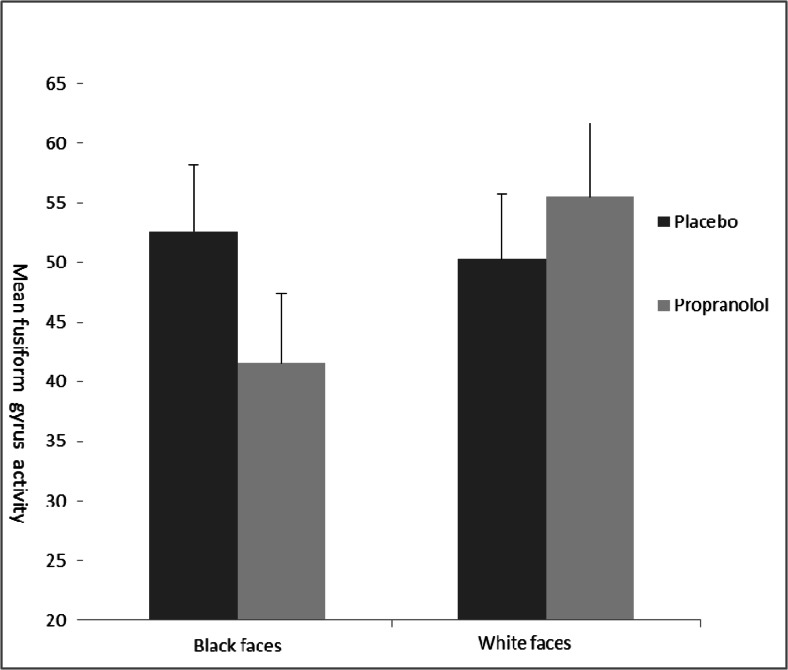
We found significantly reduced activity in the fusiform gyrus and thalamus following propranolol to out-group faces only. Additionally, propranolol lowered the implicit attitude score, without affecting explicit prejudice measure.
These findings suggest that noradrenaline pathways might modulate racial bias by acting on the processing of categorisation in the fusiform gyrus.
已知β-肾上腺素能受体拮抗剂普萘洛尔可降低去甲肾上腺素的外周和中枢活性。最近一项研究发现,使用普萘洛尔进行干预可减少负面的内隐种族偏见。
本研究使用功能磁共振成像(fMRI)来确定这种效应的神经关联。具有白人种族背景的健康志愿者(N = 40)在随机、双盲、平行组、安慰剂对照设计中,于观看同种族和其他种族的陌生面孔之前,接受单次口服剂量(40毫克)的普萘洛尔。
我们发现,仅在普萘洛尔作用于外群体面孔后,梭状回和丘脑的活性显著降低。此外,普萘洛尔降低了内隐态度得分,但不影响外显偏见测量结果。
这些发现表明,去甲肾上腺素通路可能通过作用于梭状回中的分类处理来调节种族偏见。