Ntui Valentine Otang, Kong Kynet, Khan Raham Sher, Igawa Tomoko, Janavi Gnanaguru Janaky, Rabindran Ramalingam, Nakamura Ikuo, Mii Masahiro
Laboratory of Plant Cell Technology, Graduate School of Horticulture, Chiba University, Chiba, Japan; Department of Genetics/Biotechnology, Faculty of Science, University of Calabar, Calabar, Nigeria.
Laboratory of Plant Cell Technology, Graduate School of Horticulture, Chiba University, Chiba, Japan; Cambodia Agricultural Research and Development Institute, Phnom Penh, Cambodia.
PLoS One. 2015 Apr 22;10(4):e0120551. doi: 10.1371/journal.pone.0120551. eCollection 2015.
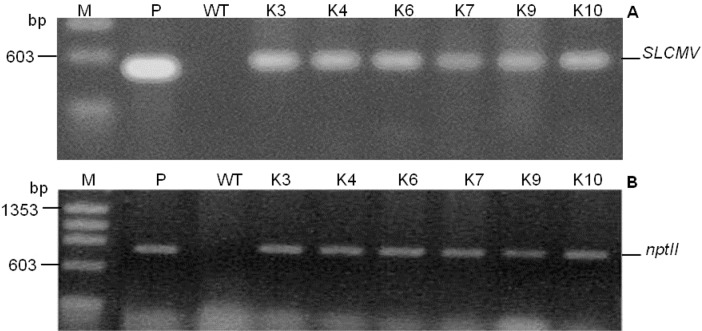
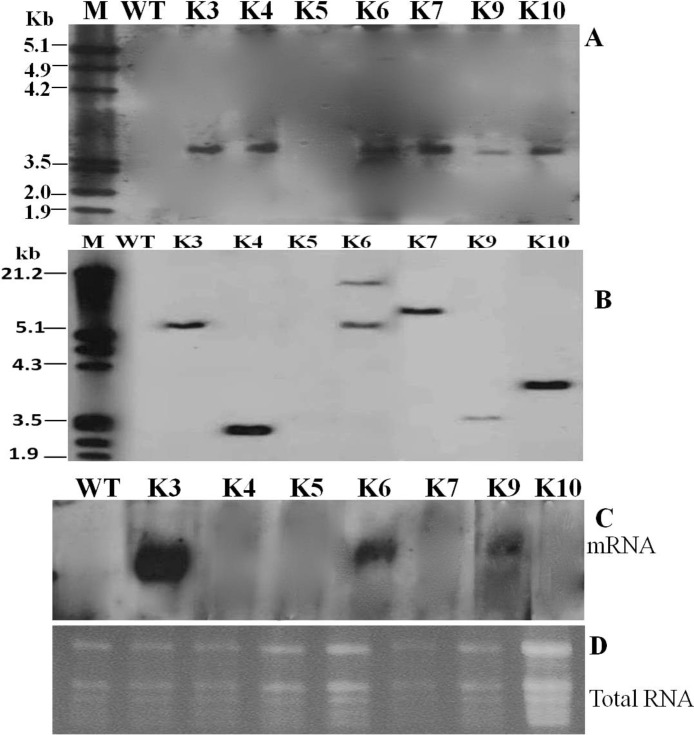
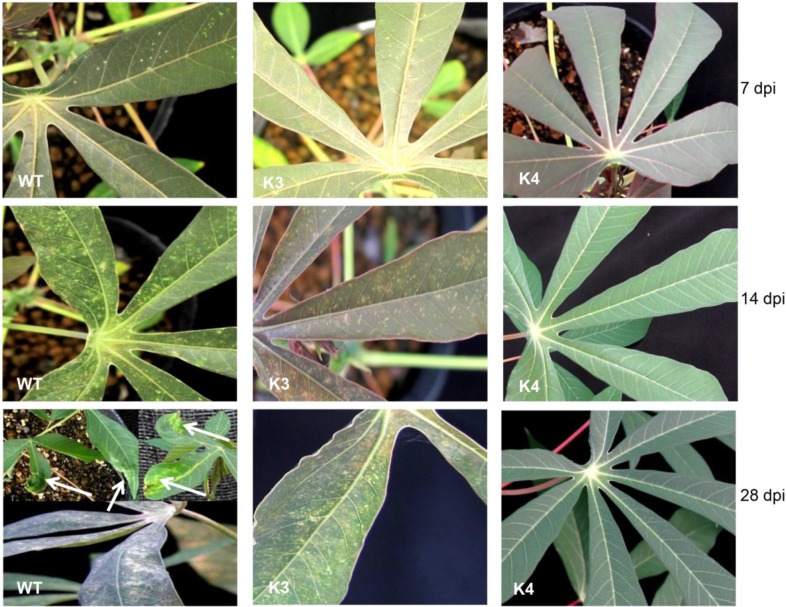
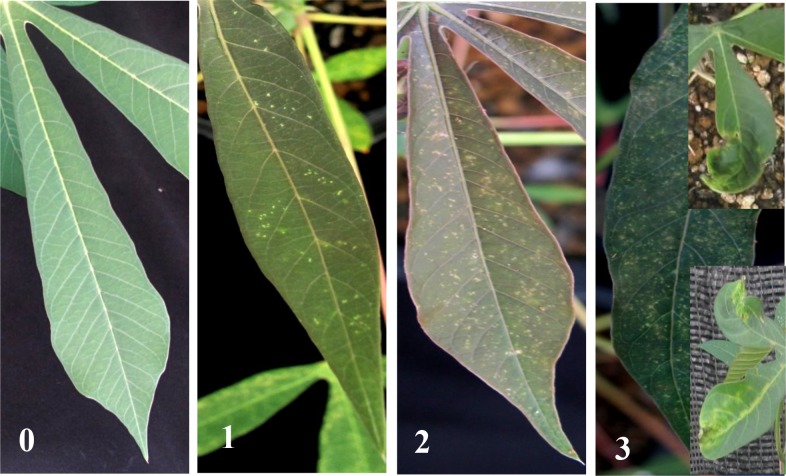
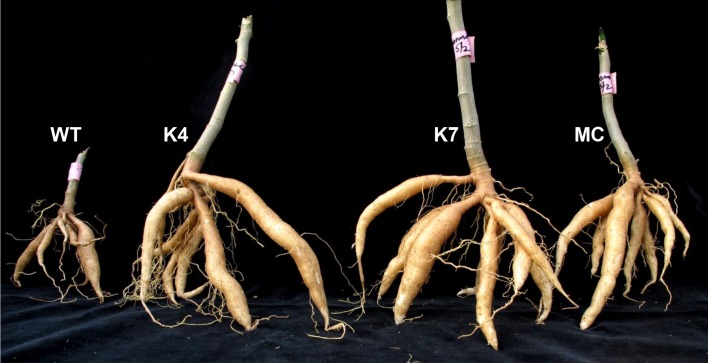
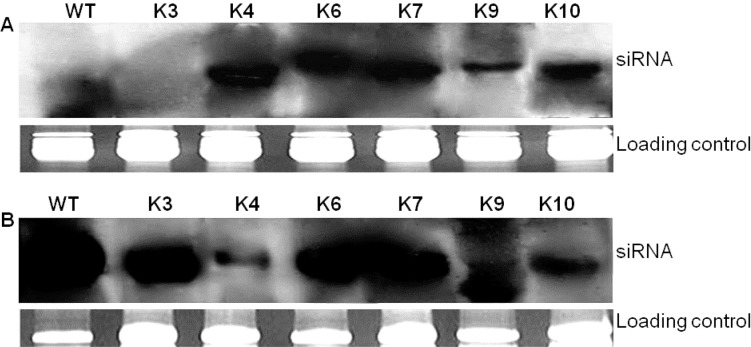
Cassava ranks fifth among the starch producing crops of the world, its annual bioethanol yield is higher than for any other crop. Cassava cultivar KU50, the most widely grown cultivar for non-food purposes is susceptible to Sri Lankan cassava mosaic virus (SLCMV). The objective of this work was to engineer resistance to SLCMV by RNA interference (RNAi) in order to increase biomass yield, an important aspect for bioethanol production. Here, we produced transgenic KU50 lines expressing dsRNA homologous to the region between the AV2 and AV1 of DNA A of SLCMV. High level expression of dsRNA of SLCMV did not induce any growth abnormality in the transgenic plants. Transgenic lines displayed high levels of resistance to SLCMV compared to the wild-type plants and no virus load could be detected in uninoculated new leaves of the infected resistant lines after PCR amplification and RT-PCR analysis. The agronomic performance of the transgenic lines was unimpaired after inoculation with the virus as the plants presented similar growth when compared to the mock inoculated control plants and revealed no apparent reduction in the amount and weight of tubers produced. We show that the resistance is correlated with post-transcriptional gene silencing because of the production of transgene specific siRNA. The results demonstrate that transgenic lines exhibited high levels of resistance to SLCMV. This resistance coupled with the desirable yield components in the transgenic lines makes them better candidates for exploitation in the production of biomass as well as bioethanol.
木薯在世界淀粉生产作物中排名第五,其年度生物乙醇产量高于其他任何作物。木薯品种KU50是种植最广泛的非食用品种,易受斯里兰卡木薯花叶病毒(SLCMV)感染。这项工作的目的是通过RNA干扰(RNAi)构建对SLCMV的抗性,以提高生物量产量,这是生物乙醇生产的一个重要方面。在此,我们培育了表达与SLCMV DNA A的AV2和AV1之间区域同源的dsRNA的转基因KU50品系。SLCMV的dsRNA的高水平表达并未在转基因植物中诱导任何生长异常。与野生型植物相比,转基因品系对SLCMV表现出高水平的抗性,并且在PCR扩增和RT-PCR分析后,在感染的抗性品系未接种的新叶中未检测到病毒载量。接种病毒后,转基因品系的农艺性能未受损害,因为与模拟接种的对照植物相比,这些植物呈现出相似的生长,并且所产生块根的数量和重量没有明显减少。我们表明,由于转基因特异性siRNA的产生,抗性与转录后基因沉默相关。结果表明,转基因品系对SLCMV表现出高水平的抗性。这种抗性与转基因品系中理想的产量构成因素相结合,使其成为生物质以及生物乙醇生产中更适合开发利用的候选对象。