Raby Graham D, Clark Timothy D, Farrell Anthony P, Patterson David A, Bett Nolan N, Wilson Samantha M, Willmore William G, Suski Cory D, Hinch Scott G, Cooke Steven J
Fish Ecology and Conservation Physiology Laboratory, Department of Biology and Institute of Environmental Sciences, Carleton University, Ottawa, Ontario, Canada.
Australian Institute of Marine Science, Townsville, Queensland, Australia.
PLoS One. 2015 Apr 22;10(4):e0124023. doi: 10.1371/journal.pone.0124023. eCollection 2015.
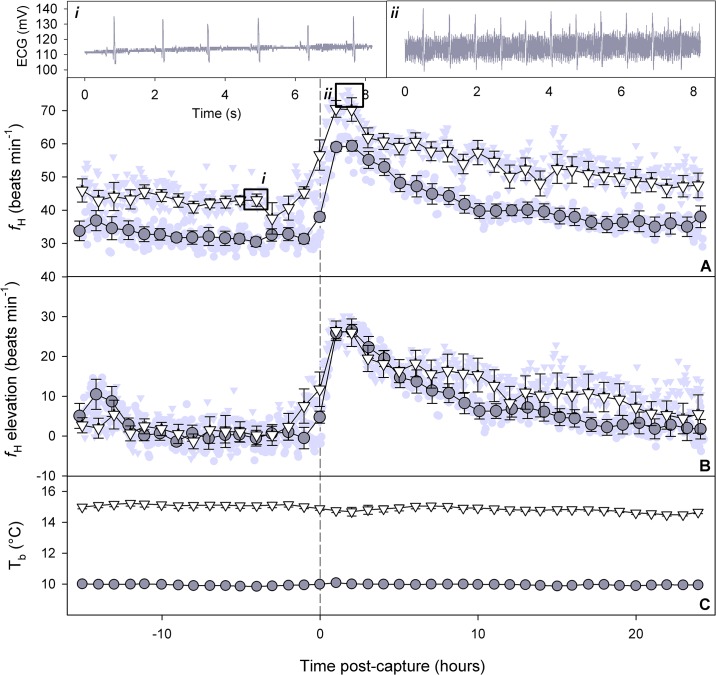
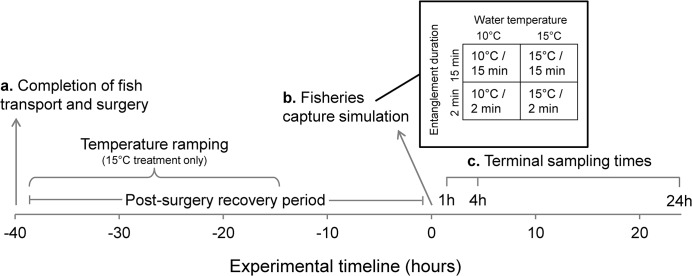
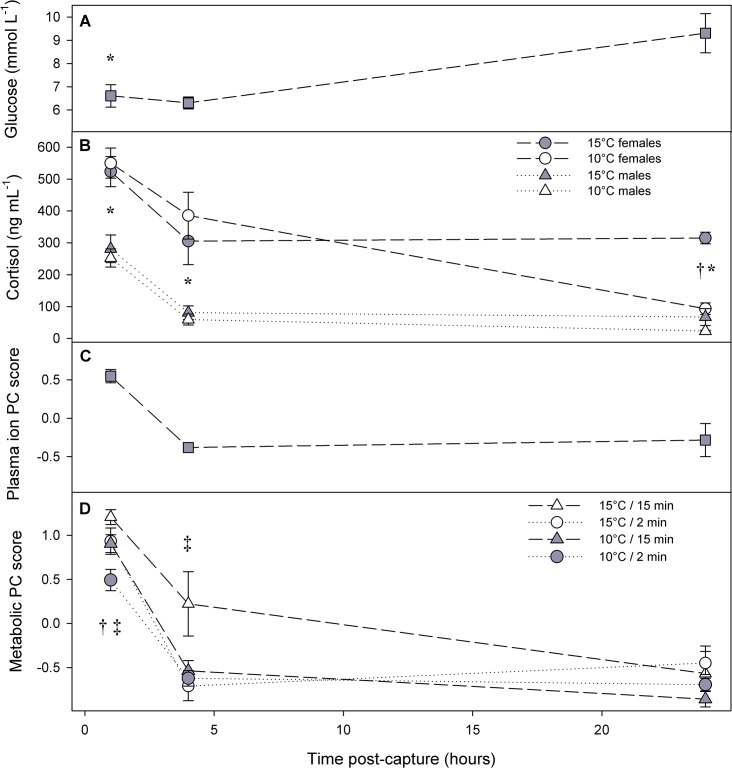
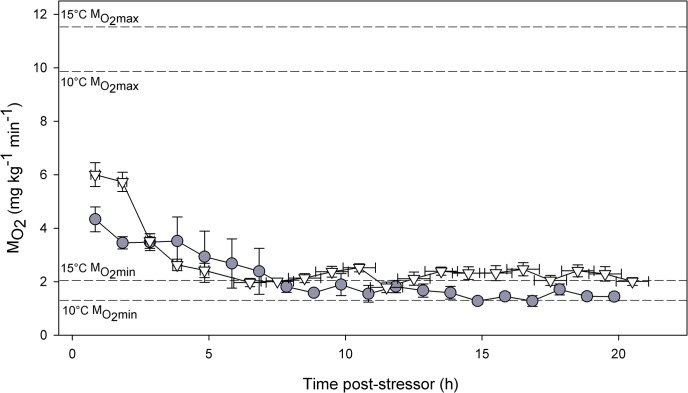
An improved understanding of bycatch mortality can be achieved by complementing field studies with laboratory experiments that use physiological assessments. This study examined the effects of water temperature and the duration of net entanglement on physiological disturbance and recovery in coho salmon (Oncorhynchus kisutch) after release from a simulated beach seine capture. Heart rate was monitored using implanted electrocardiogram biologgers that allowed fish to swim freely before and after release. A subset of fish was recovered in respirometers to monitor metabolic recovery, and separate groups of fish were sacrificed at different times to assess blood and white muscle biochemistry. One hour after release, fish had elevated lactate in muscle and blood plasma, depleted tissue energy stores, and altered osmoregulatory status, particularly in warmer (15 vs. 10°C) and longer (15 vs. 2 min) capture treatments. A significant effect of entanglement duration on blood and muscle metabolites remained after 4 h. Oxygen consumption rate recovered to baseline within 7-10 h. However, recovery of heart rate to routine levels was longer and more variable, with most fish taking over 10 h, and 33% of fish failing to recover within 24 h. There were no significant treatment effects on either oxygen consumption or heart rate recovery. Our results indicate that fishers should minimize handling time for bycatch and maximize oxygen supply during crowding, especially when temperatures are elevated. Physiological data, such as those presented here, can be used to understand mechanisms that underlie bycatch impairment and mortality, and thus inform best practices that ensure the welfare and conservation of affected species.
通过将实地研究与使用生理评估的实验室实验相结合,可以更好地了解兼捕死亡率。本研究考察了水温以及围网缠绕时间对银大麻哈鱼(Oncorhynchus kisutch)在模拟海滩围网捕捞放归后生理干扰和恢复的影响。使用植入式心电图生物记录仪监测心率,该记录仪使鱼在放归前后能够自由游动。在呼吸仪中回收一部分鱼以监测代谢恢复情况,另外将不同组的鱼在不同时间处死以评估血液和白肌生物化学指标。放归1小时后,鱼的肌肉和血浆中的乳酸水平升高,组织能量储备耗尽,渗透调节状态改变,特别是在较温暖(15℃与10℃)和较长(15分钟与2分钟)的捕捞处理中。4小时后,缠绕时间对血液和肌肉代谢物仍有显著影响。耗氧率在7 - 10小时内恢复到基线水平。然而,心率恢复到常规水平所需时间更长且更具变异性,大多数鱼需要超过10小时,33%的鱼在24小时内未能恢复。在耗氧或心率恢复方面没有显著的处理效应。我们的结果表明,渔民应尽量减少对兼捕物的处理时间,并在拥挤时最大限度地提供氧气供应,尤其是在温度升高时。此处呈现的生理数据可用于理解兼捕损伤和死亡背后的机制,从而为确保受影响物种的福利和保护的最佳实践提供依据。