Ong Christy C, Gierke Sarah, Pitt Cameron, Sagolla Meredith, Cheng Christine K, Zhou Wei, Jubb Adrian M, Strickland Laura, Schmidt Maike, Duron Sergio G, Campbell David A, Zheng Wei, Dehdashti Seameen, Shen Min, Yang Nora, Behnke Mark L, Huang Wenwei, McKew John C, Chernoff Jonathan, Forrest William F, Haverty Peter M, Chin Suet-Feung, Rakha Emad A, Green Andrew R, Ellis Ian O, Caldas Carlos, O'Brien Thomas, Friedman Lori S, Koeppen Hartmut, Rudolph Joachim, Hoeflich Klaus P
Department of Translational Oncology, Genentech, Inc., South San Francisco, CA, USA.
Department of Pathology, Genentech, Inc., South San Francisco, CA, USA.
Breast Cancer Res. 2015 Apr 23;17(1):59. doi: 10.1186/s13058-015-0564-5.
Breast cancer, the most common cause of cancer-related deaths worldwide among women, is a molecularly and clinically heterogeneous disease. Extensive genetic and epigenetic profiling of breast tumors has recently revealed novel putative driver genes, including p21-activated kinase (PAK)1. PAK1 is a serine/threonine kinase downstream of small GTP-binding proteins, Rac1 and Cdc42, and is an integral component of growth factor signaling networks and cellular functions fundamental to tumorigenesis.
PAK1 dysregulation (copy number gain, mRNA and protein expression) was evaluated in two cohorts of breast cancer tissues (n=980 and 1,108). A novel small molecule inhibitor, FRAX1036, and RNA interference were used to examine PAK1 loss of function and combination with docetaxel in vitro. Mechanism of action for the therapeutic combination, both cellular and molecular, was assessed via time-lapse microscopy and immunoblotting.
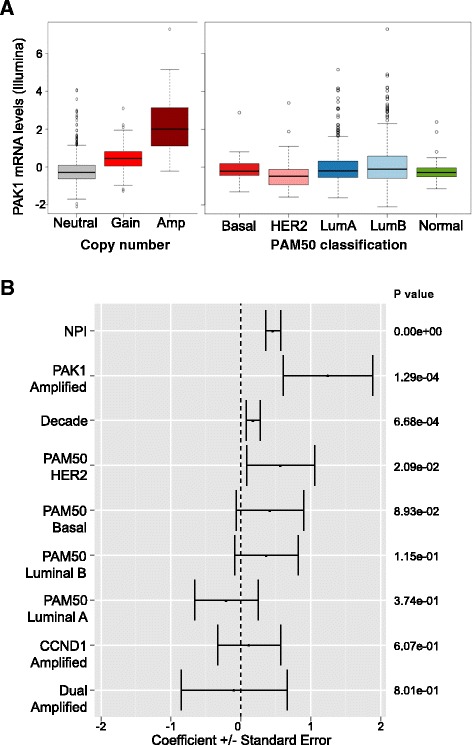
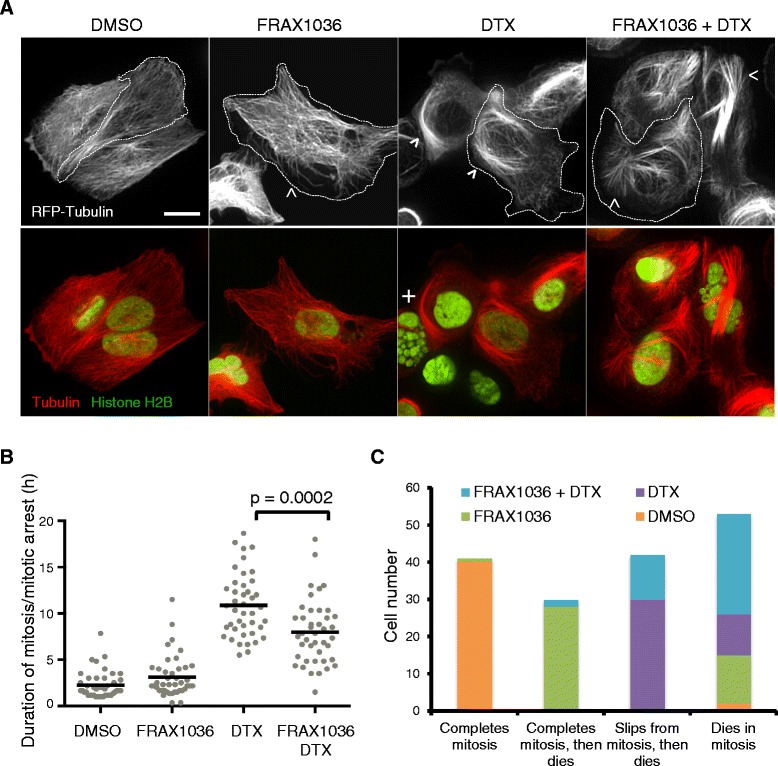
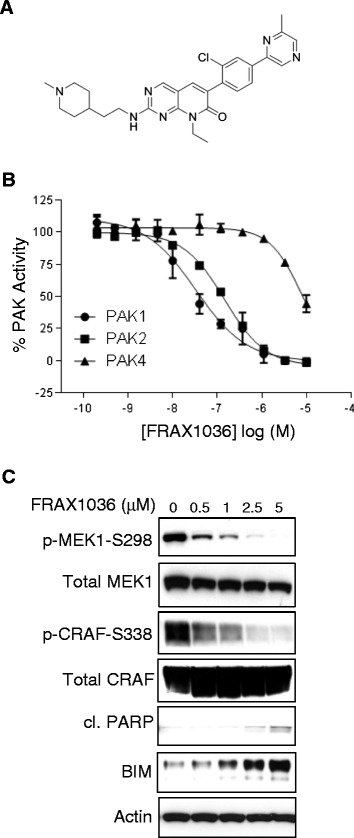
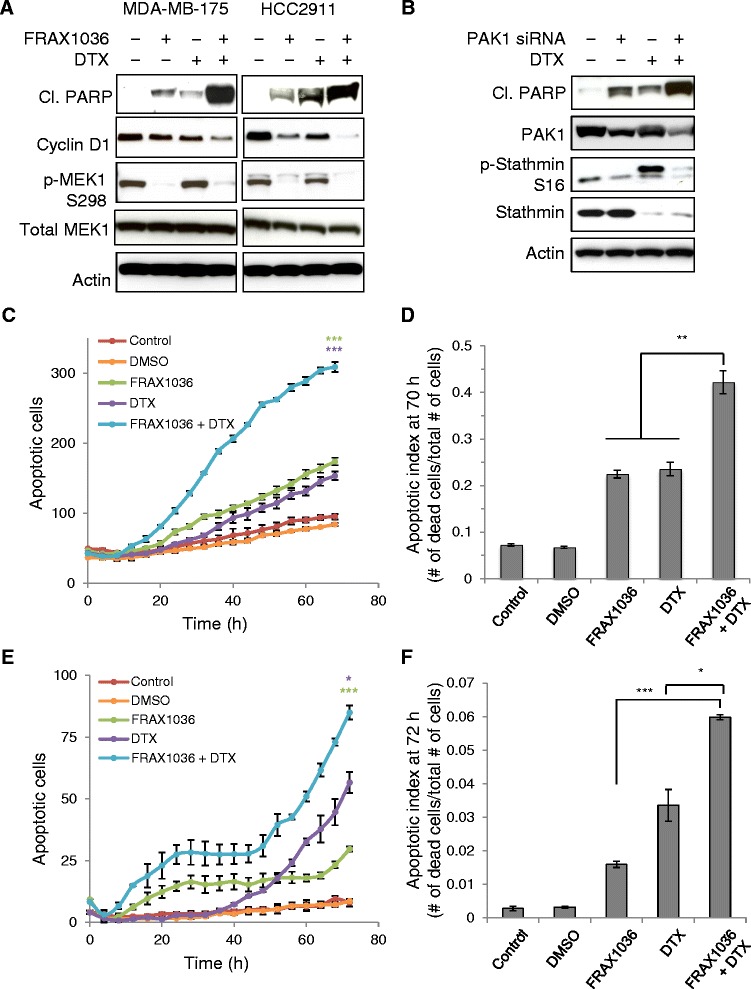
We demonstrate that focal genomic amplification and overexpression of PAK1 are associated with poor clinical outcome in the luminal subtype of breast cancer (P=1.29×10(-4) and P=0.015, respectively). Given the role for PAK1 in regulating cytoskeletal organization, we hypothesized that combination of PAK1 inhibition with taxane treatment could be combined to further interfere with microtubule dynamics and cell survival. Consistent with this, administration of docetaxel with either a novel small molecule inhibitor of group I PAKs, FRAX1036, or PAK1 small interfering RNA oligonucleotides dramatically altered signaling to cytoskeletal-associated proteins, such as stathmin, and induced microtubule disorganization and cellular apoptosis. Live-cell imaging revealed that the duration of mitotic arrest mediated by docetaxel was significantly reduced in the presence of FRAX1036, and this was associated with increased kinetics of apoptosis.
Taken together, these findings further support PAK1 as a potential target in breast cancer and suggest combination with taxanes as a viable strategy to increase anti-tumor efficacy.
乳腺癌是全球女性癌症相关死亡的最常见原因,是一种分子和临床异质性疾病。近期对乳腺肿瘤进行的广泛基因和表观遗传分析揭示了包括p21激活激酶(PAK)1在内的新型潜在驱动基因。PAK1是小GTP结合蛋白Rac1和Cdc42下游的丝氨酸/苏氨酸激酶,是生长因子信号网络以及肿瘤发生所必需的细胞功能的重要组成部分。
在两组乳腺癌组织(n = 980和1108)中评估PAK1失调(拷贝数增加、mRNA和蛋白表达)情况。使用新型小分子抑制剂FRAX1036和RNA干扰技术在体外检测PAK1功能丧失及其与多西他赛联合使用的效果。通过延时显微镜和免疫印迹评估治疗组合在细胞和分子水平上的作用机制。
我们证明PAK1的局灶性基因组扩增和过表达与乳腺癌管腔亚型的不良临床结局相关(分别为P = 1.29×10⁻⁴和P = 0.015)。鉴于PAK1在调节细胞骨架组织中的作用我们推测PAK1抑制与紫杉烷治疗联合可进一步干扰微管动力学和细胞存活。与此相符,多西他赛与I组PAK的新型小分子抑制剂FRAX1036或PAK1小干扰RNA寡核苷酸联合给药显著改变了与细胞骨架相关蛋白(如微管相关蛋白)的信号传导,并诱导微管解聚和细胞凋亡。活细胞成像显示,在存在FRAX1036的情况下,多西他赛介导的有丝分裂停滞持续时间显著缩短,这与凋亡动力学增加相关联。
综上所述,这些发现进一步支持PAK1作为乳腺癌的潜在靶点,并表明与紫杉烷联合是提高抗肿瘤疗效的可行策略。