Allsopp Rebecca C, Evans Richard J
From the Department of Cell Physiology and Pharmacology, University of Leicester, Leicester LE1 9HN, United Kingdom.
From the Department of Cell Physiology and Pharmacology, University of Leicester, Leicester LE1 9HN, United Kingdom
J Biol Chem. 2015 Jun 5;290(23):14556-66. doi: 10.1074/jbc.M115.642033. Epub 2015 Apr 22.
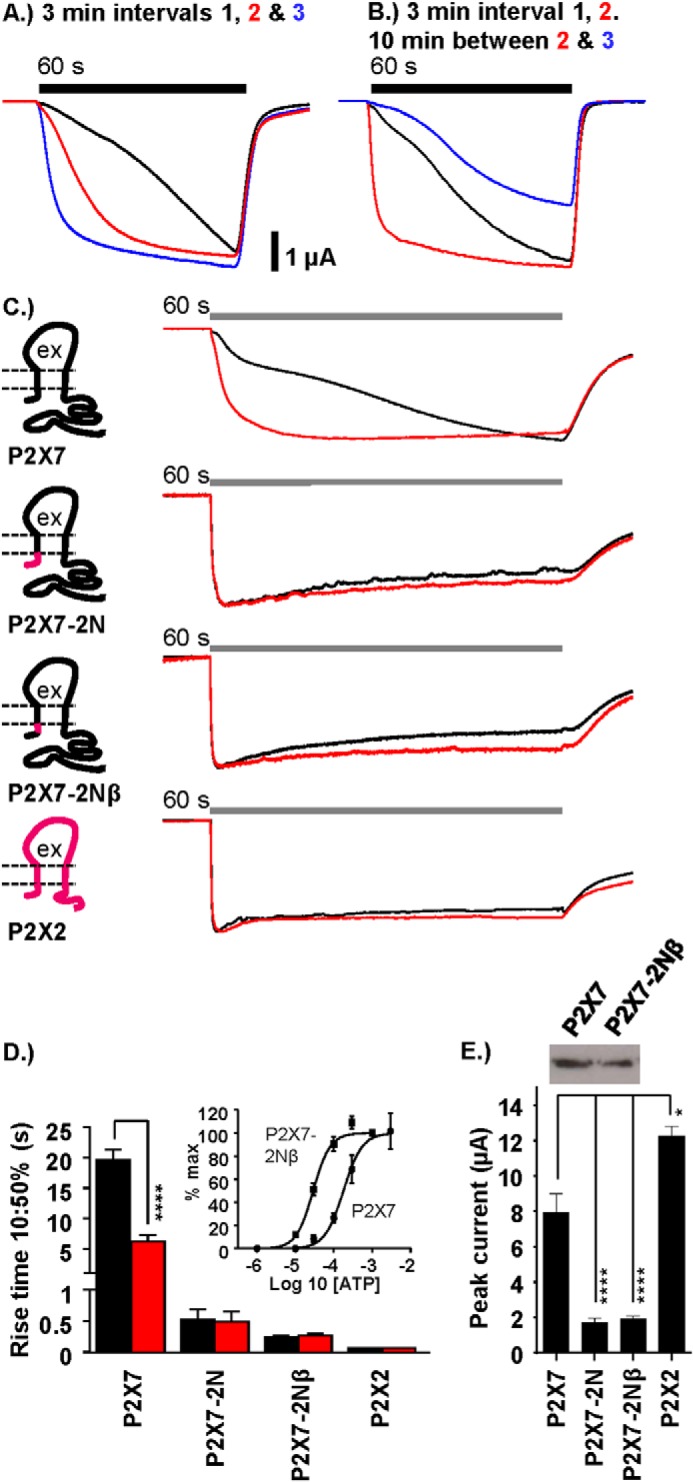
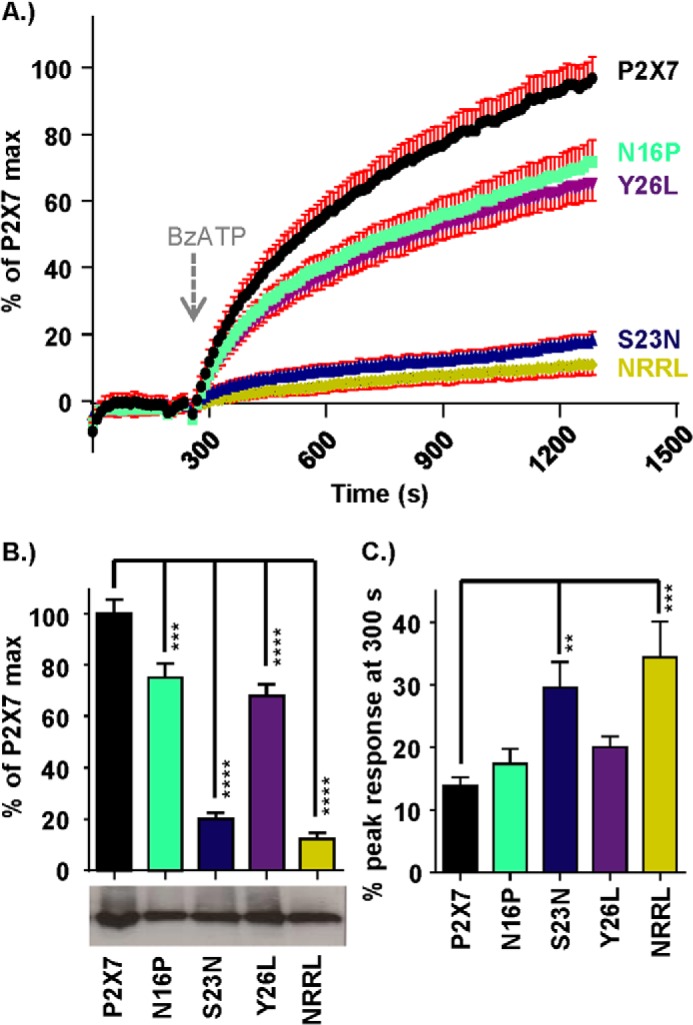
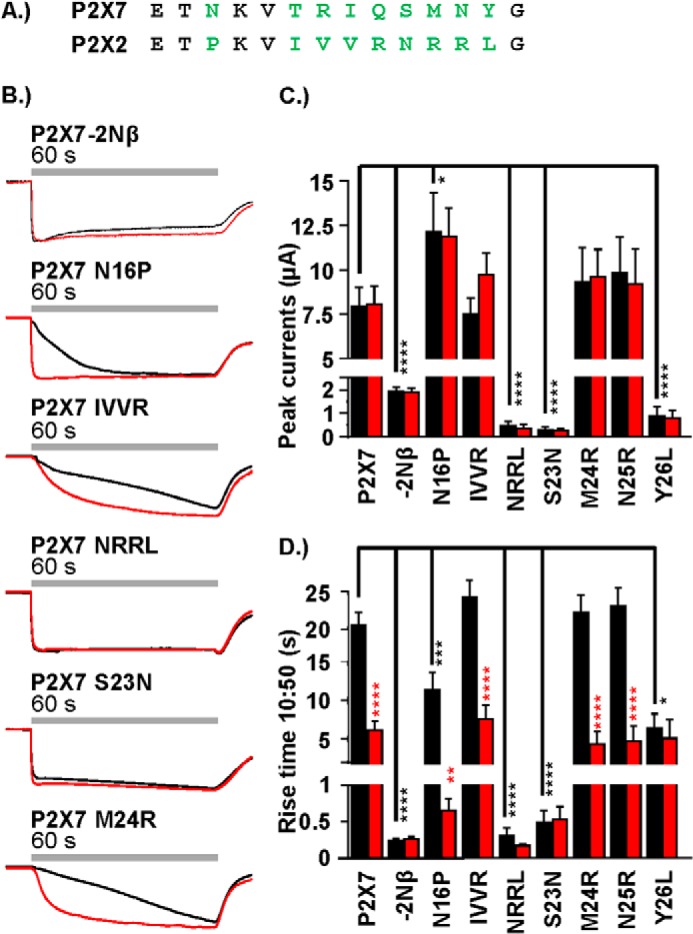
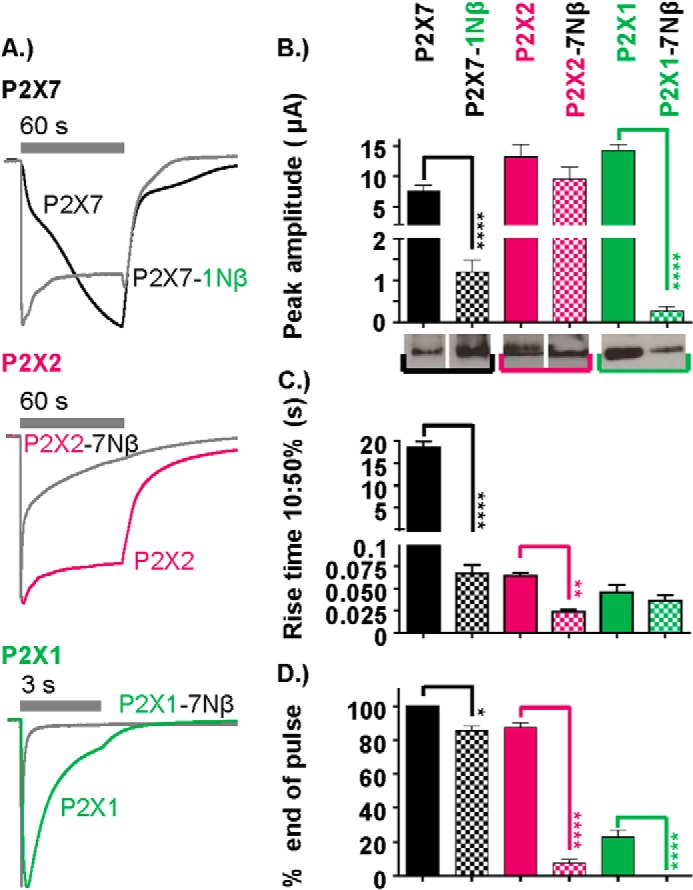
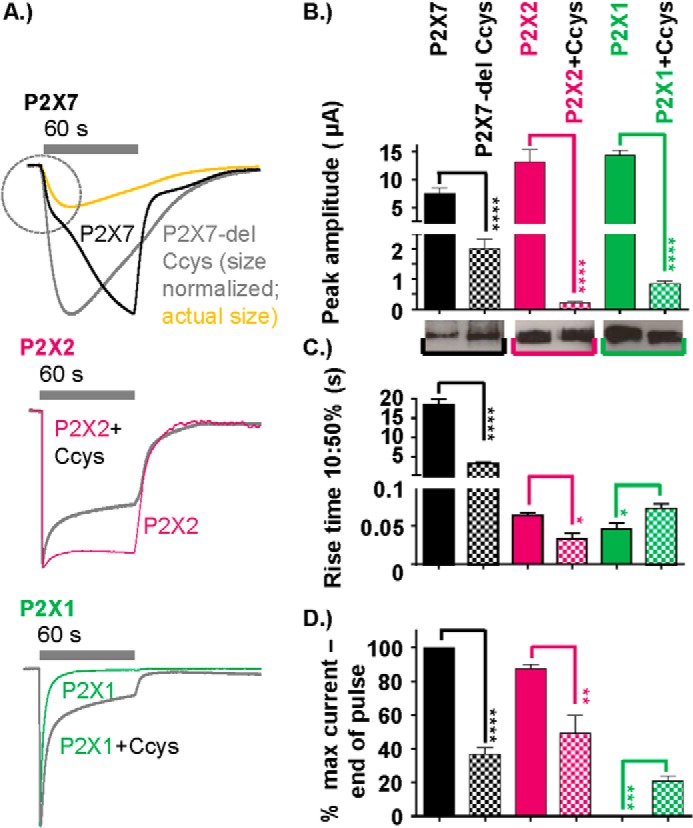
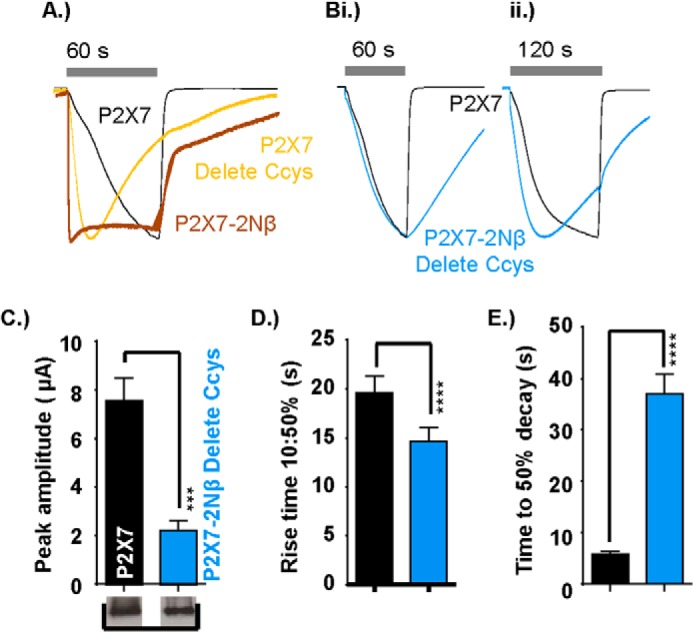
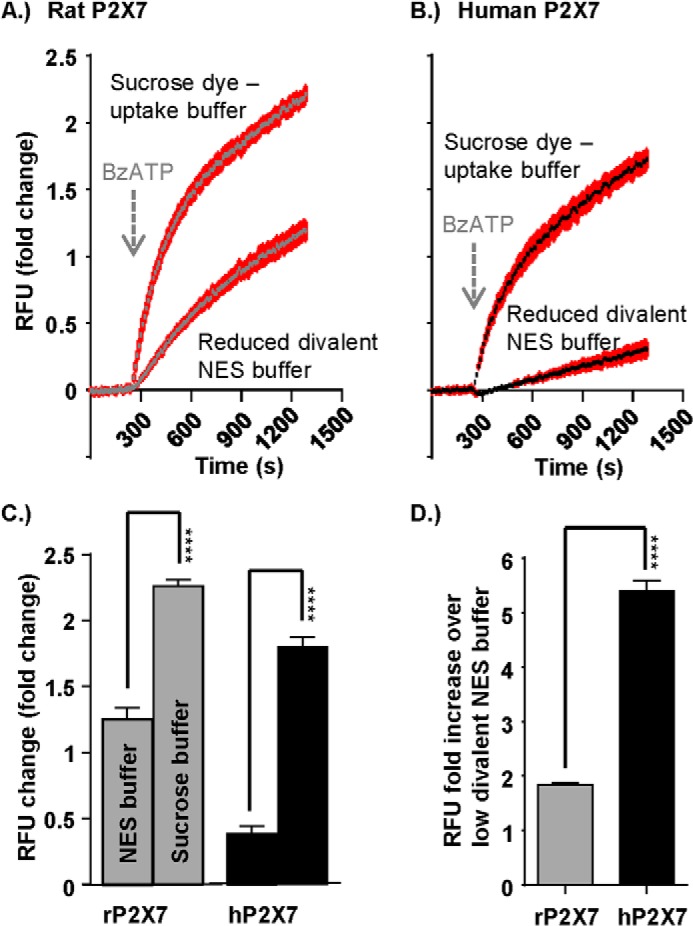
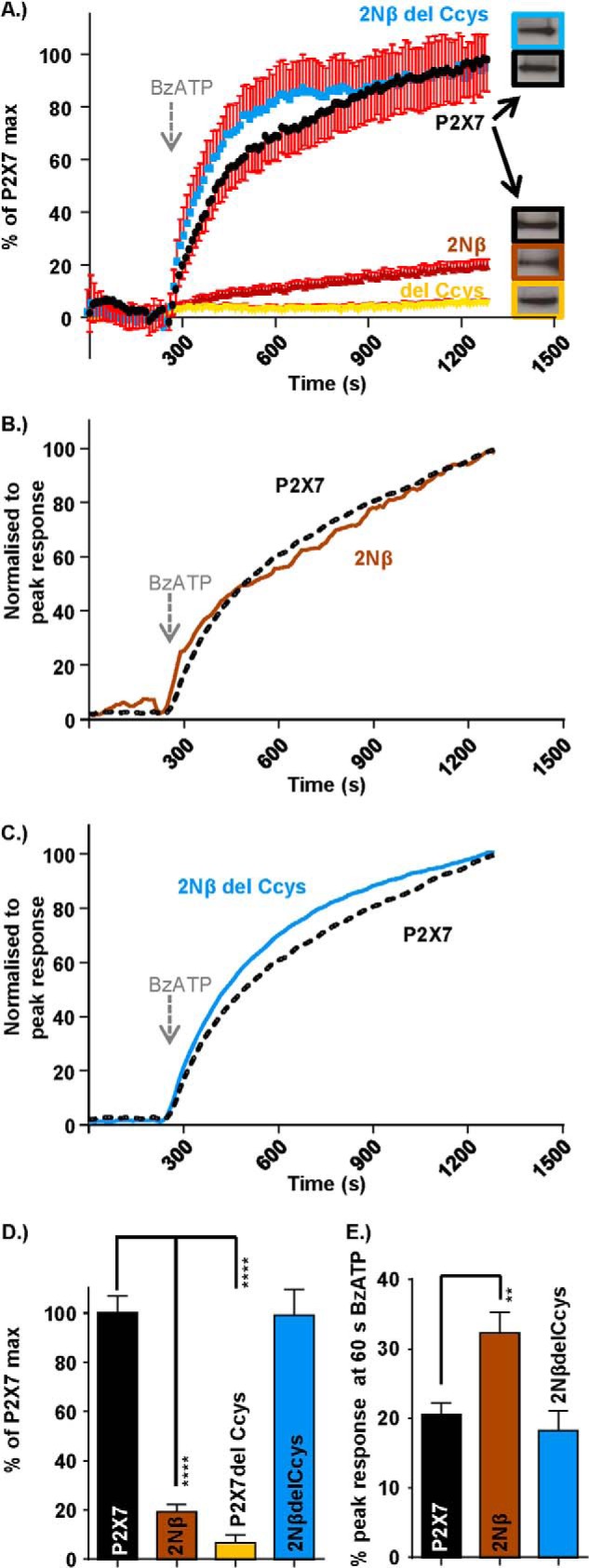
P2X7 receptors are ATP-gated ion channels that contribute to inflammation and cell death. They have the novel property of showing marked facilitation to repeated applications of agonist, and the intrinsic channel pore dilates to allow the passage of fluorescent dyes. A 60-s application of ATP to hP2X7 receptors expressed in Xenopus oocytes gave rise to a current that had a biphasic time course with initial and secondary slowly developing components. A second application of ATP evoked a response with a more rapid time to peak. This facilitation was reversed to initial levels following a 10-min agonist-free interval. A chimeric approach showed that replacement of the pre-TM1 amino-terminal region with the corresponding P2X2 receptor section (P2X7-2Nβ) gave responses that quickly reached a steady state and did not show facilitation. Subsequent point mutations of variant residues identified Asn-16 and Ser-23 as important contributors to the time course/facilitation. The P2X7 receptor is unique in having an intracellular carboxyl-terminal cysteine-rich region (Ccys). Deletion of this region removed the secondary slowly developing current, and, when expressed in HEK293 cells, ethidium bromide uptake was only ∼5% that of WT levels, indicating reduced large pore formation. Dye uptake was also reduced for the P2X7-2Nβ chimera. Surprisingly, combination of the chimera and the Ccys deletion (P2X7-2NβdelCcys) restored the current rise time and ethidium uptake to WT levels. These findings suggest that there is a coevolved interaction between the juxtatransmembrane amino and carboxyl termini in the regulation of P2X7 receptor gating.
P2X7受体是一种ATP门控离子通道,与炎症和细胞死亡有关。它们具有对激动剂重复应用表现出显著易化作用的新特性,并且其内在通道孔会扩张以允许荧光染料通过。将ATP施加到非洲爪蟾卵母细胞中表达的hP2X7受体上60秒,会产生一个具有双相时间进程的电流,包括初始和次级缓慢发展的成分。第二次施加ATP会引发一个达到峰值时间更快的反应。在10分钟无激动剂间隔后,这种易化作用恢复到初始水平。嵌合方法表明,用相应的P2X2受体部分替换跨膜前1(pre-TM1)氨基末端区域(P2X7-2Nβ)会产生迅速达到稳态且不显示易化作用的反应。随后对变异残基的点突变确定天冬酰胺-16(Asn-16)和丝氨酸-23(Ser-23)是时间进程/易化作用的重要贡献者。P2X7受体的独特之处在于其具有细胞内富含半胱氨酸的羧基末端区域(Ccys)。删除该区域消除了次级缓慢发展的电流,并且当在HEK293细胞中表达时,溴化乙锭摄取量仅为野生型水平的约5%,表明大孔形成减少。P2X7-2Nβ嵌合体的染料摄取也减少。令人惊讶的是,嵌合体与Ccys缺失(P2X7-2NβdelCcys)的组合将电流上升时间和溴化乙锭摄取恢复到野生型水平。这些发现表明,在P2X7受体门控调节中,跨膜附近的氨基和羧基末端之间存在共同进化的相互作用。