Tasi Yun-Chieh, Chin Ting-Yu, Chen Ying-Ju, Huang Chun-Chih, Lee Shou-Lun, Wu Tzong-Yuan
Graduate Institute of Life Sciences, National Defense Medical Center, Taipei 11490, Taiwan.
Department of Bioscience Technology, Chung Yuan Christian University, Taoyuan 32032, Taiwan.
Int J Mol Sci. 2015 Apr 20;16(4):8789-810. doi: 10.3390/ijms16048789.
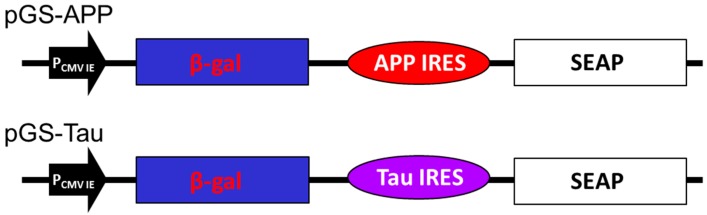
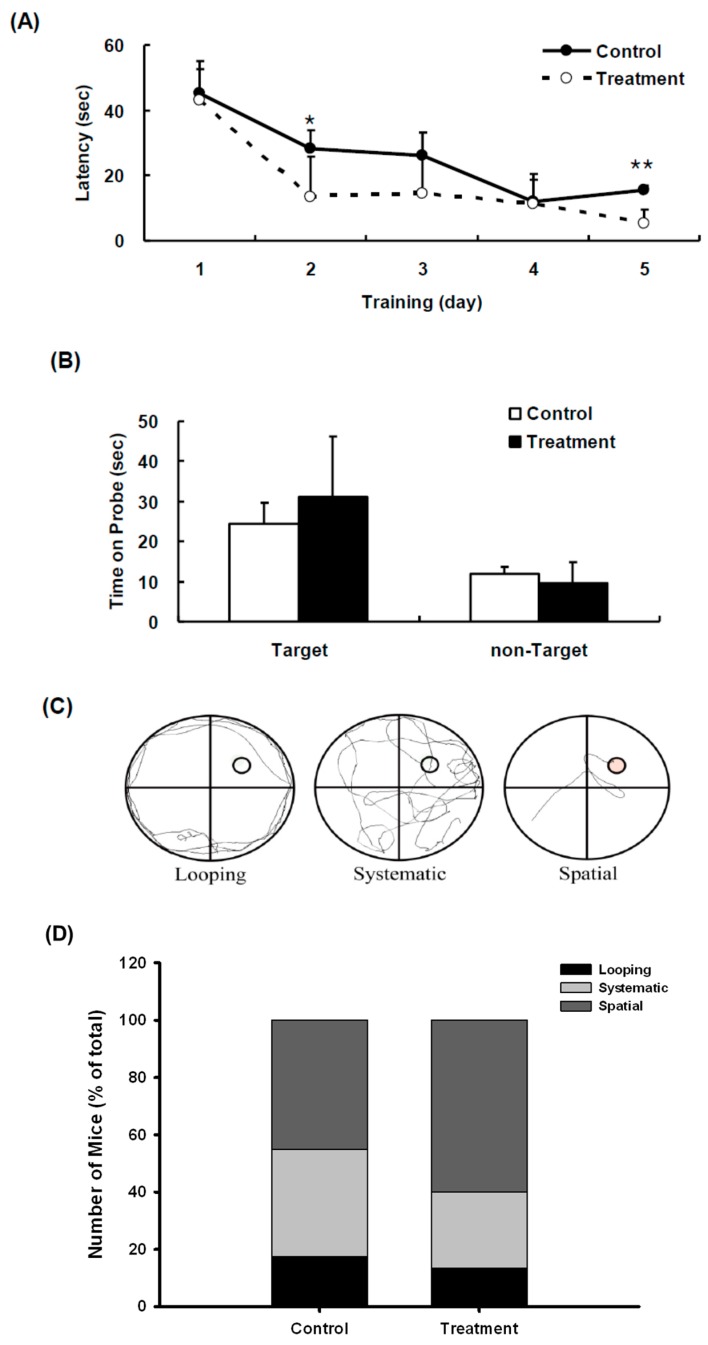
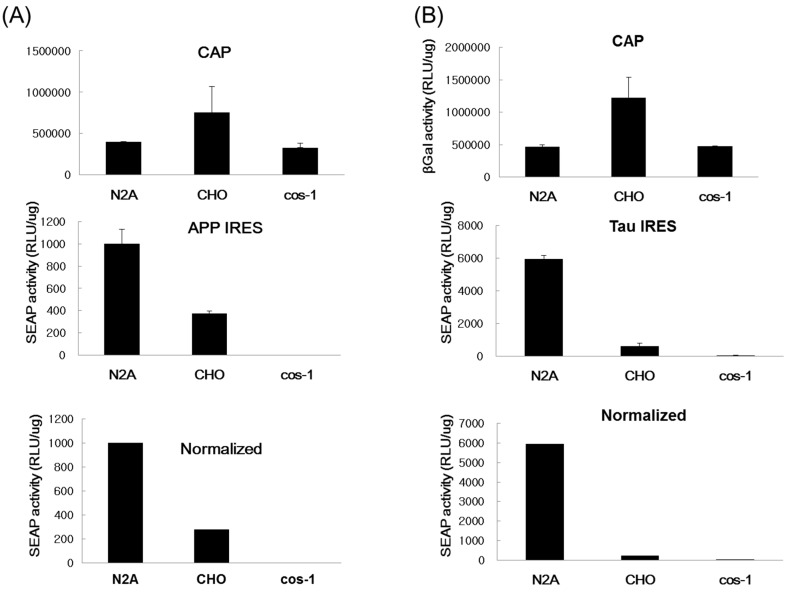
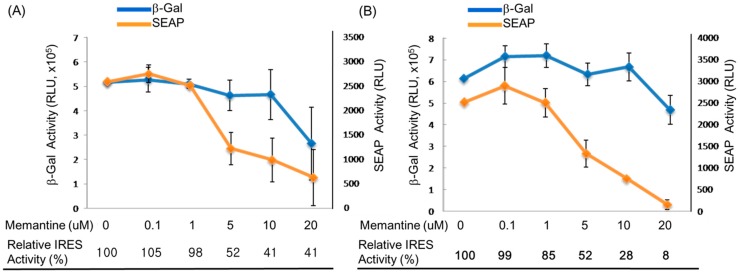
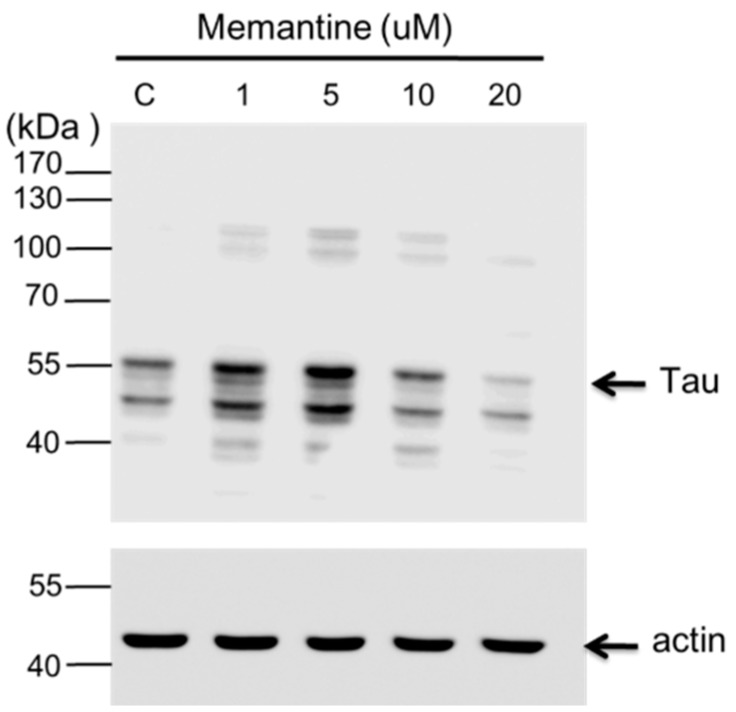
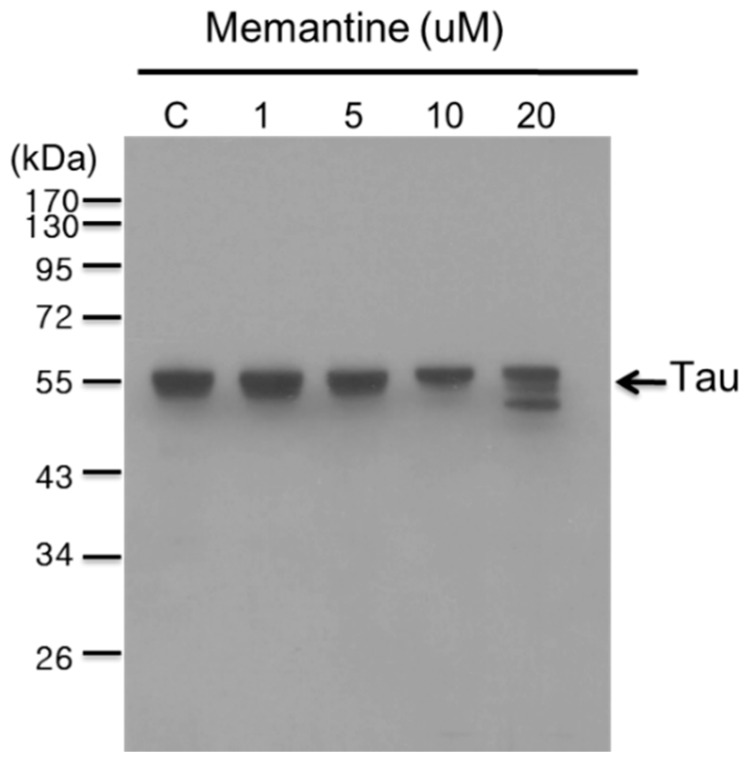
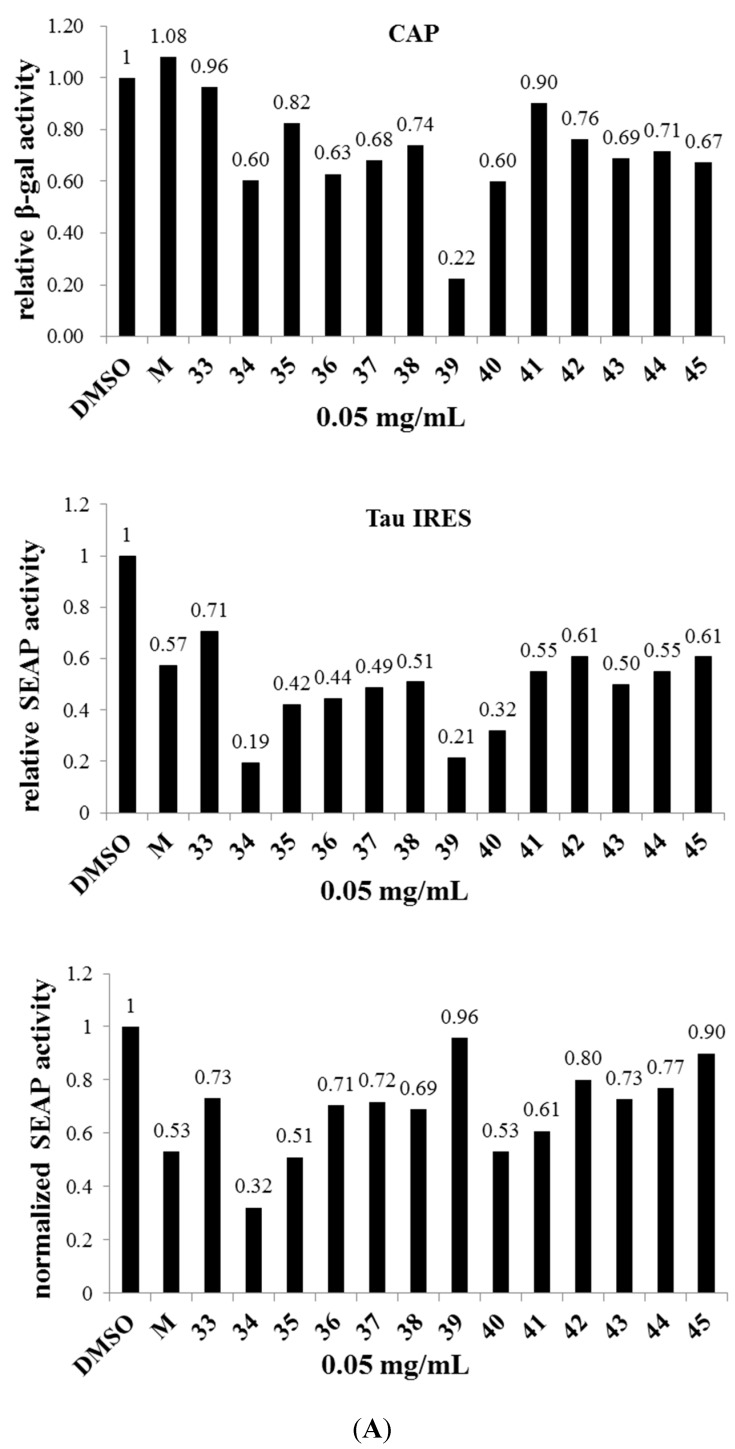
Overexpression of the amyloid precursor protein (APP) and the hyperphosphorylation of the tau protein are vital in the understanding of the cause of Alzheimer's disease (AD). As a consequence, regulation of the expression of both APP and tau proteins is one important approach in combating AD. The APP and tau proteins can be targeted at the levels of transcription, translation and protein structural integrity. This paper reports the utilization of a bi-cistronic vector containing either APP or tau internal ribosome entry site (IRES) elements flanked by β-galactosidase gene (cap-dependent) and secreted alkaline phosphatase (SEAP) (cap-independent) to discern the mechanism of action of memantine, an N-methyl-D-aspartate (NMDA) receptor antagonist. Results indicate that memantine could reduce the activity of both the APP and tau IRES at a concentration of ~10 μM (monitored by SEAP activity) without interfering with the cap-dependent translation as monitored by the β-galactosidase assay. Western blot analysis of the tau protein in neuroblastoma (N2A) and rat hippocampal cells confirmed the halting of the expression of the tau proteins. We also employed this approach to identify a preparation named NB34, extracts of Boussingaultia baselloides (madeira-vine) fermented with Lactobacillus spp., which can function similarly to memantine in both IRES of APP and Tau. The water maze test demonstrated that NB34 could improve the spatial memory of a high fat diet induced neurodegeneration in apolipoprotein E-knockout (ApoE-/-) mice. These results revealed that the bi-cistronic vector provided a simple, and effective platform in screening and establishing the mechanistic action of potential compounds for the treatment and management of AD.
淀粉样前体蛋白(APP)的过度表达和tau蛋白的高度磷酸化对于理解阿尔茨海默病(AD)的病因至关重要。因此,调节APP和tau蛋白的表达是对抗AD的一种重要方法。APP和tau蛋白可以在转录、翻译和蛋白质结构完整性水平上作为靶点。本文报道了利用一种双顺反子载体,该载体包含由β-半乳糖苷酶基因(帽依赖性)和分泌性碱性磷酸酶(SEAP)(帽非依赖性)侧翼的APP或tau内部核糖体进入位点(IRES)元件,以识别美金刚(一种N-甲基-D-天冬氨酸(NMDA)受体拮抗剂)的作用机制。结果表明,美金刚在浓度约为10 μM时可降低APP和tau IRES的活性(通过SEAP活性监测),而不干扰通过β-半乳糖苷酶测定监测的帽依赖性翻译。对神经母细胞瘤(N2A)和大鼠海马细胞中tau蛋白的蛋白质印迹分析证实了tau蛋白表达的停止。我们还采用这种方法鉴定了一种名为NB34的制剂,它是用乳酸杆菌属发酵的落葵薯(藤三七)提取物,在APP和Tau的IRES中其作用与美金刚相似。水迷宫试验表明,NB34可以改善高脂饮食诱导的载脂蛋白E基因敲除(ApoE-/-)小鼠的神经退行性变的空间记忆。这些结果表明,双顺反子载体为筛选和确立用于治疗和管理AD的潜在化合物的作用机制提供了一个简单而有效的平台。