Imai Noboru, Miyake Noriko, Saito Yoshiaki, Kobayashi Emiko, Ikawa Masako, Manaka Shinya, Shiina Masaaki, Ogata Kazuhiro, Matsumoto Naomichi
Department of Neurology, Japanese Red Cross Shizuoka Hospital, 8-2 Ohtemachi, Aoi-ku, Shizuoka, Shizuoka, 420-0853, Japan,
J Headache Pain. 2015;16:519. doi: 10.1186/s10194-015-0519-3. Epub 2015 Apr 23.
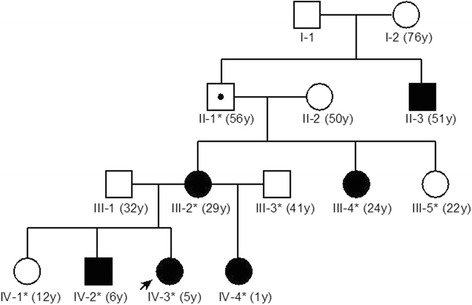
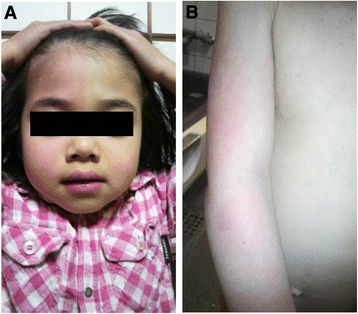
We encountered a 5-year-old girl who had short-lasting, severe, unilateral temporal headaches with ipsilateral lacrimation, nasal congestion and rhinorrhoea, and facial flushing after severe attacks. Family history revealed similar short-lasting, severe headaches in an older brother, younger sister, mother, maternal aunt, and maternal grandfather's brother.
We performed routine laboratory examinations and electrophysiological and radiological studies for three children, and whole-exome sequencing to determine the genetic causality in this family.
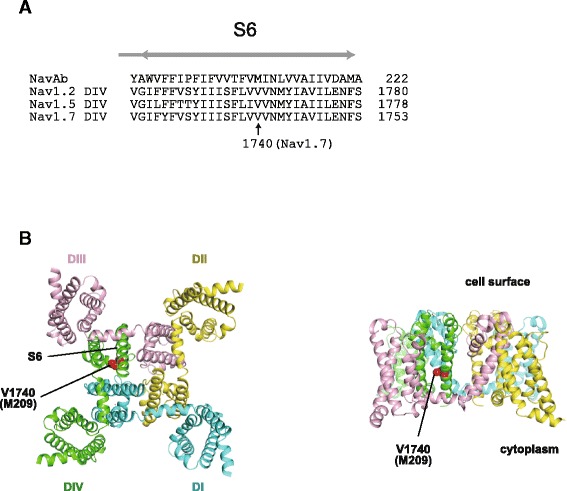
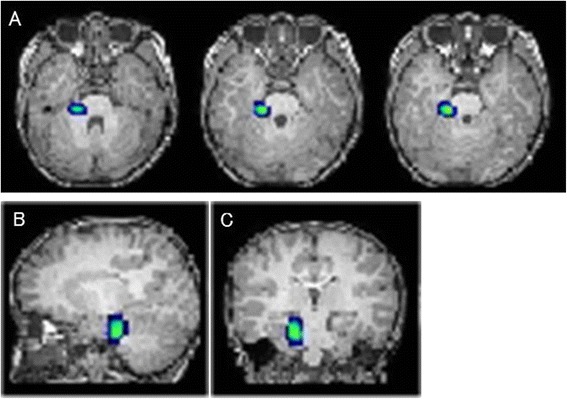
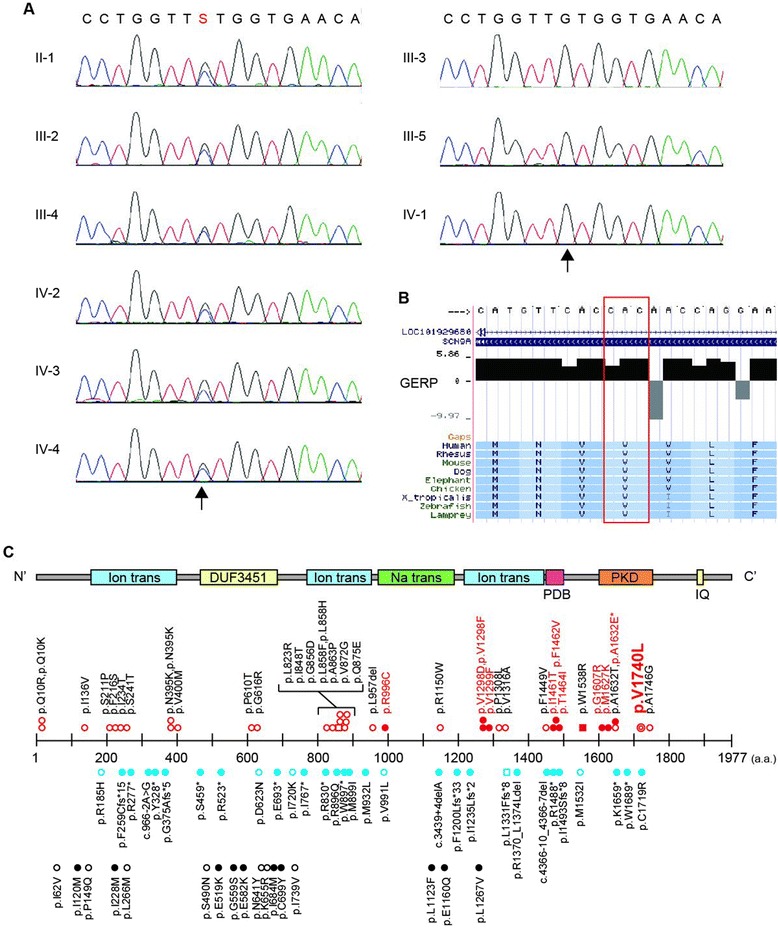
Focal hyperperfusion of the right trigeminal root entry zone was seen during a right-sided attack in one child, while left-sided temporal headache attacks were provoked by bilateral electrical stimulation of the upper extremities in another. We identified a novel SCN9A mutation (NM_002977: c.5218G>C, p.Val1740Leu) in all affected family members, but not in any of the unaffected members. SCN9A encodes the voltage-gated sodium-channel type IX alpha subunit known as Na(v)1.7.
Gain-of-function mutations in Na(v)1.7 are well known to cause paroxysmal extreme pain disorder (PEPD), a painful Na-channelopathy characterized by attacks of excruciating deep burning pain in the rectal, ocular, or jaw areas. The SCN9A mutation suggests that our patients had a phenotype of PEPD with a predominant symptom of short-lasting, severe, unilateral headache.
我们接诊了一名5岁女孩,她患有短暂性、严重的单侧颞部头痛,并伴有同侧流泪、鼻充血和流涕,严重发作后出现面部潮红。家族史显示,其哥哥、妹妹、母亲、姨妈和外祖父的兄弟也有类似的短暂性、严重头痛。
我们对三名儿童进行了常规实验室检查、电生理和放射学研究,并进行了全外显子测序以确定该家族的遗传病因。
一名儿童在右侧发作期间可见右侧三叉神经根入区局灶性血流灌注增加,而另一名儿童双侧上肢电刺激可诱发左侧颞部头痛发作。我们在所有患病家庭成员中发现了一种新的SCN9A突变(NM_002977:c.5218G>C,p.Val1740Leu),而在任何未患病成员中均未发现。SCN9A编码电压门控钠通道IXα亚基,即Na(v)1.7。
众所周知,Na(v)1.7功能获得性突变会导致发作性极端疼痛障碍(PEPD),这是一种疼痛性钠通道病,其特征是直肠、眼部或颌部区域发作剧烈的深部灼痛。SCN9A突变表明,我们的患者具有PEPD的表型,主要症状为短暂性、严重的单侧头痛。