Sezgin Erdinc, Gutmann Theresia, Buhl Tomasz, Dirkx Ron, Grzybek Michal, Coskun Ünal, Solimena Michele, Simons Kai, Levental Ilya, Schwille Petra
Weatherall Institute of Molecular Medicine, University of Oxford, Oxford, United Kingdom; Max Planck Institute for Molecular Cell Biology and Genetics, Dresden, Germany.
Paul Langerhans Institute Dresden of the Helmholtz Centre Munich at the University Clinic Carl Gustav Carus, TU Dresden, Dresden, Germany; German Center for Diabetes Research (DZD), Neuherberg, Germany.
PLoS One. 2015 Apr 23;10(4):e0123930. doi: 10.1371/journal.pone.0123930. eCollection 2015.
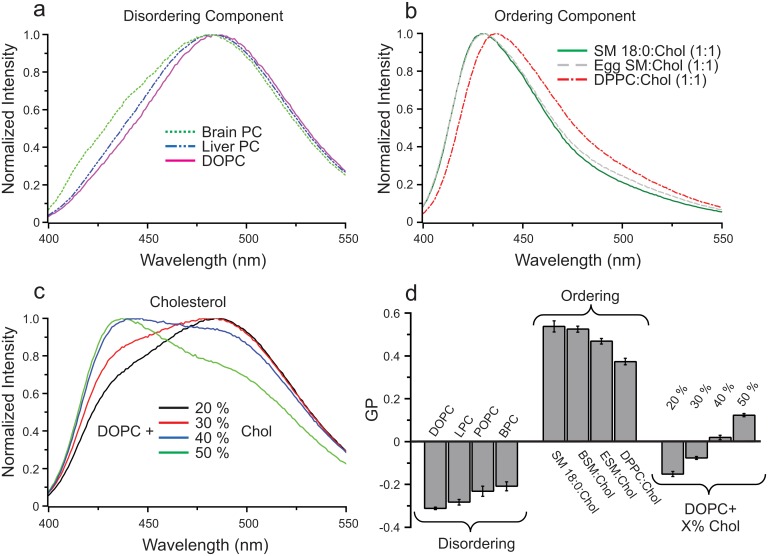
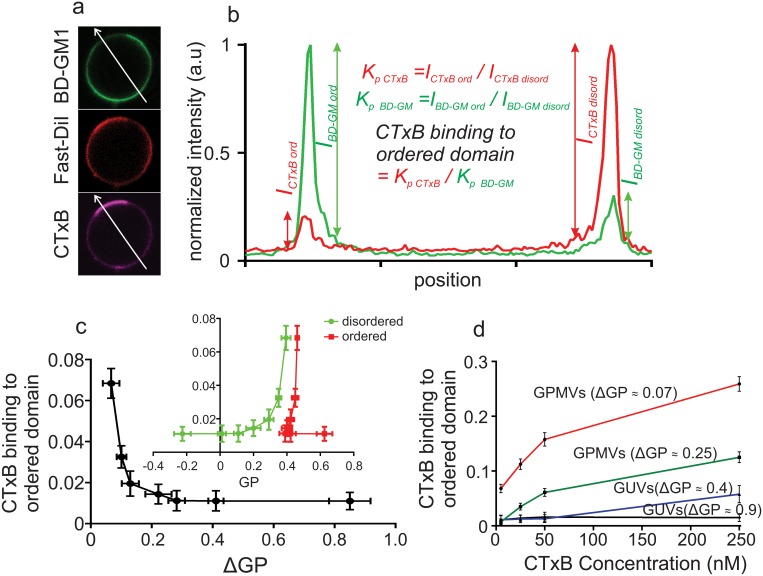
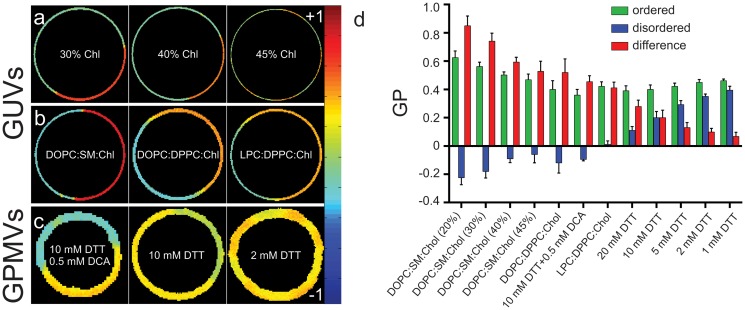
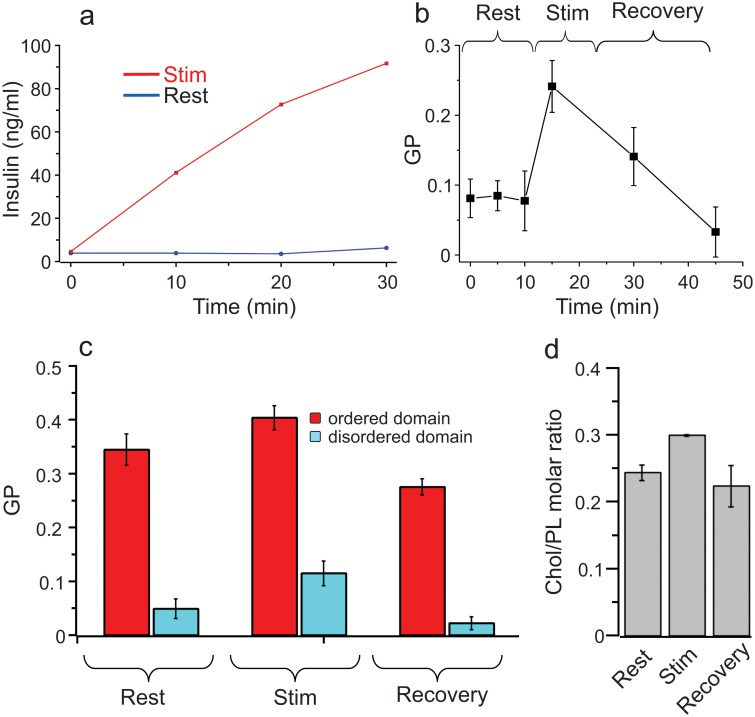
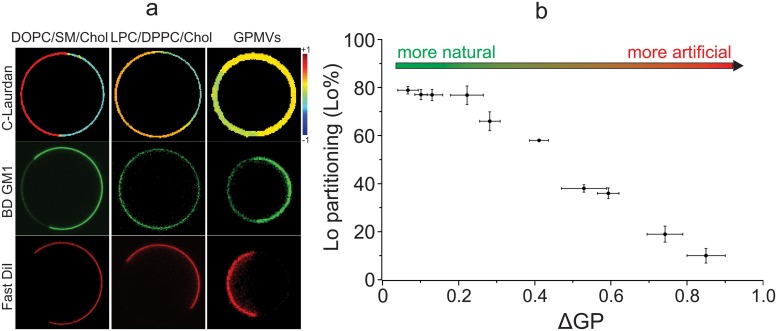
Lateral compositional and physicochemical heterogeneity is a ubiquitous feature of cellular membranes on various length scales, from molecular assemblies to micrometric domains. Segregated lipid domains of increased local order, referred to as rafts, are believed to be prominent features in eukaryotic plasma membranes; however, their exact nature (i.e. size, lifetime, composition, homogeneity) in live cells remains difficult to define. Here we present evidence that both synthetic and natural plasma membranes assume a wide range of lipid packing states with varying levels of molecular order. These states may be adapted and specifically tuned by cells during active cellular processes, as we show for stimulated insulin secretion. Most importantly, these states regulate both the partitioning of molecules between coexisting domains and the bioactivity of their constituent molecules, which we demonstrate for the ligand binding activity of the glycosphingolipid receptor GM1. These results confirm the complexity and flexibility of lipid-mediated membrane organization and reveal mechanisms by which this flexibility could be functionalized by cells.
横向成分和物理化学异质性是细胞膜在从分子聚集体到微米级结构域等各种长度尺度上普遍存在的特征。局部有序性增加的分离脂质结构域,即脂筏,被认为是真核细胞质膜中的突出特征;然而,它们在活细胞中的确切性质(即大小、寿命、组成、均匀性)仍然难以确定。在此,我们提供证据表明,合成质膜和天然质膜都呈现出广泛的脂质堆积状态,分子有序程度各不相同。正如我们在刺激胰岛素分泌实验中所展示的,这些状态可能在活跃的细胞过程中被细胞调整并进行特异性调节。最重要的是,这些状态既调节分子在共存结构域之间的分配,也调节其组成分子的生物活性,我们以糖鞘脂受体GM1的配体结合活性为例进行了证明。这些结果证实了脂质介导的膜组织的复杂性和灵活性,并揭示了细胞可使这种灵活性发挥功能的机制。