De Marco Júnior Paulo, Batista Joana Darc, Cabette Helena Soares Ramos
Laboratorio de Teoria, Metacomunidades e Ecologia de Paisagens, Departamento de Ecologia, ICB, Universidade Federal de Goiás, Goiânia, GO, Brasil.
Laboratório de Entomologia, Universidade do Estado de Mato Grosso (UNEMAT), Nova Xavantina, MT, Brasil.
PLoS One. 2015 Apr 23;10(4):e0123023. doi: 10.1371/journal.pone.0123023. eCollection 2015.
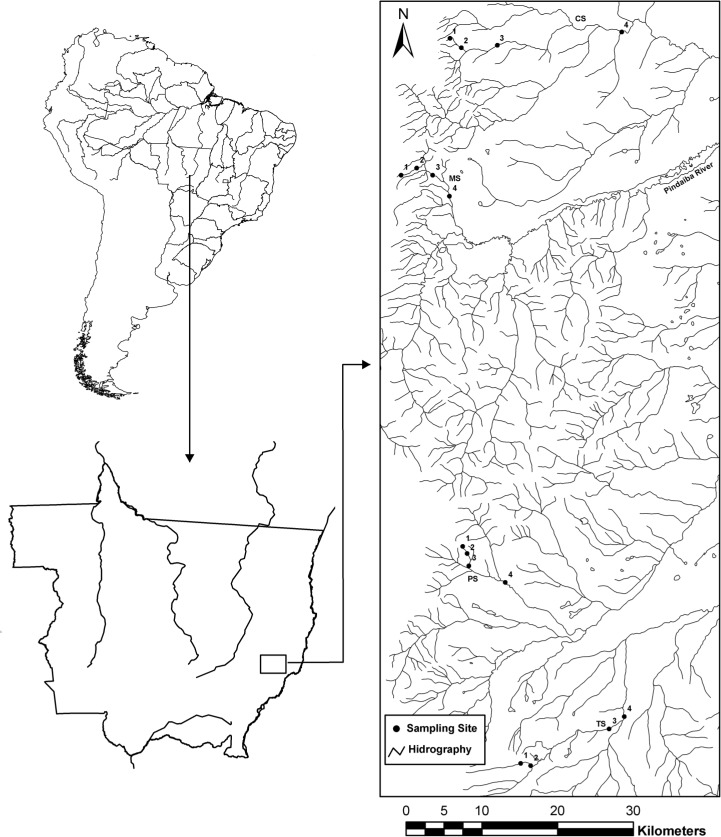
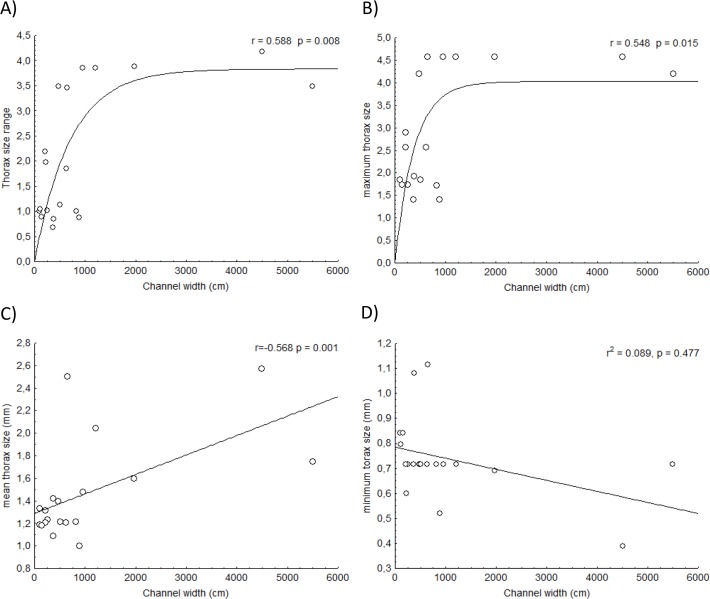
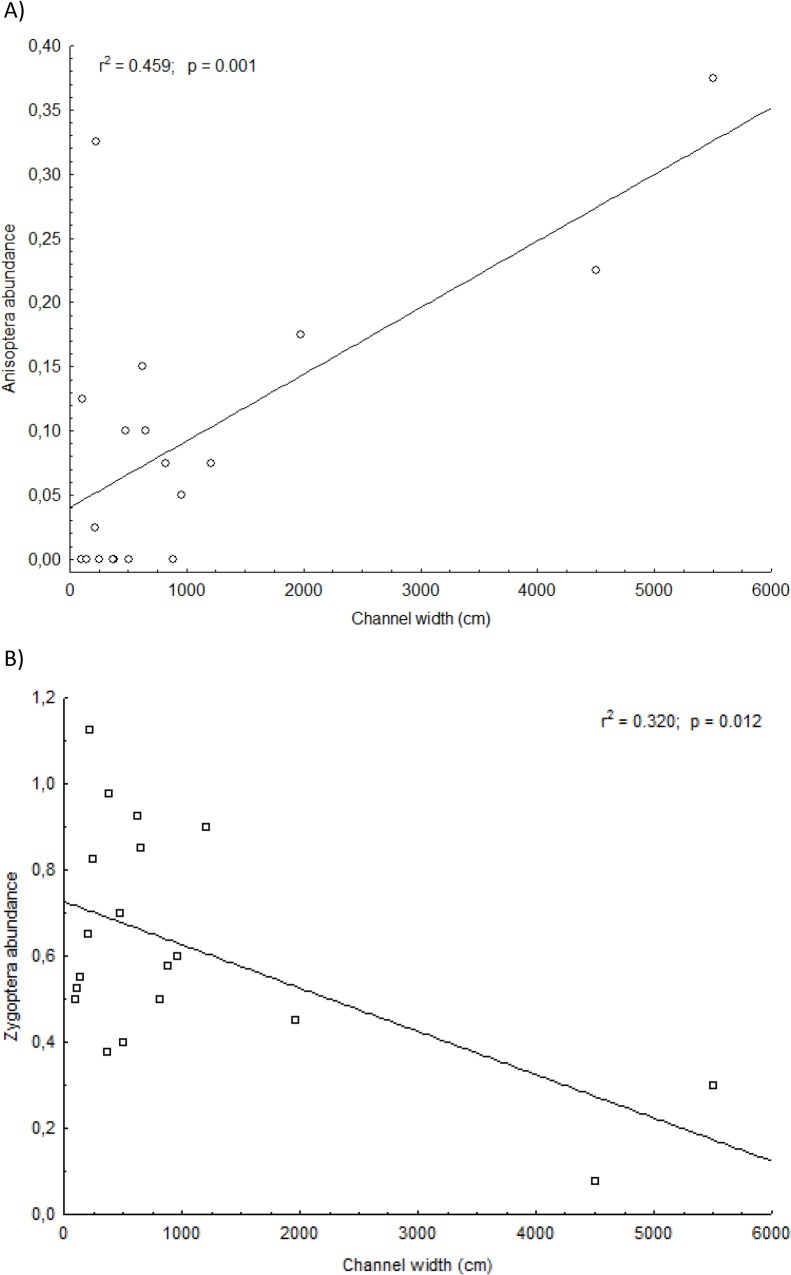
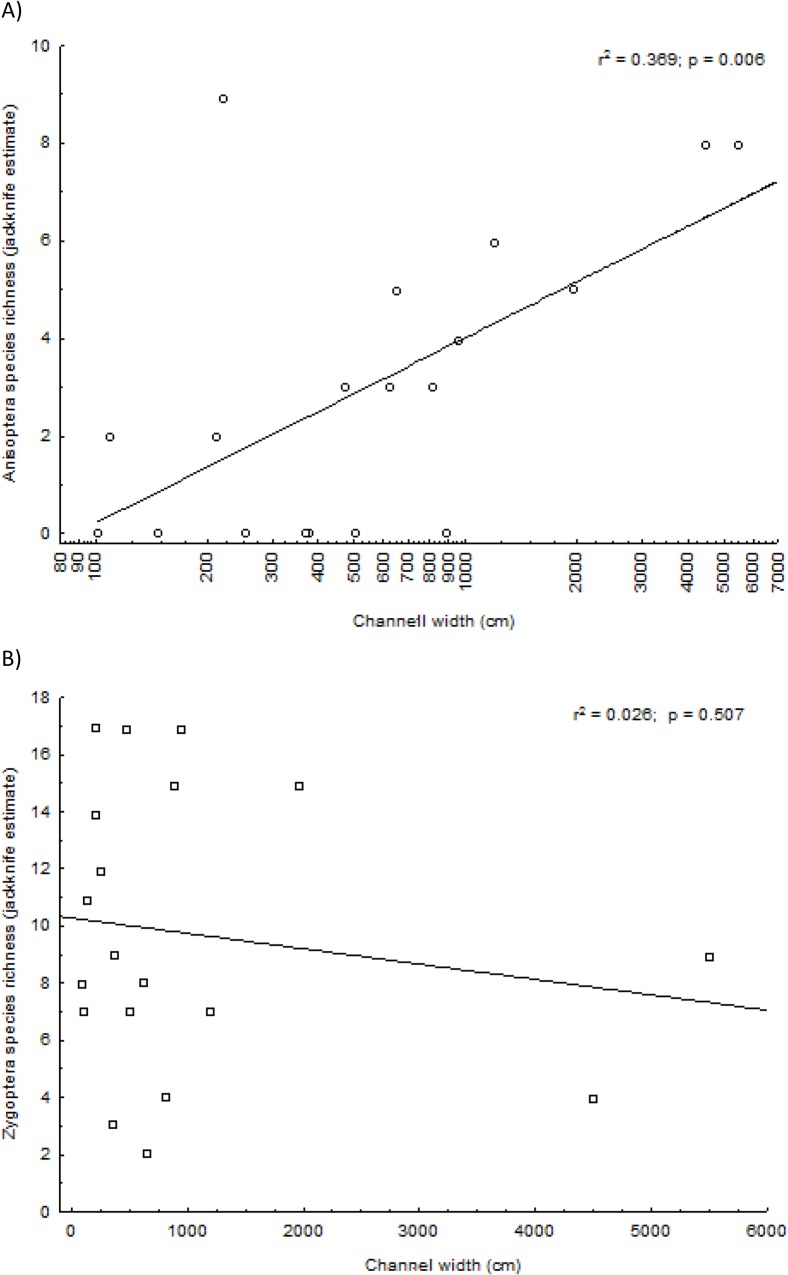
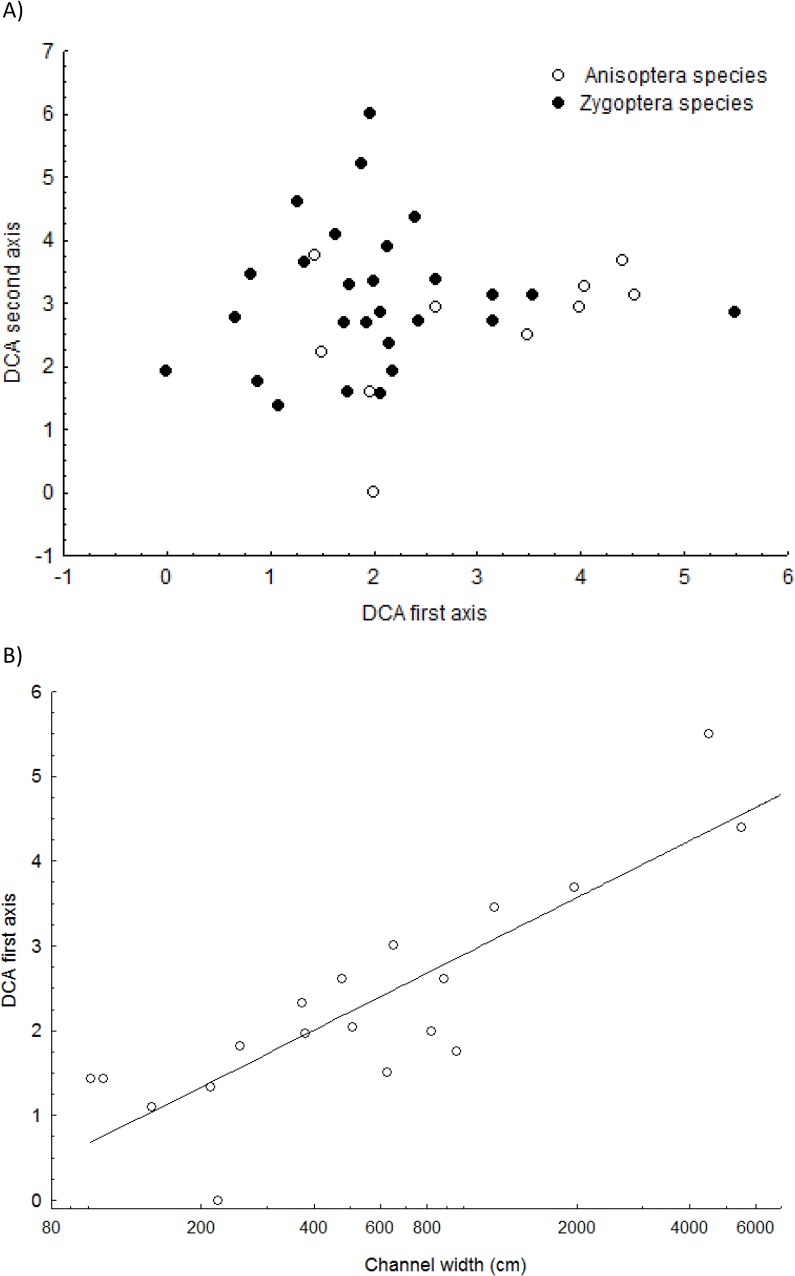
Community assembly theory is founded on the premise that the relative importance of local environmental processes and dispersal shapes the compositional structure of metacommunities. The species sorting model predicts that assemblages are dominated by the environmental filtering of species that are readily able to disperse to suitable sites. We propose an ecophysiological hypothesis (EH) for the mechanism underlying the organization of species-sorting odonate metacommunities based on the interplay of thermoregulation, body size and the degree of sunlight availability in small-to-medium tropical streams. Due to thermoregulatory restrictions, the EH predicts (i) that larger species are disfavored in small streams and (ii) that streams exhibit a nested compositional pattern characterized by species' size distribution. To test the EH, we evaluate the longitudinal distribution of adult Odonata at 19 sites in 1st- to 6th-order streams in the Tropical Cerrado of Brazil. With increasing channel width, the total abundance and species richness of Anisoptera increased, while the abundance of Zygoptera decreased. The first axis of an ordination analysis of the species abundance data was directly related to channel width. Mean and maximum thorax size are positively correlated to channel width, but no relationship was found for the minimum thorax size, suggesting that there is no lower size constraint on the occurrence of these species. Additionally, a nested compositional pattern related to body size was observed. Our results support the EH and its use as an ecological assembly rule based on abiotic factors. Forest cover functions as a filter to determine which species successfully colonize a given site within a metacommunity. As a consequence, the EH also indicates higher treats for small-bodied zygopterans in relation to the loss of riparian forests in tropical streams.
群落组装理论基于这样一个前提,即局部环境过程和扩散的相对重要性塑造了集合群落的组成结构。物种分选模型预测,群落主要由能够轻易扩散到适宜地点的物种的环境筛选作用主导。我们基于中小型热带溪流中体温调节、体型和阳光可利用程度之间的相互作用,提出了一个关于物种分选豆娘集合群落组织机制的生态生理学假说(EH)。由于体温调节的限制,EH预测:(i)大型物种在小溪流中处于劣势;(ii)溪流呈现出以物种大小分布为特征的嵌套组成模式。为了验证EH,我们评估了巴西热带稀树草原1至6级溪流中19个地点成年豆娘的纵向分布。随着河道宽度增加,差翅亚目豆娘的总丰度和物种丰富度增加,而束翅亚目豆娘的丰度下降。对物种丰度数据进行排序分析的第一轴与河道宽度直接相关。平均和最大胸部尺寸与河道宽度呈正相关,但未发现最小胸部尺寸与河道宽度之间存在关系,这表明这些物种的出现不存在更低的体型限制。此外,还观察到了与体型相关的嵌套组成模式。我们的结果支持EH及其作为基于非生物因素的生态组装规则的应用。森林覆盖起到了过滤器的作用,决定了哪些物种能够成功定殖于集合群落中的特定地点。因此,EH还表明,热带溪流中河岸森林的丧失对小型束翅亚目豆娘构成了更高的威胁。