Yamane Masako, Yokoyama Yusuke, Abe-Ouchi Ayako, Obrochta Stephen, Saito Fuyuki, Moriwaki Kiichi, Matsuzaki Hiroyuki
Atmosphere and Ocean Research Institute, University of Tokyo, 5-1-5 Kashiwanoha, Chiba 277-8564, Japan.
Department of Earth and Planetary Sciences, University of Tokyo, 7-3-1 Hongo, Bunkyoku, Tokyo 113-0033, Japan.
Nat Commun. 2015 Apr 24;6:7016. doi: 10.1038/ncomms8016.
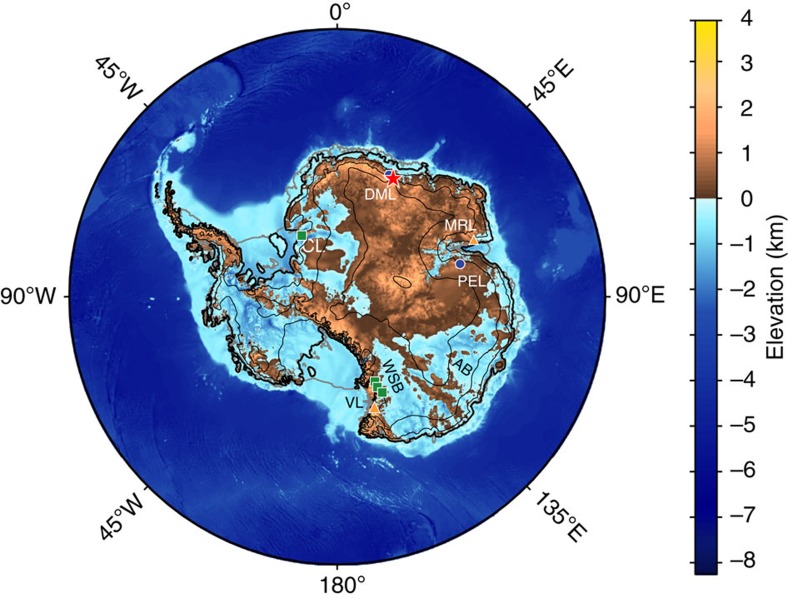
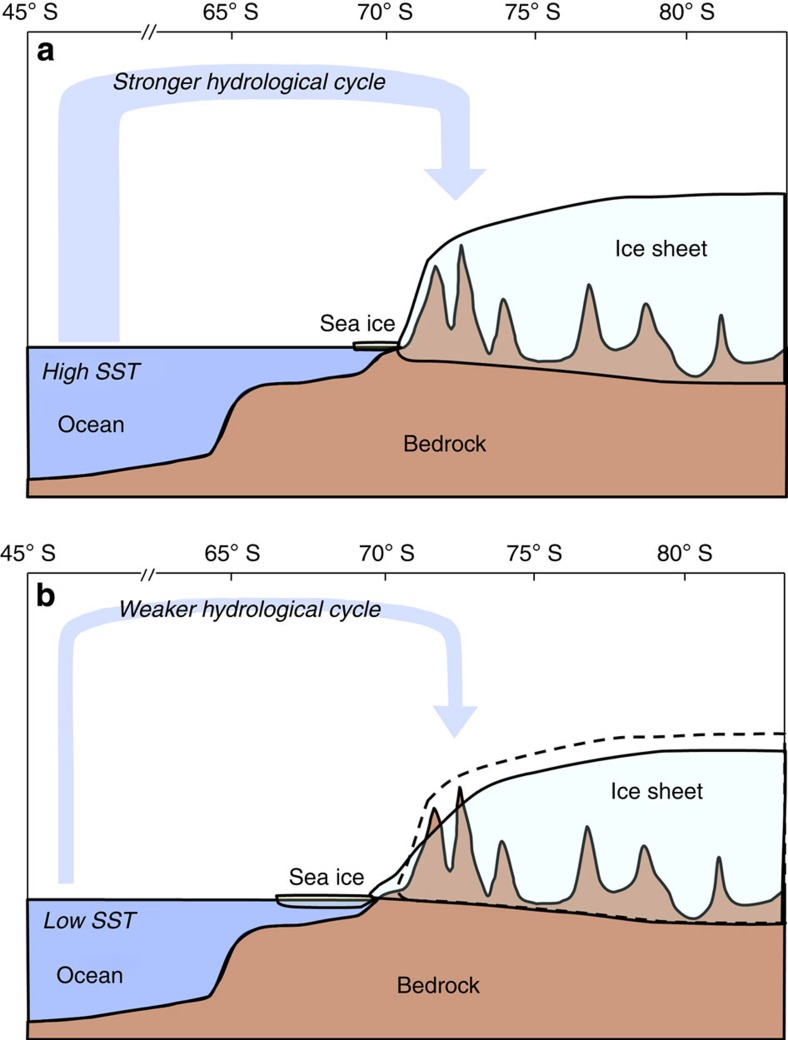
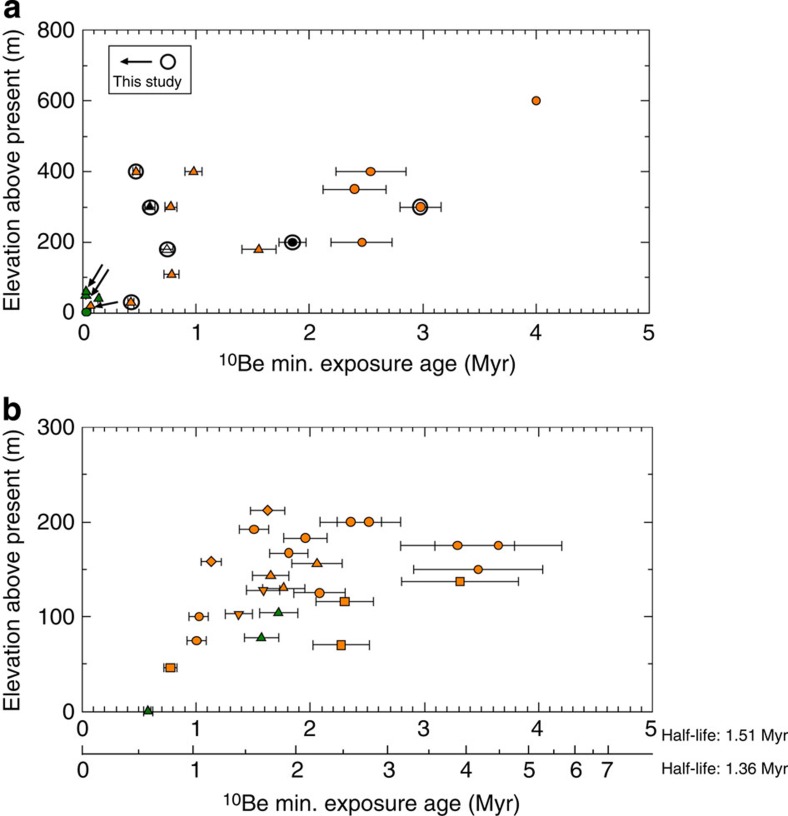
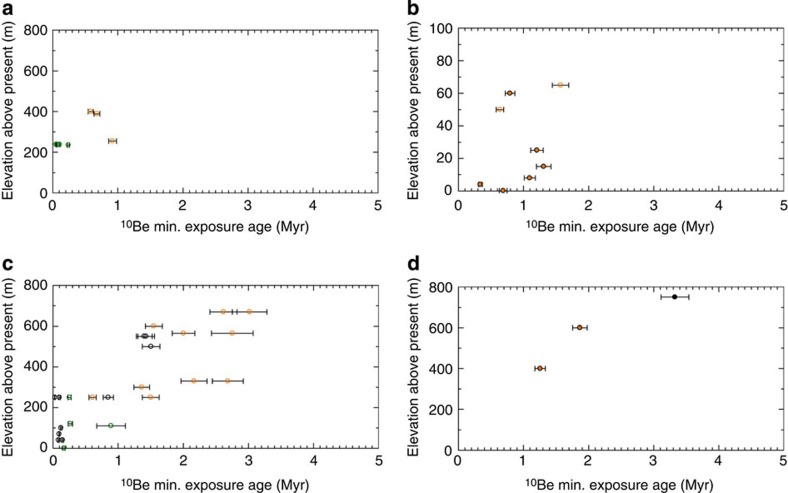
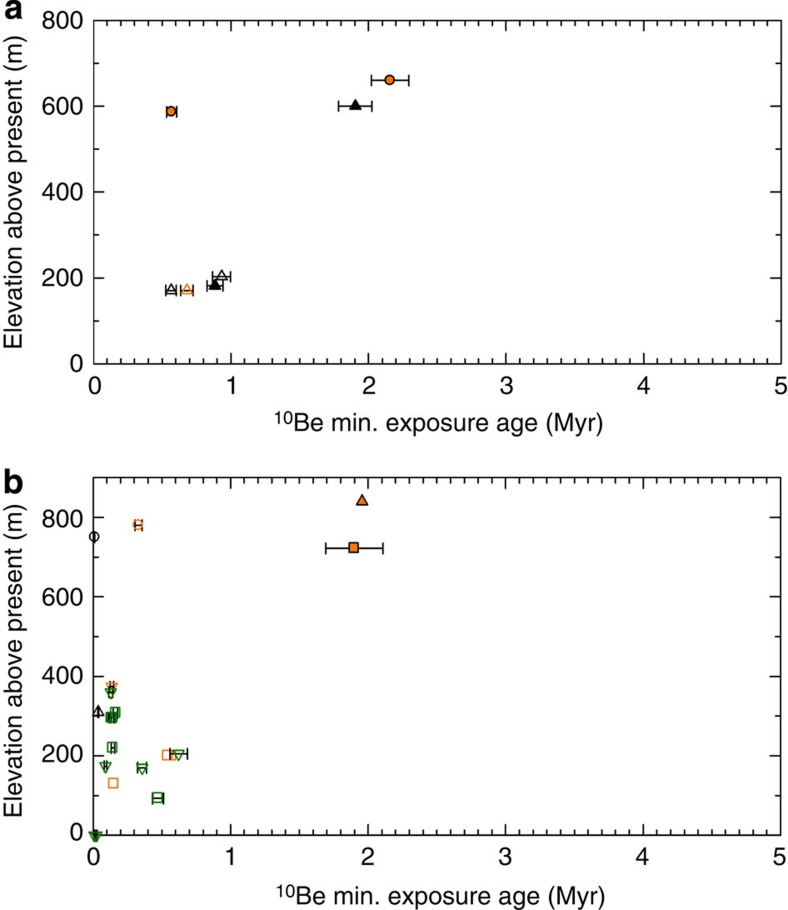
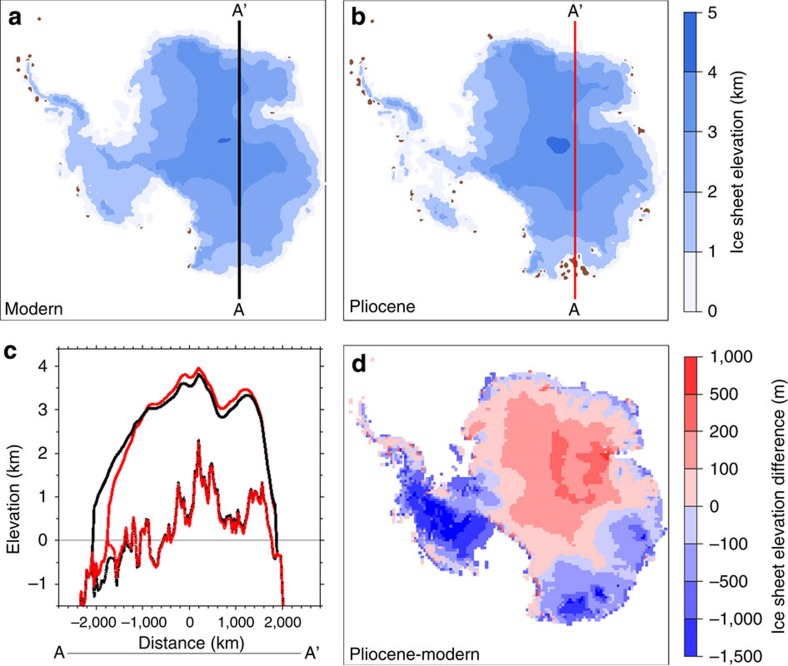
The Late Pliocene epoch is a potential analogue for future climate in a warming world. Here we reconstruct Plio-Pleistocene East Antarctic Ice Sheet (EAIS) variability using cosmogenic nuclide exposure ages and model simulations to better understand ice sheet behaviour under such warm conditions. New and previously published exposure ages indicate interior-thickening during the Pliocene. An ice sheet model with mid-Pliocene boundary conditions also results in interior thickening and suggests that both the Wilkes Subglacial and Aurora Basins largely melted, offsetting increased ice volume. Considering contributions from West Antarctica and Greenland, this is consistent with the most recent IPCC AR5 estimate, which indicates that the Pliocene sea level likely did not exceed +20 m on Milankovitch timescales. The inception of colder climate since ∼3 Myr has increased the sea ice cover and inhibited active moisture transport to Antarctica, resulting in reduced ice sheet thickness, at least in coastal areas.
上新世晚期是变暖世界未来气候的一个潜在模拟对象。在此,我们利用宇宙成因核素暴露年龄和模型模拟来重建上新世 - 更新世东南极冰盖(EAIS)的变化情况,以便更好地理解在这种温暖条件下冰盖的行为。新的以及先前发表的暴露年龄表明上新世期间冰盖内部增厚。一个具有上新世中期边界条件的冰盖模型也得出了内部增厚的结果,并表明威尔克斯冰下盆地和奥罗拉盆地大部分都融化了,抵消了冰量的增加。考虑到西南极洲和格陵兰岛的贡献,这与政府间气候变化专门委员会(IPCC)第五次评估报告(AR5)的最新估计一致,该估计表明上新世海平面在米兰科维奇时间尺度上可能未超过+20米。自约300万年前以来气候变冷,增加了海冰覆盖范围,并抑制了向南极洲的活跃水分输送,导致冰盖厚度减小,至少在沿海地区如此。