Palmer William J, Jiggins Francis M
Department of Genetics, University of Cambridge, Cambridge, United Kingdom
Department of Genetics, University of Cambridge, Cambridge, United Kingdom.
Mol Biol Evol. 2015 Aug;32(8):2111-29. doi: 10.1093/molbev/msv093. Epub 2015 Apr 22.
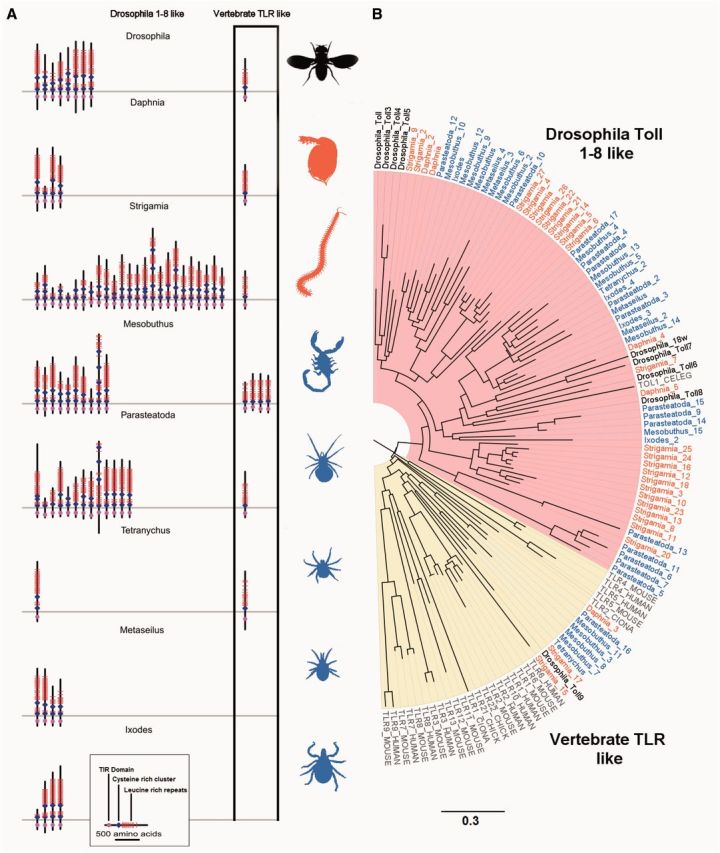
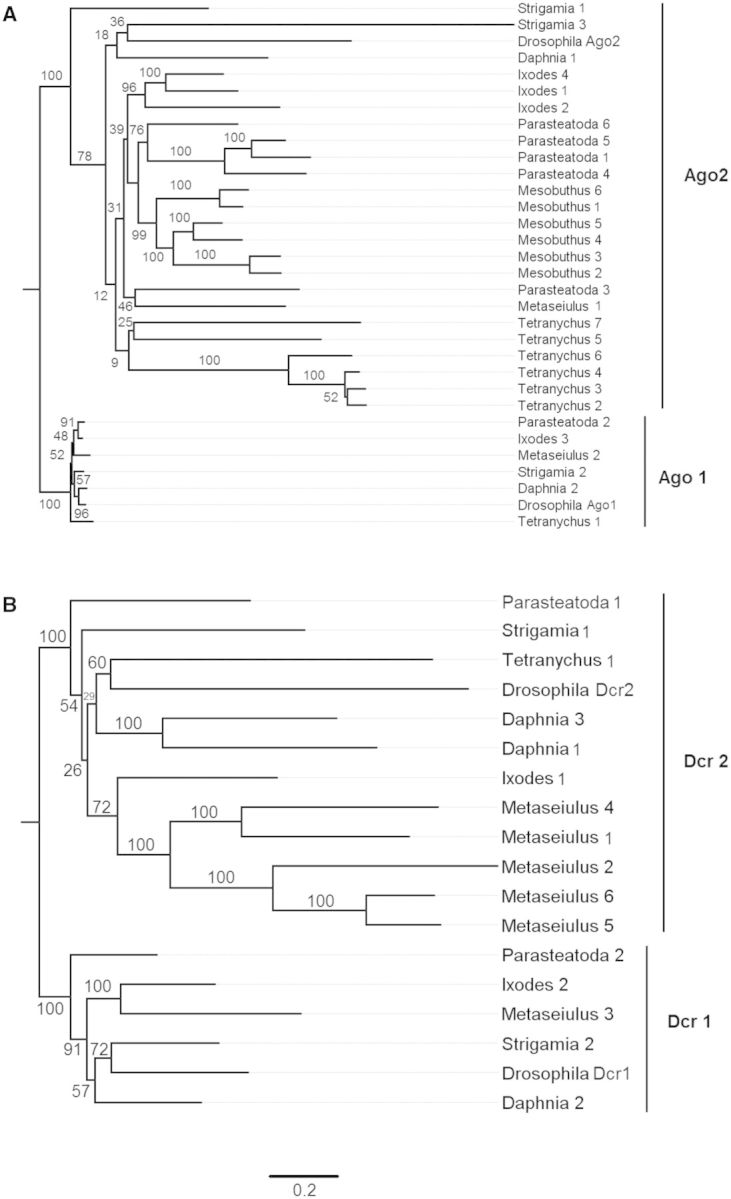
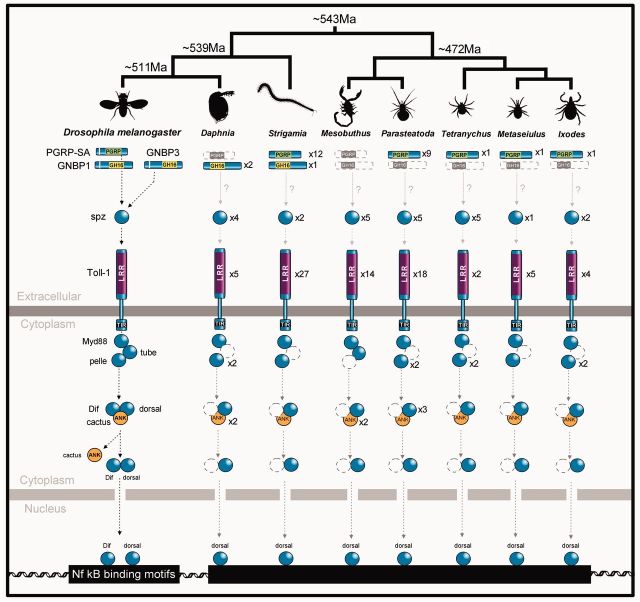
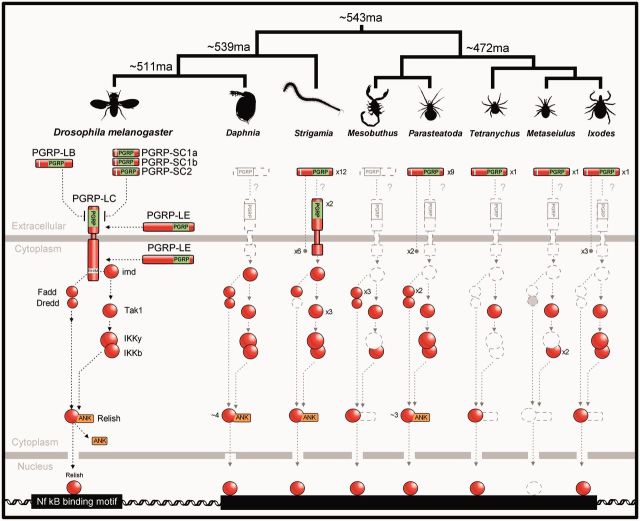
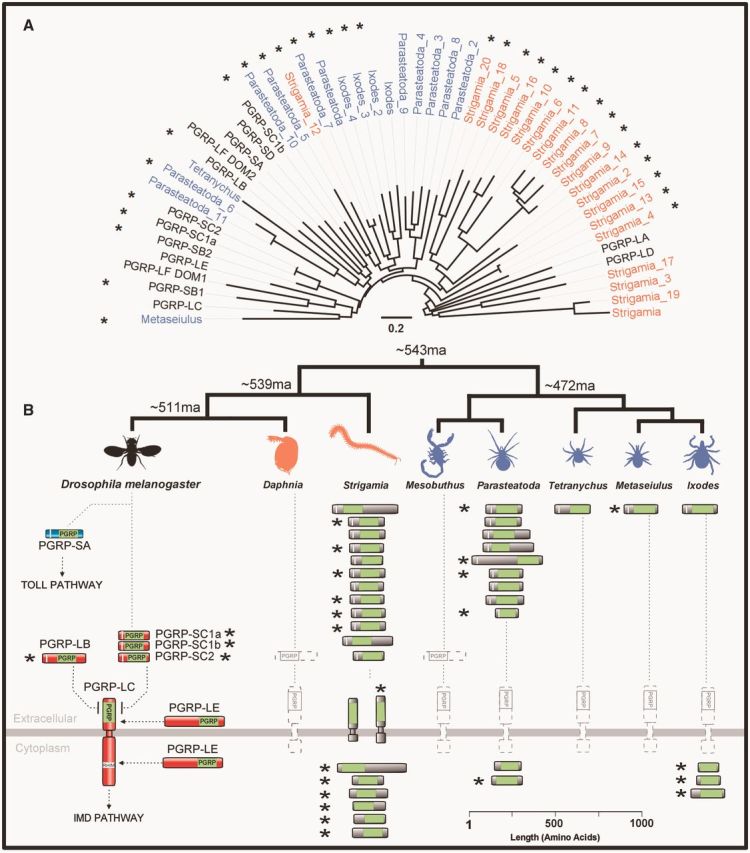
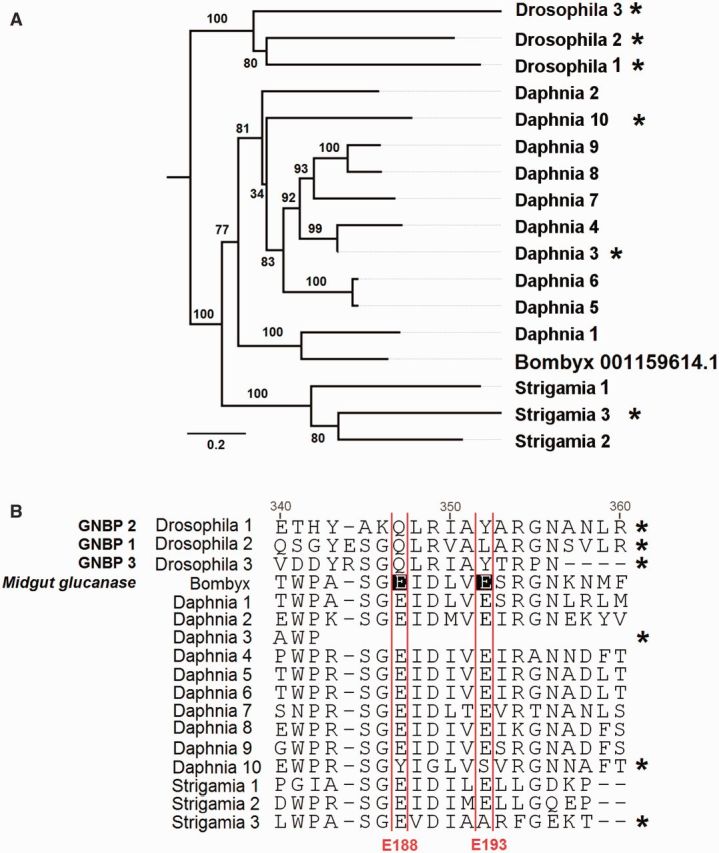
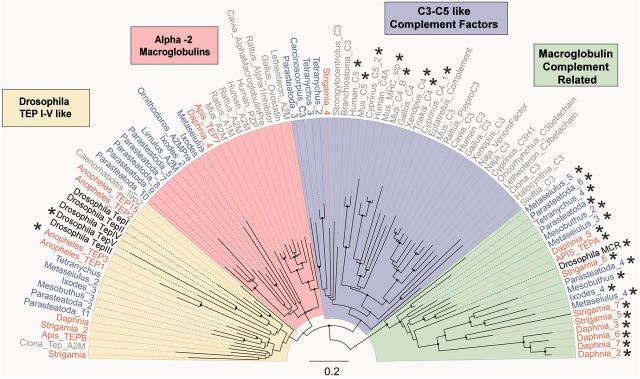
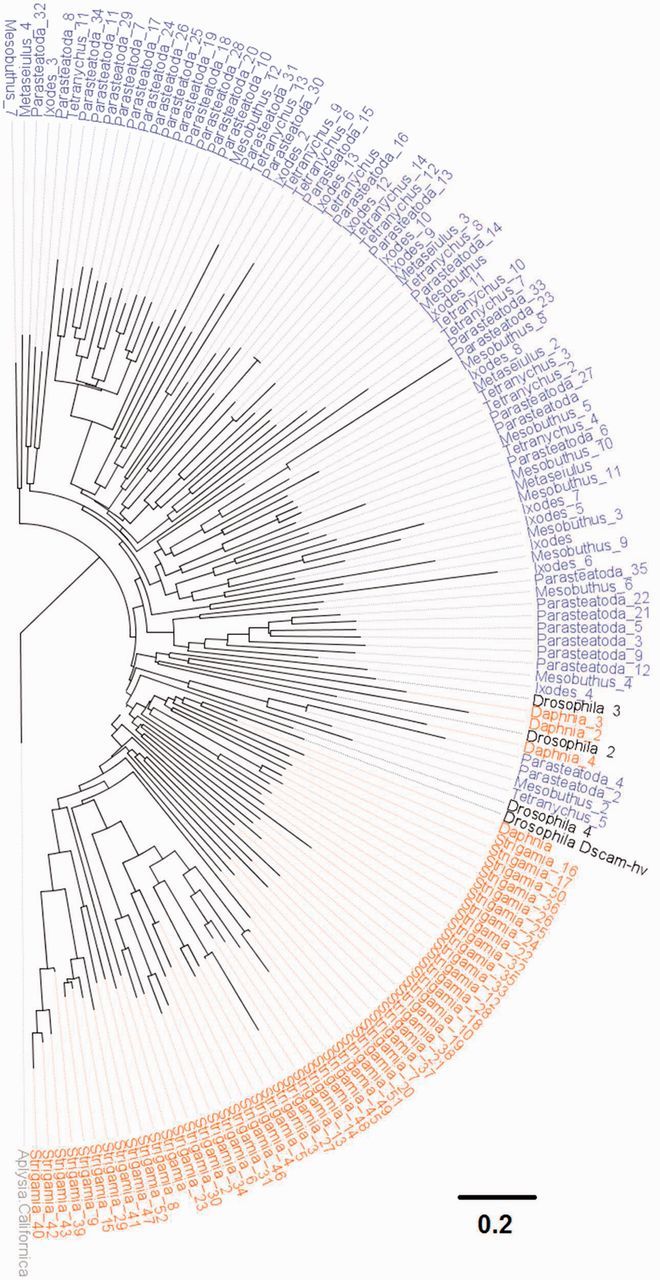
Insects are an important model for the study of innate immune systems, but remarkably little is known about the immune system of other arthropod groups despite their importance as disease vectors, pests, and components of biological diversity. Using comparative genomics, we have characterized the immune system of all the major groups of arthropods beyond insects for the first time--studying five chelicerates, a myriapod, and a crustacean. We found clear traces of an ancient origin of innate immunity, with some arthropods having Toll-like receptors and C3-complement factors that are more closely related in sequence or structure to vertebrates than other arthropods. Across the arthropods some components of the immune system, such as the Toll signaling pathway, are highly conserved. However, there is also remarkable diversity. The chelicerates apparently lack the Imd signaling pathway and beta-1,3 glucan binding proteins--a key class of pathogen recognition receptors. Many genes have large copy number variation across species, and this may sometimes be accompanied by changes in function. For example, we find that peptidoglycan recognition proteins have frequently lost their catalytic activity and switch between secreted and intracellular forms. We also find that there has been widespread and extensive duplication of the cellular immune receptor Dscam (Down syndrome cell adhesion molecule), which may be an alternative way to generate the high diversity produced by alternative splicing in insects. In the antiviral short interfering RNAi pathway Argonaute 2 evolves rapidly and is frequently duplicated, with a highly variable copy number. Our results provide a detailed analysis of the immune systems of several important groups of animals for the first time and lay the foundations for functional work on these groups.
昆虫是研究先天免疫系统的重要模型,但令人惊讶的是,尽管其他节肢动物类群作为疾病传播媒介、害虫和生物多样性的组成部分很重要,我们对它们的免疫系统却知之甚少。通过比较基因组学,我们首次对昆虫以外的所有主要节肢动物类群的免疫系统进行了特征描述——研究了五种螯肢动物、一种多足动物和一种甲壳动物。我们发现了先天免疫古老起源的明显痕迹,一些节肢动物具有与脊椎动物在序列或结构上比其他节肢动物更密切相关的Toll样受体和C3补体因子。在整个节肢动物中,免疫系统的一些组成部分,如Toll信号通路,是高度保守的。然而,也存在显著的多样性。螯肢动物显然缺乏Imd信号通路和β-1,3葡聚糖结合蛋白——一类关键的病原体识别受体。许多基因在物种间有大量的拷贝数变异,这有时可能伴随着功能的变化。例如,我们发现肽聚糖识别蛋白经常失去其催化活性,并在分泌形式和细胞内形式之间转换。我们还发现,细胞免疫受体Dscam(唐氏综合征细胞粘附分子)存在广泛而大量的复制,这可能是产生昆虫中由可变剪接产生的高多样性的另一种方式。在抗病毒的短干扰RNAi途径中,Argonaute 2进化迅速且经常复制,拷贝数高度可变。我们的结果首次对几个重要动物类群的免疫系统进行了详细分析,并为这些类群的功能研究奠定了基础。