McDermott Mary McGrae
From the Departments of Medicine and Preventive Medicine, Northwestern University Feinberg School of Medicine, Chicago, IL.
Circ Res. 2015 Apr 24;116(9):1540-50. doi: 10.1161/CIRCRESAHA.114.303517.
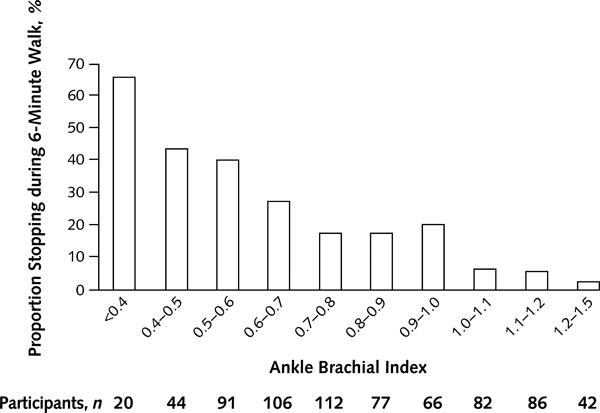
Lower extremity peripheral artery disease (PAD) is frequently underdiagnosed, in part because of the wide variety of leg symptoms manifested by patients with PAD and in part because of the high prevalence of asymptomatic PAD. In primary care medical practices, 30% to 60% of patients with PAD report no exertional leg symptoms and ≈45% to 50% report exertional leg symptoms that are not consistent with classic intermittent claudication. The prevalence and extent of functional impairment and functional decline in PAD may also be underappreciated. Functional impairment and functional decline are common in PAD, even among those who are asymptomatic. Lower extremity ischemia is also associated with pathophysiologic changes in calf skeletal muscle, including smaller calf muscle area, increased calf muscle fat content, impaired leg strength, and impaired metabolic function. People with severe PAD have poorer peroneal nerve conduction velocity compared with people with mild PAD or no PAD. The degree of ischemia-related pathophysiologic changes in lower extremity muscles and peripheral nerves of people with PAD are associated with the degree of functional impairment. New interventions are needed to improve functional performance and prevent mobility loss in the large number of patients with PAD, including in those who are asymptomatic or who have exertional leg symptoms other than claudication.
下肢外周动脉疾病(PAD)常常未得到充分诊断,部分原因是PAD患者表现出的腿部症状多种多样,部分原因是无症状PAD的患病率很高。在基层医疗实践中,30%至60%的PAD患者报告无运动性腿部症状,约45%至50%的患者报告的运动性腿部症状与典型的间歇性跛行不符。PAD患者功能损害和功能衰退的患病率及程度也可能未得到充分认识。功能损害和功能衰退在PAD中很常见,即使在无症状者中也是如此。下肢缺血还与小腿骨骼肌的病理生理变化有关,包括小腿肌肉面积减小、小腿肌肉脂肪含量增加、腿部力量受损和代谢功能受损。与轻度PAD或无PAD的人相比,重度PAD患者的腓总神经传导速度更慢。PAD患者下肢肌肉和周围神经中与缺血相关的病理生理变化程度与功能损害程度相关。需要新的干预措施来改善大量PAD患者的功能表现并防止活动能力丧失,包括那些无症状或有除跛行以外的运动性腿部症状的患者。