Stimac Monika, Dolinsek Tanja, Lampreht Ursa, Cemazar Maja, Sersa Gregor
Department of Experimental Oncology, Institute of Oncology Ljubljana, Ljubljana, Slovenia.
Department of Experimental Oncology, Institute of Oncology Ljubljana, Ljubljana, Slovenia; Faculty of Health Sciences, University of Primorska, Izola, Slovenia.
PLoS One. 2015 Apr 24;10(4):e0124913. doi: 10.1371/journal.pone.0124913. eCollection 2015.
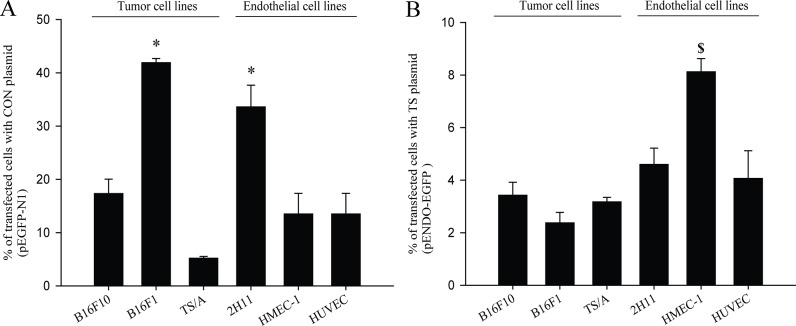
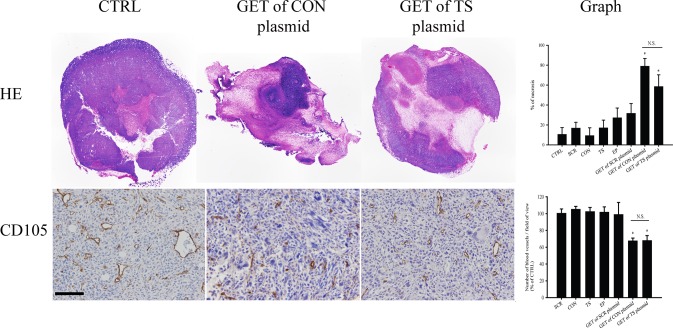
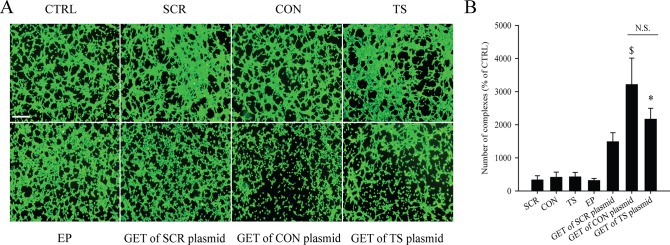
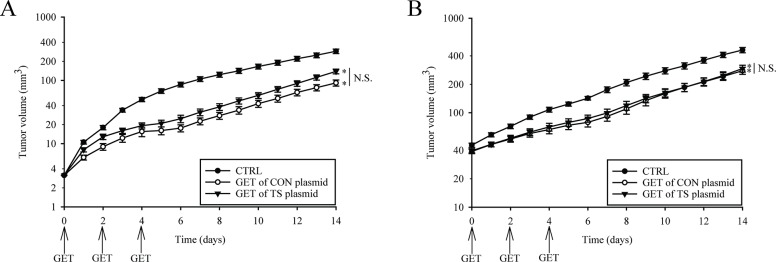
Vascular targeted therapies, targeting specific endothelial cell markers, are promising approaches for the treatment of cancer. One of the targets is endoglin, transforming growth factor-β (TGF-β) co-receptor, which mediates proliferation, differentiation and migration of endothelial cells forming neovasculature. However, its specific, safe and long-lasting targeting remains the challenge. Therefore, in our study we evaluated the transfection efficacy, vascular targeted effects and therapeutic potential of the plasmid silencing endoglin with the tissue specific promoter, specific for endothelial cells marker endothelin-1 (ET) (TS plasmid), in comparison to the plasmid with constitutive promoter (CON plasmid), in vitro and in vivo. Tissue specificity of TS plasmid was demonstrated in vitro on several cell lines, and its antiangiogenic efficacy was demonstrated by reducing tube formation of 2H11 endothelial cells. In vivo, on a murine mammary TS/A tumor model, we demonstrated good antitumor effect of gene electrotransfer (GET) of either of both plasmids in treatment of smaller tumors still in avascular phase of growth, as well as on bigger tumors, already well vascularized. In support to the observations on predominantly vascular targeted effects of endoglin, histological analysis has demonstrated an increase in necrosis and a decrease in the number of blood vessels in therapeutic groups. A significant antitumor effect was observed in tumors in avascular and vascular phase of growth, possibly due to both, the antiangiogenic and the vascular disrupting effect. Furthermore, the study indicates on the potential use of TS plasmid in cancer gene therapy since the same efficacy as of CON plasmid was determined.
血管靶向治疗,即针对特定内皮细胞标志物的治疗方法,是治疗癌症的有前景的途径。其中一个靶点是内皮糖蛋白,它是转化生长因子-β(TGF-β)的共受体,介导形成新血管的内皮细胞的增殖、分化和迁移。然而,对其进行特异性、安全且持久的靶向仍然是一项挑战。因此,在我们的研究中,我们评估了与组成型启动子质粒(CON质粒)相比,具有组织特异性启动子(该启动子对内皮细胞标志物内皮素-1(ET)具有特异性)的沉默内皮糖蛋白的质粒(TS质粒)在体外和体内的转染效率、血管靶向作用和治疗潜力。TS质粒的组织特异性在体外的几种细胞系上得到了证实,其抗血管生成功效通过减少2H11内皮细胞的管腔形成得以证明。在体内,在小鼠乳腺TS/A肿瘤模型上,我们证明了两种质粒中的任何一种通过基因电穿孔(GET)在治疗仍处于无血管生长阶段的较小肿瘤以及已经充分血管化的较大肿瘤时均具有良好的抗肿瘤效果。为支持关于内皮糖蛋白主要具有血管靶向作用的观察结果,组织学分析表明治疗组中坏死增加且血管数量减少。在处于无血管和血管生长阶段的肿瘤中均观察到了显著的抗肿瘤效果,这可能是由于抗血管生成作用和血管破坏作用两者所致。此外,该研究表明TS质粒在癌症基因治疗中具有潜在用途,因为已确定其与CON质粒具有相同的疗效。