Ali Badreldin H, Adham Sirin A, Al Za'abi Mohammed, Waly Mostafa I, Yasin Javed, Nemmar Abderrahim, Schupp Nicole
Departments of Pharmacology and Clinical Pharmacy, College of Medicine and Health Sciences, Sultan Qaboos University, Muscat, Oman.
Department of Biology, College of Science, Sultan Qaboos University, Muscat, Oman.
PLoS One. 2015 Apr 24;10(4):e0125285. doi: 10.1371/journal.pone.0125285. eCollection 2015.
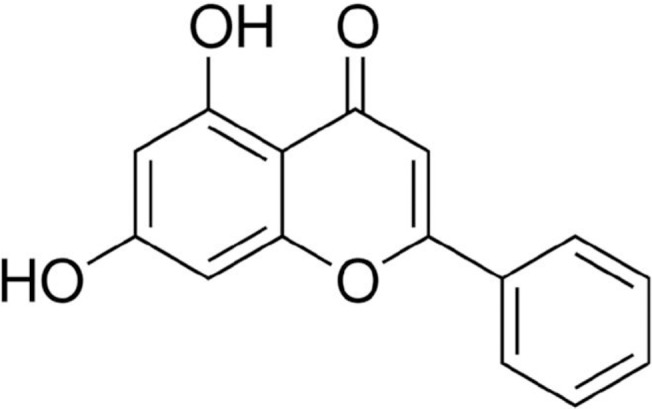
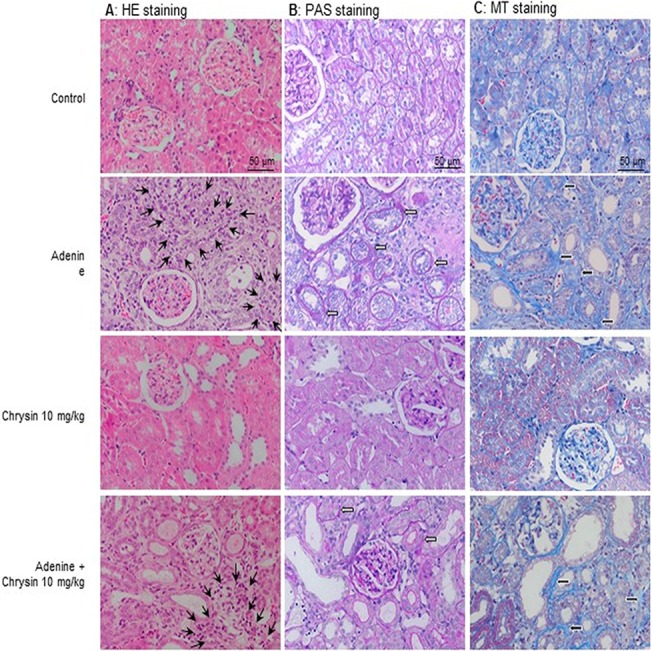
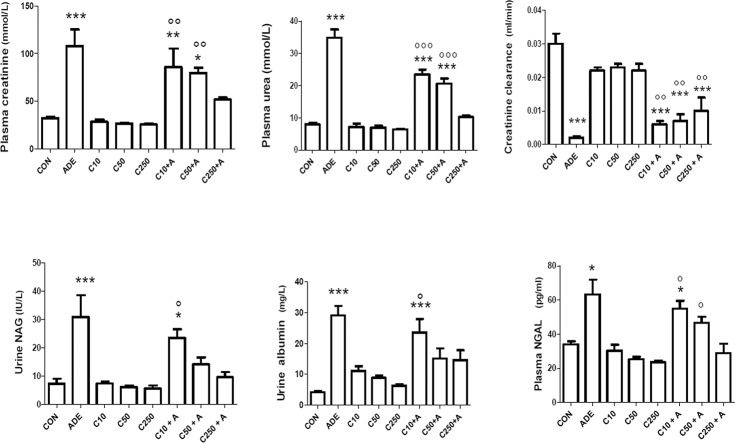
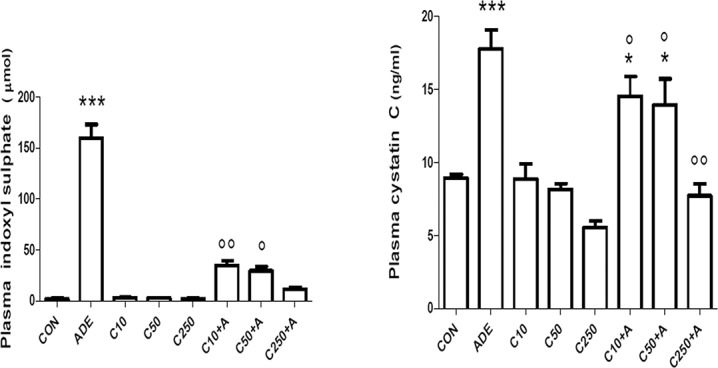
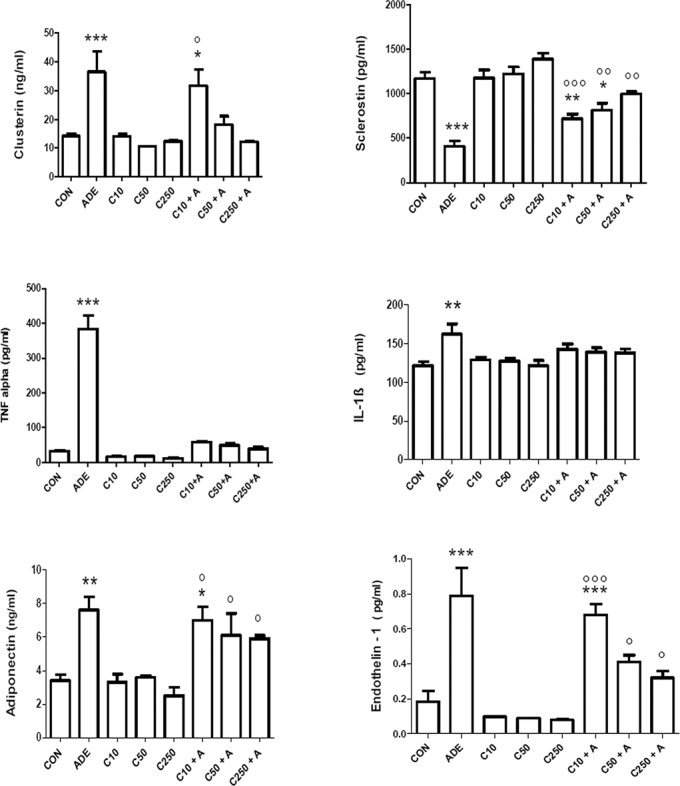
Chrysin (5, 7- dihydroxyflavone) is a flavonoid with several pharmacological properties that include antioxidant, anti-inflammatory and antiapoptotic activities. in this work, we investigated some effects of three graded oral doses of chrysin (10, 50 and 250 mg/kg) on kidney structure and function in rats with experimental chronic renal disease (CKD) induced by adenine (0.25% w/w in feed for 35 days), which is known to involve inflammation and oxidative stress. Using several indices in plasma, urine and kidney homogenates, adenine was found to impair kidney function as it lowered creatinine clearance and increased plasma concentrations of creatinine, urea, neutrophil gelatinase-associated lipocalin and N-Acetyl-beta-D-glucosaminidase activity. Furthermore, it raised plasma concentrations of the uremic toxin indoxyl sulfate, some inflammatory cytokines and urinary albumin concentration. Renal morphology was severely damaged and histopathological markers of inflammation and fibrosis were especially increased. In renal homogenates, antioxidant indices, including superoxide dismutase and catalase activities, total antioxidant capacity and reduced glutathione were all adversely affected. Most of these adenine - induced actions were moderately and dose -dependently mitigated by chrysin, especially at the highest dose. Chrysin did not cause any overt adverse effect on the treated rats. The results suggest that different doses of chrysin produce variable salutary effects against adenine-induced CKD in rats, and that, pending further pharmacological and toxicological studies, its usability as a possible ameliorative agent in human CKD should be considered.
白杨素(5,7 - 二羟基黄酮)是一种具有多种药理特性的黄酮类化合物,这些特性包括抗氧化、抗炎和抗凋亡活性。在本研究中,我们探究了三种不同口服剂量(10、50和250 mg/kg)的白杨素对腺嘌呤诱导的实验性慢性肾病(CKD)大鼠肾脏结构和功能的影响。已知腺嘌呤会引发炎症和氧化应激,通过在大鼠饲料中添加0.25%(w/w)的腺嘌呤持续35天来诱导CKD。通过检测血浆、尿液和肾脏匀浆中的多项指标,发现腺嘌呤会损害肾脏功能,表现为降低肌酐清除率,增加血浆中肌酐、尿素、中性粒细胞明胶酶相关脂质运载蛋白的浓度以及N - 乙酰 - β - D - 氨基葡萄糖苷酶的活性。此外,它还会提高尿毒症毒素硫酸吲哚酚、一些炎性细胞因子的血浆浓度以及尿白蛋白浓度。肾脏形态严重受损,炎症和纤维化的组织病理学标志物尤其增加。在肾脏匀浆中,抗氧化指标,包括超氧化物歧化酶和过氧化氢酶活性、总抗氧化能力以及还原型谷胱甘肽均受到不利影响。白杨素能适度且剂量依赖性地减轻腺嘌呤诱导的这些作用,尤其是在最高剂量时。白杨素对接受治疗的大鼠未产生任何明显的不良影响。结果表明,不同剂量的白杨素对大鼠腺嘌呤诱导的CKD具有不同程度的有益作用,并且在进一步的药理学和毒理学研究之前,应考虑其作为人类CKD潜在改善剂的可用性。