Sanromán-Junquera Margarita, Mora-Jiménez Inmaculada, Almendral Jesús, García-Alberola Arcadio, Rojo-Álvarez José Luis
Department of Signal Theory and Communications, Telematics and Computing, Universidad Rey Juan Carlos, Fuenlabrada 28943, Spain.
Arrhythmia Unit, Hospital Madrid Montepríncipe, Boadilla del Monte 28660, Spain.
PLoS One. 2015 Apr 24;10(4):e0124514. doi: 10.1371/journal.pone.0124514. eCollection 2015.
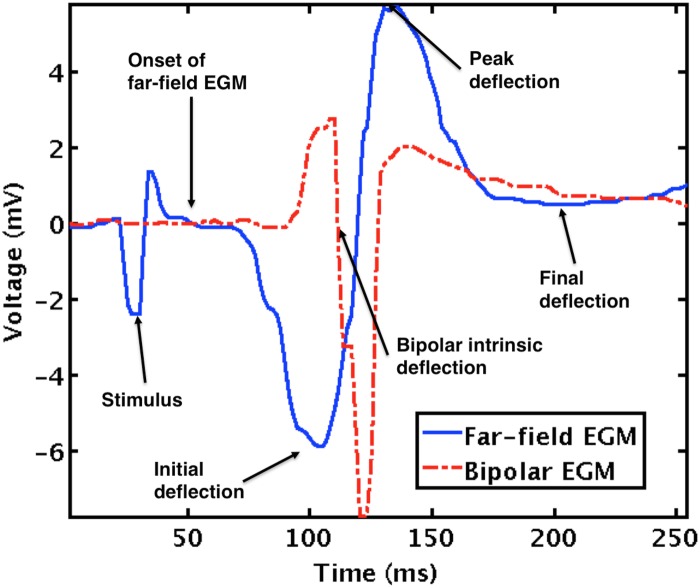
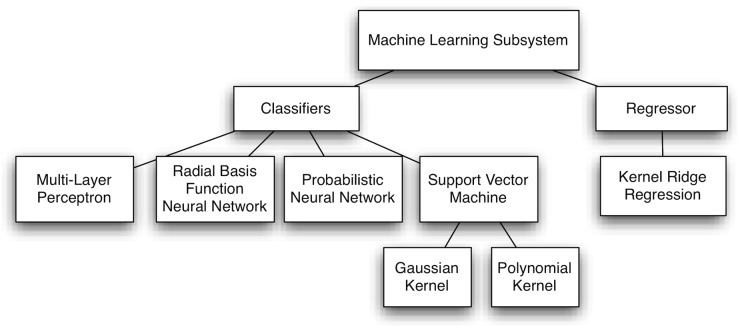
Electrograms stored in Implantable Cardioverter Defibrillators (ICD-EGM) have been proven to convey useful information for roughly determining the anatomical location of the Left Ventricular Tachycardia exit site (LVTES). Our aim here was to evaluate the possibilities from a machine learning system intended to provide an estimation of the LVTES anatomical region with the use of ICD-EGM in the situation where 12-lead electrocardiogram of ventricular tachycardia are not available. Several machine learning techniques were specifically designed and benchmarked, both from classification (such as Neural Networks (NN), and Support Vector Machines (SVM)) and regression (Kernel Ridge Regression) problem statements. Classifiers were evaluated by using accuracy rates for LVTES identification in a controlled number of anatomical regions, and the regression approach quality was studied in terms of the spatial resolution. We analyzed the ICD-EGM of 23 patients (18±10 EGM per patient) during left ventricular pacing and simultaneous recording of the spatial coordinates of the pacing electrode with a navigation system. Several feature sets extracted from ICD-EGM (consisting of times and voltages) were shown to convey more discriminative information than the raw waveform. Among classifiers, the SVM performed slightly better than NN. In accordance with previous clinical works, the average spatial resolution for the LVTES was about 3 cm, as in our system, which allows it to support the faster determination of the LVTES in ablation procedures. The proposed approach also provides with a framework suitable for driving the design of improved performance future systems.
植入式心脏复律除颤器(ICD-EGM)中存储的心电图已被证明能传达有用信息,用于大致确定左室性心动过速出口部位(LVTES)的解剖位置。我们的目的是评估一种机器学习系统的可能性,该系统旨在在无法获得室性心动过速的12导联心电图的情况下,利用ICD-EGM提供LVTES解剖区域的估计。专门设计并对几种机器学习技术进行了基准测试,包括分类(如神经网络(NN)和支持向量机(SVM))和回归(核岭回归)问题陈述。通过在可控数量的解剖区域中使用LVTES识别准确率来评估分类器,并从空间分辨率方面研究回归方法的质量。我们分析了23例患者在左心室起搏期间的ICD-EGM(每位患者18±10份EGM),并同时使用导航系统记录起搏电极的空间坐标。从ICD-EGM(由时间和电压组成)中提取的几个特征集显示比原始波形传达了更多的判别信息。在分类器中,SVM的表现略优于NN。与先前的临床研究一致,在我们的系统中,LVTES的平均空间分辨率约为3厘米,这使得它能够支持在消融手术中更快地确定LVTES。所提出的方法还提供了一个适合推动未来高性能系统设计的框架。