Ferdinand Angeline S, Paradies Yin, Kelaher Margaret
Centre for Health Policy, Melbourne School of Population and Global Health, University of Melbourne, Melbourne, Australia.
Alfred Deakin Institute for Citizenship and Globalisation, Faculty of Arts and Education, Deakin University, Burwood, Australia.
BMC Public Health. 2015 Apr 18;15:401. doi: 10.1186/s12889-015-1661-1.
Racial discrimination denies those from racial and ethnic minority backgrounds access to rights such as the ability to participate equally and freely in community and public life, equitable service provision and freedom from violence. Our study was designed to examine how people from racial and ethnic minority backgrounds in four Australian localities experience and respond to racial discrimination, as well as associated health impacts.
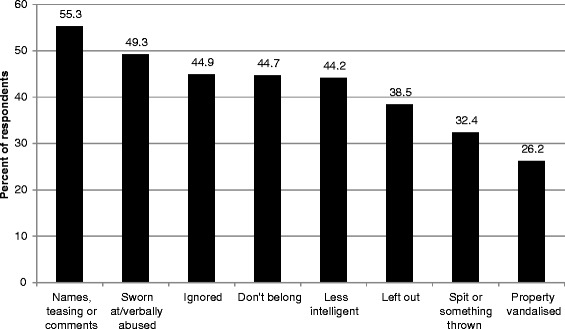
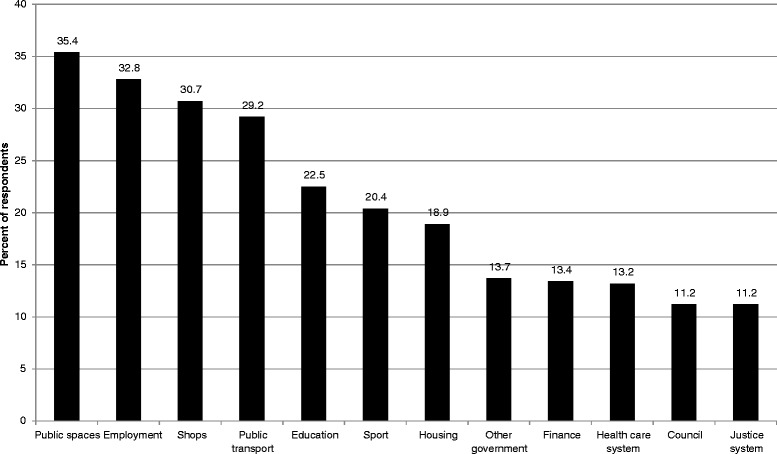
Data were collected from 1,139 Australians regarding types of racial discrimination experienced, settings for these incidents, response mechanisms and psychological distress as measured by the Kessler 6 (K6) Psychological Distress Scale.
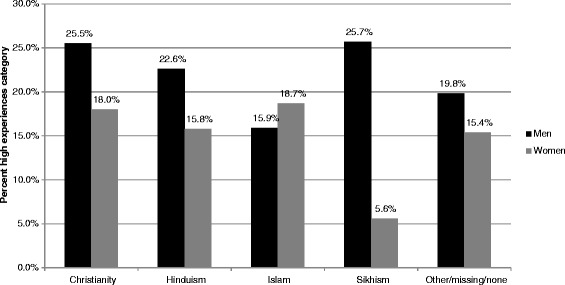
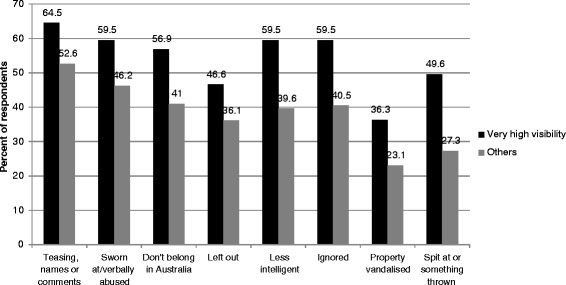
Age, education, religion, gender, visibility and rurality were all significantly associated with differences in the frequency of experiencing racial discrimination. Experiencing racial discrimination was associated with worse mental health. Mental health impacts were not associated with the type of discriminatory experience, but experiencing racial discrimination in shops and in employment and government settings was associated with being above the threshold for high or very high psychological distress. One out of twelve response mechanisms was found to be associated with lower stress following a discriminatory incident.
Study results indicate that poorer mental health was associated with the volume of discrimination experienced, rather than the type of experience. However, the impact of experiencing discrimination in some settings was shown to be particularly associated with high or very high psychological distress. Our findings suggest that interventions designed to prevent the occurrence of racism have more potential to increase mental health in racial and ethnic minority communities than interventions that work with individuals in response to experiencing racism.
种族歧视使来自少数种族和族裔背景的人无法享有平等自由参与社区和公共生活、获得公平服务以及免受暴力侵害等权利。我们的研究旨在调查澳大利亚四个地区少数种族和族裔背景的人们如何体验和应对种族歧视以及相关的健康影响。
收集了1139名澳大利亚人的数据,内容涉及所经历的种族歧视类型、这些事件发生的场景、应对机制以及通过凯斯勒6项心理困扰量表(K6)衡量的心理困扰情况。
年龄、教育程度、宗教信仰、性别、外貌特征以及居住在农村地区均与经历种族歧视的频率差异显著相关。经历种族歧视与较差的心理健康状况相关。心理健康影响与歧视经历的类型无关,但在商店、就业和政府部门遭遇种族歧视与心理困扰程度达到高或非常高的阈值相关。在十二种应对机制中,有一种被发现与歧视事件后的较低压力相关。
研究结果表明,较差的心理健康与所经历的歧视数量有关,而非经历的类型。然而,在某些场景中经历歧视的影响尤其与高或非常高的心理困扰相关。我们的研究结果表明,与针对个体应对种族主义经历的干预措施相比,旨在防止种族主义发生的干预措施在改善少数种族和族裔社区心理健康方面更具潜力。