Fan Song, Liu Bodu, Sun Lijuan, Lv Xiao-bin, Lin Zhaoyu, Chen Weixiong, Chen Weiliang, Tang Qionglan, Wang Youyuan, Su Yuxiong, Jin Shaowen, Zhang Daming, Zhong Jianglong, Li Yilin, Wen Bin, Zhang Zhang, Yang Pu, Zhou Bin, Liang Qixiang, Yu Xing, Zhu Yinghua, Hu Pengnan, Chu Junjun, Huang Wei, Feng Yuhuan, Peng Hongzhuang, Huang Qihong, Song Erwei, Li Jinsong
Guangdong Provincial Key Laboratory of Malignant Tumor Epigenetics and Gene Regulation, Sun Yat-Sen Memorial Hospital, Sun Yat-Sen University, Guangzhou, China.
Department of Oral & Maxillofacial Surgery, Sun Yat-sen Memorial Hospital, Sun Yat-sen University, Guangzhou, China.
Oncotarget. 2015 Jun 20;6(17):14885-904. doi: 10.18632/oncotarget.3659.
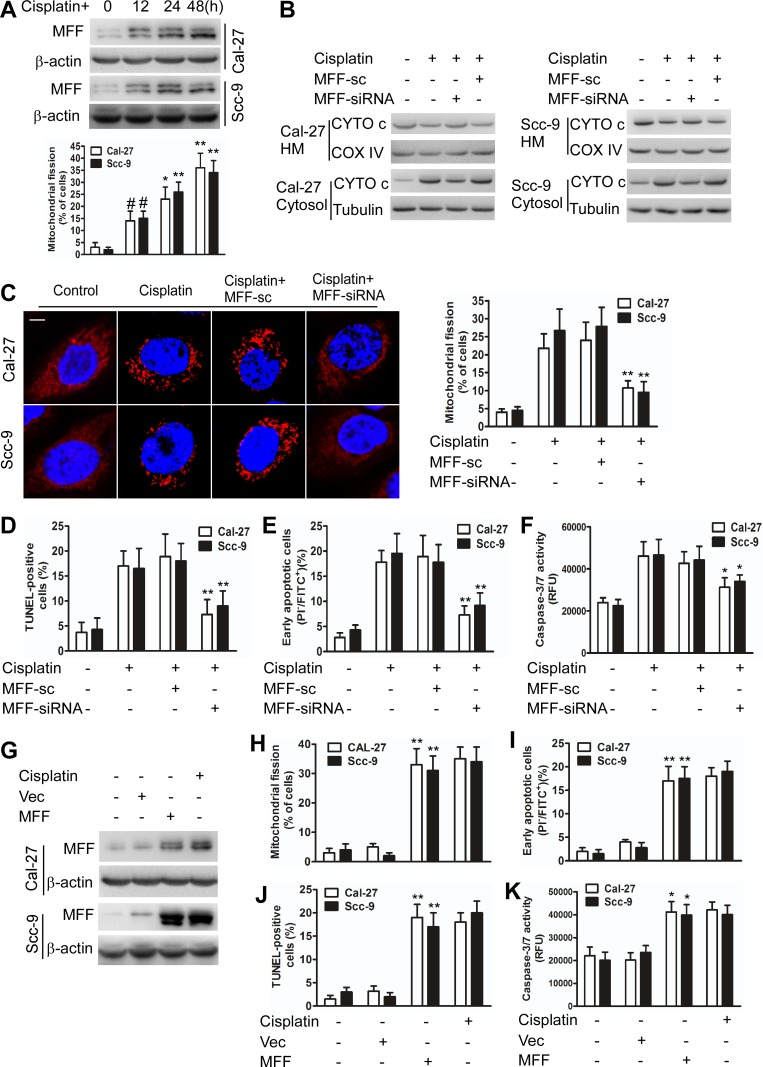
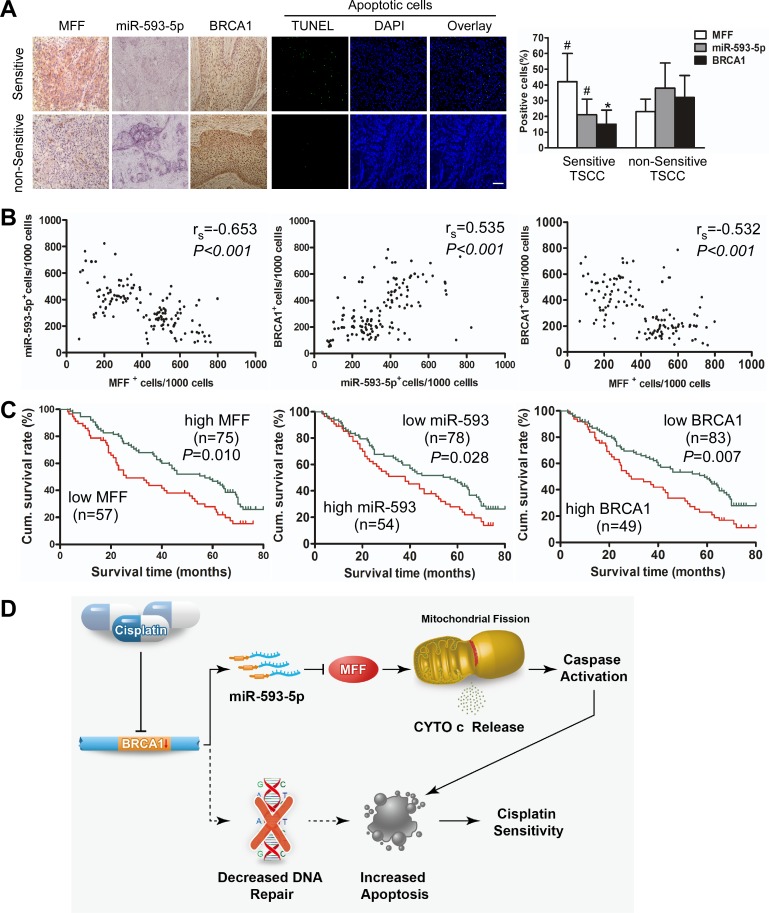
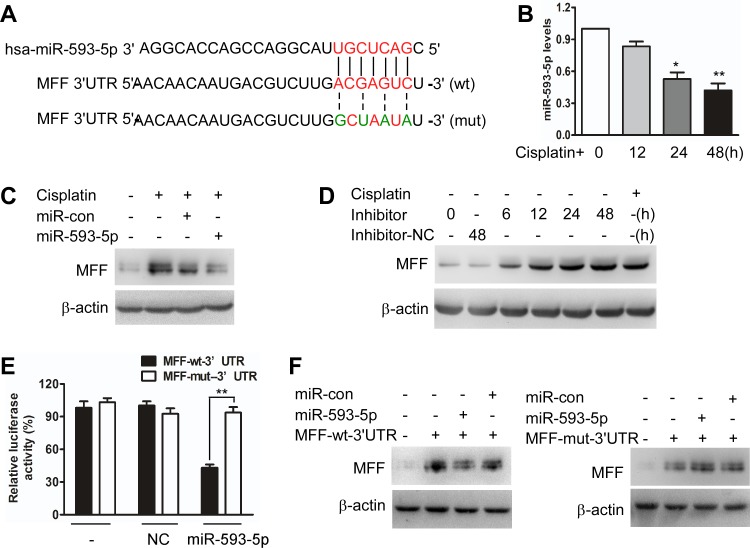
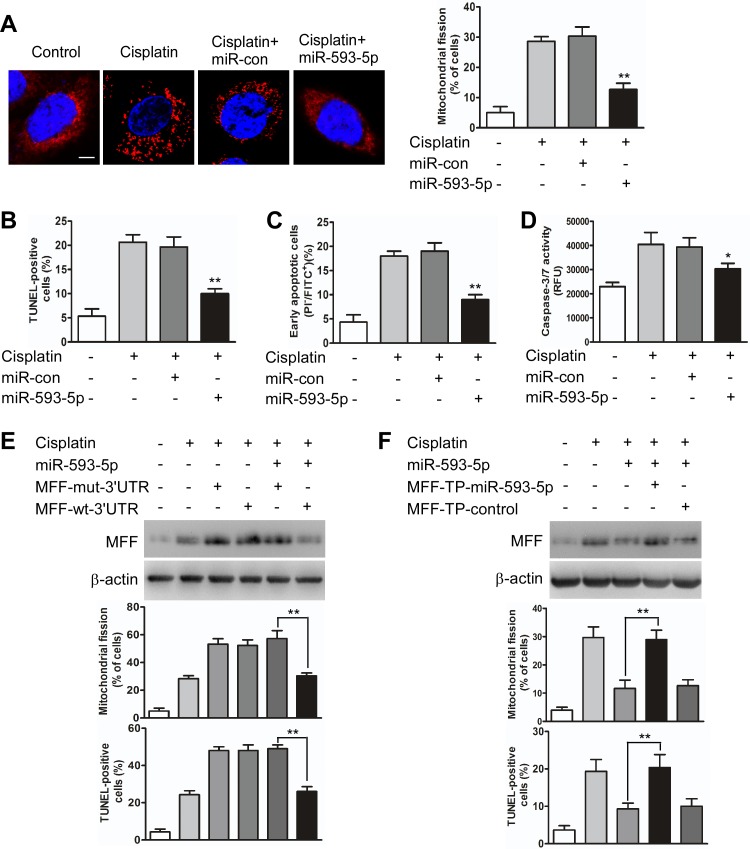
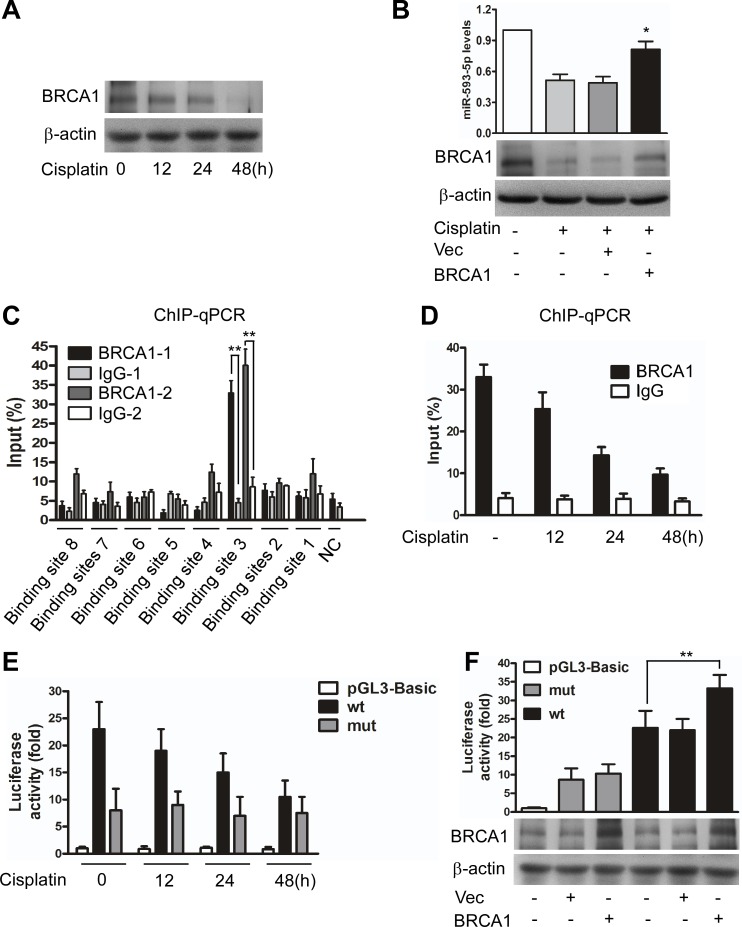
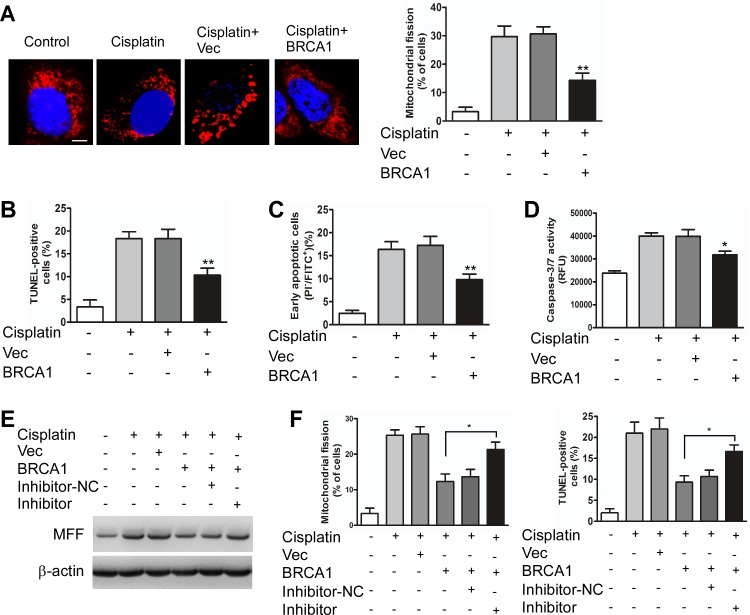
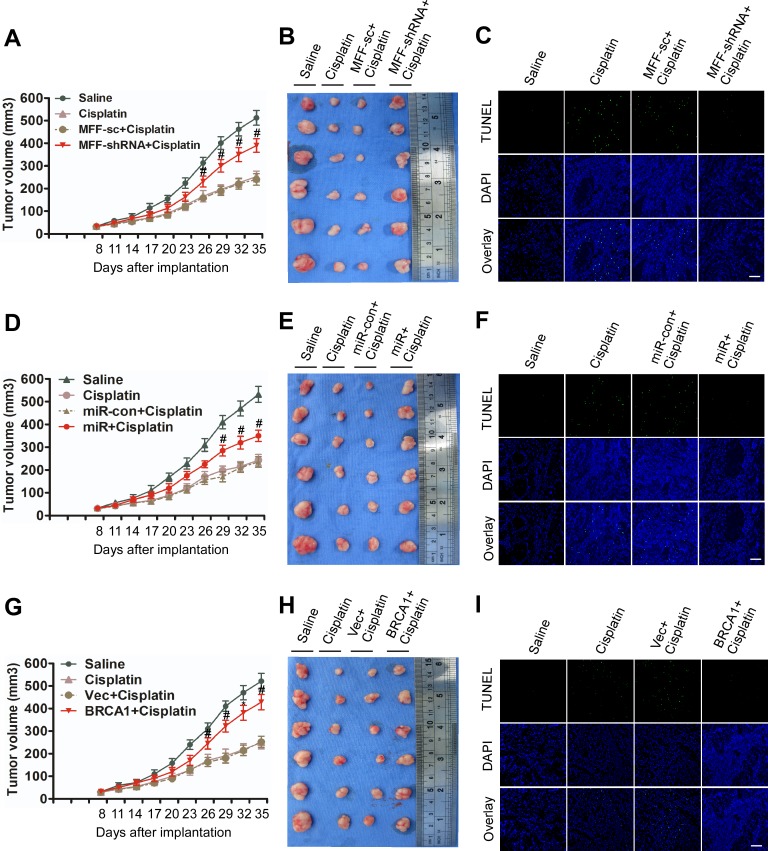
Cisplatin has been widely employed as a cornerstone chemotherapy treatment for a wide spectrum of solid neoplasms; increasing tumor responsiveness to cisplatin has been a topic of interest for the past 30 years. Strong evidence has indicated that mitochondrial fission participates in the regulation of apoptosis in many diseases; however, whether mitochondrial fission regulates cisplatin sensitivity remains poorly understood. Here, we show that MFF mediated mitochondrial fission and apoptosis in tongue squamous cell carcinoma (TSCC) cells after cisplatin treatment and that miR-593-5p was downregulated in this process. miR-593-5p attenuated mitochondrial fission and cisplatin sensitivity by targeting the 3' untranslated region sequence of MFF and inhibiting its translation. In exploring the underlying mechanism of miR-593-5p downregulation, we observed that BRCA1 transactivated miR-593-5p expression and attenuated cisplatin sensitivity in vitro. The BRCA1-miR-593-5p-MFF axis also affected cisplatin sensitivity in vivo. Importantly, in a retrospective analysis of multiple centers, we further found that the BRCA1-miR-593-5p-MFF axis was significantly associated with cisplatin sensitivity and the survival of patients with TSCC. Together, our data reveal a model for mitochondrial fission regulation at the transcriptional and post-transcriptional levels; we also reveal a new pathway for BRCA1 in determining cisplatin sensitivity through the mitochondrial fission program.
顺铂已被广泛用作多种实体肿瘤的化疗基石;在过去30年中,提高肿瘤对顺铂的反应性一直是一个备受关注的话题。有力证据表明,线粒体分裂参与多种疾病中细胞凋亡的调控;然而,线粒体分裂是否调节顺铂敏感性仍知之甚少。在此,我们表明,在顺铂处理后,MFF介导舌鳞状细胞癌(TSCC)细胞中的线粒体分裂和凋亡,且在此过程中miR-593-5p表达下调。miR-593-5p通过靶向MFF的3'非翻译区序列并抑制其翻译,减弱了线粒体分裂和顺铂敏感性。在探究miR-593-5p下调的潜在机制时,我们观察到BRCA1在体外反式激活miR-593-5p表达并减弱顺铂敏感性。BRCA1-miR-593-5p-MFF轴在体内也影响顺铂敏感性。重要的是,在多中心回顾性分析中,我们进一步发现BRCA1-miR-593-5p-MFF轴与TSCC患者的顺铂敏感性和生存显著相关。总之,我们的数据揭示了转录和转录后水平上的线粒体分裂调控模型;我们还揭示了BRCA1通过线粒体分裂程序决定顺铂敏感性的新途径。