Jupa Radek, Didi Vojtěch, Hejátko Jan, Gloser Vít
Department of Experimental Biology, Faculty of Science, Masaryk University Brno, Czech Republic.
Functional Genomics and Proteomics of Plants, Central European Institute of Technology, Masaryk University Brno, Czech Republic.
Front Plant Sci. 2015 Apr 9;6:211. doi: 10.3389/fpls.2015.00211. eCollection 2015.
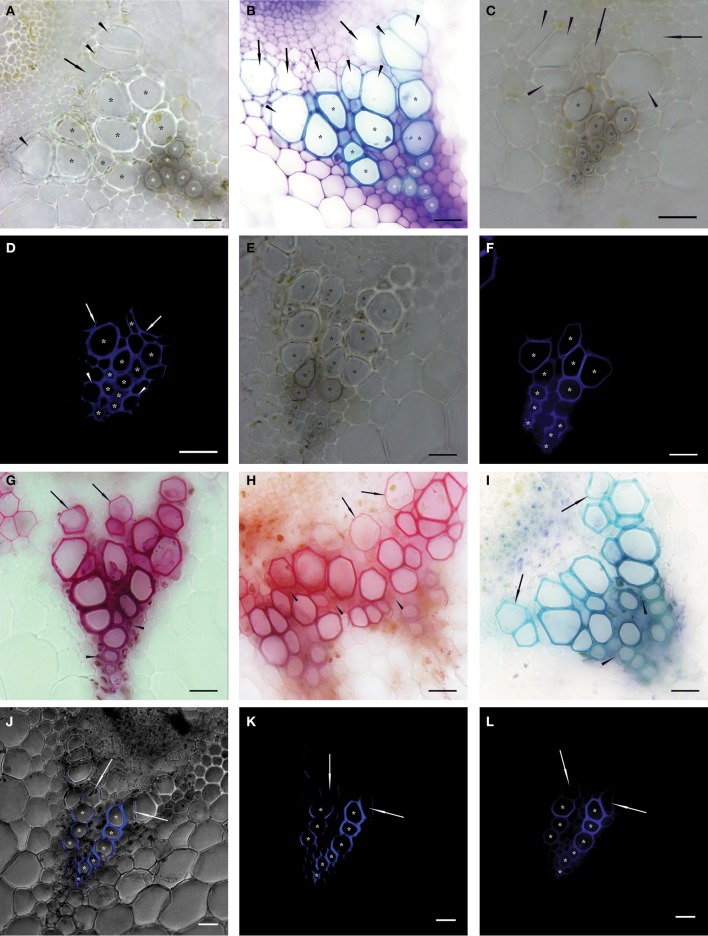
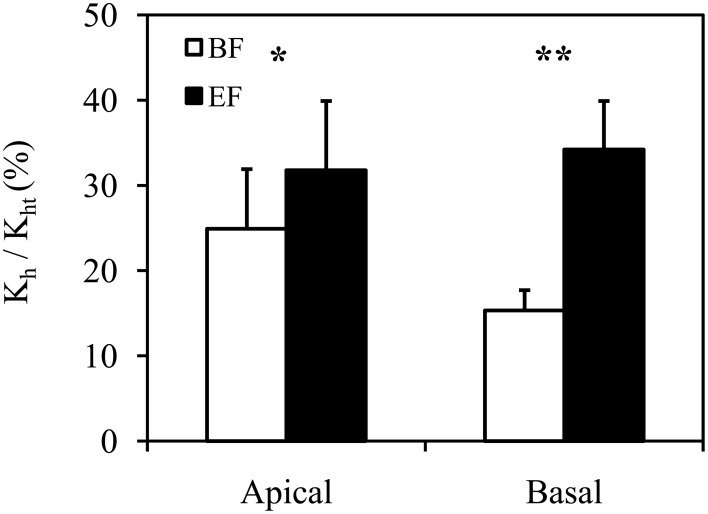
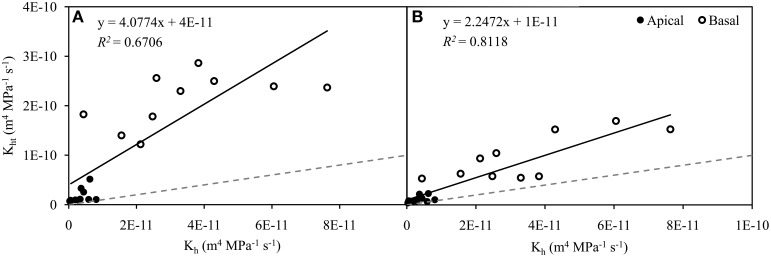
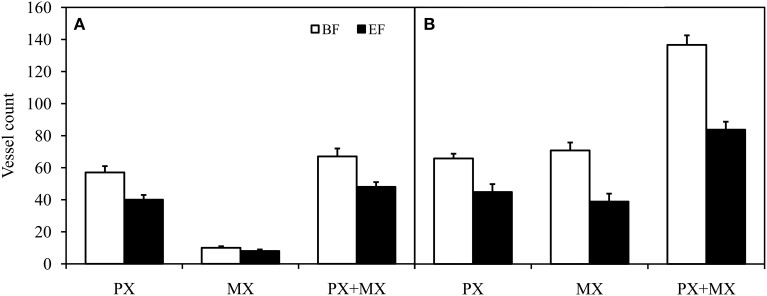
Dye perfusion is commonly used for the identification of conductive elements important for the study of xylem development as well as precise hydraulic estimations. The tiny size of inflorescence stems, the small amount of vessels in close arrangement, and high hydraulic resistivity delimit the use of the method for quantification of the water conductivity of Arabidopsis thaliana, one of the recently most extensively used plant models. Here, we present an extensive adjustment to the method in order to reliably identify individual functional (conductive) vessels. Segments of inflorescence stems were sealed in silicone tubes to prevent damage and perfused with a dye solution. Our results showed that dyes often used for staining functional xylem elements (safranin, fuchsine, toluidine blue) failed with Arabidopsis. In contrast, Fluorescent Brightener 28 dye solution perfused through segments stained secondary cell walls of functional vessels, which were clearly distinguishable in native cross sections. When compared to identification based on the degree of development of secondary cell walls, identification with the help of dye perfusion revealed a significantly lower number of functional vessels and values of theoretical hydraulic conductivity. We found that lignified but not yet functional vessels form a substantial portion of the xylem in apical and basal segments of Arabidopsis and, thus, significantly affect the analyzed functional parameters of xylem. The presented methodology enables reliable identification of individual functional vessels, allowing thus estimations of hydraulic conductivities to be improved, size distributions and vessel diameters to be refined, and data variability generally to be reduced.
染料灌注常用于识别对木质部发育研究以及精确水力估算很重要的传导元件。花序茎尺寸微小、紧密排列的导管数量少以及高水力阻力限制了该方法在拟南芥水导率定量分析中的应用,拟南芥是近年来使用最广泛的植物模型之一。在此,我们对该方法进行了广泛调整,以便可靠地识别单个功能性(传导性)导管。将花序茎段密封在硅胶管中以防止受损,并用染料溶液进行灌注。我们的结果表明,常用于染色功能性木质部元件的染料(番红、品红、甲苯胺蓝)对拟南芥无效。相比之下,荧光增白剂28染料溶液灌注通过的茎段可使功能性导管的次生细胞壁染色,这些细胞壁在天然横切面上清晰可辨。与基于次生细胞壁发育程度的识别方法相比,借助染料灌注进行的识别显示功能性导管数量明显减少,理论水力传导率值也更低。我们发现,木质化但尚未发挥功能的导管在拟南芥顶端和基部茎段的木质部中占很大比例,因此显著影响所分析的木质部功能参数。所提出的方法能够可靠地识别单个功能性导管,从而改进水力传导率估算、细化导管尺寸分布和直径,并总体上降低数据变异性。