Turkmenoglu Fatma Pinar, Baysal İpek, Ciftci-Yabanoglu Samiye, Yelekci Kemal, Temel Hamdi, Paşa Salih, Ezer Nurten, Çalış İhsan, Ucar Gulberk
Department of Pharmaceutical Botany, Faculty of Pharmacy, Hacettepe University, Ankara 06100, Turkey.
Department of Biochemistry, Faculty of Pharmacy, Hacettepe University, Ankara 06100, Turkey.
Molecules. 2015 Apr 23;20(5):7454-73. doi: 10.3390/molecules20057454.
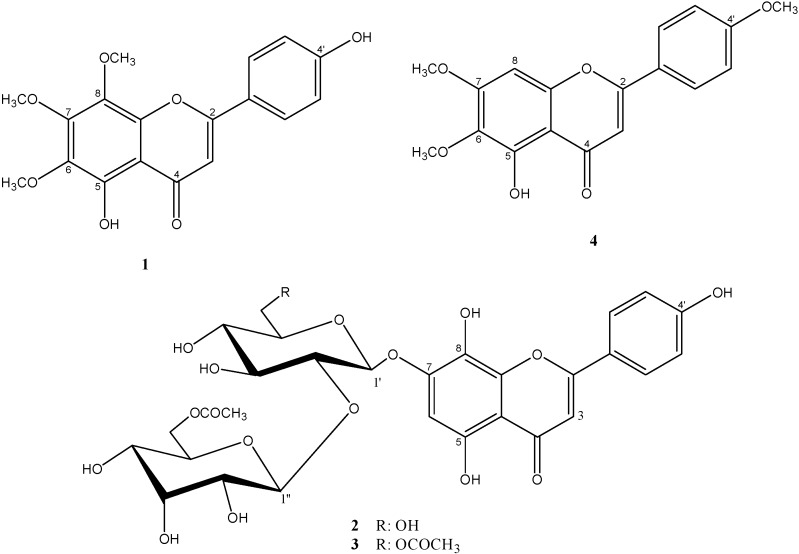
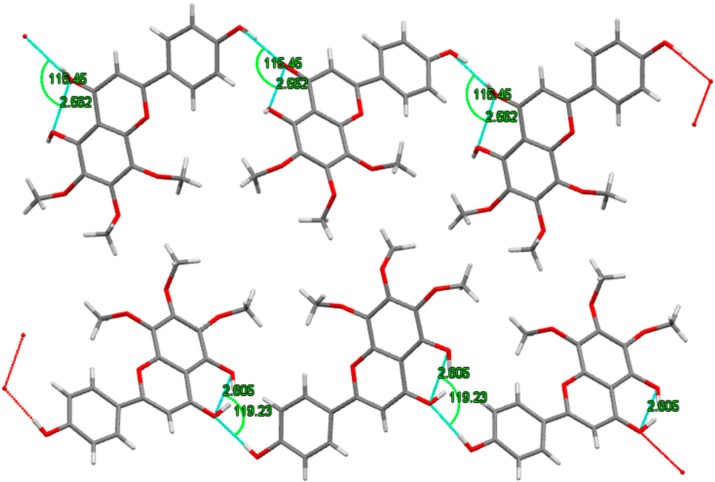
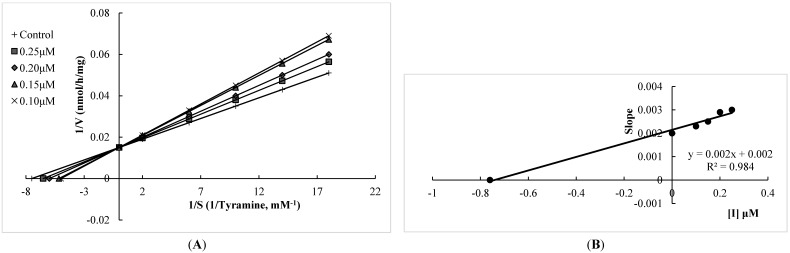
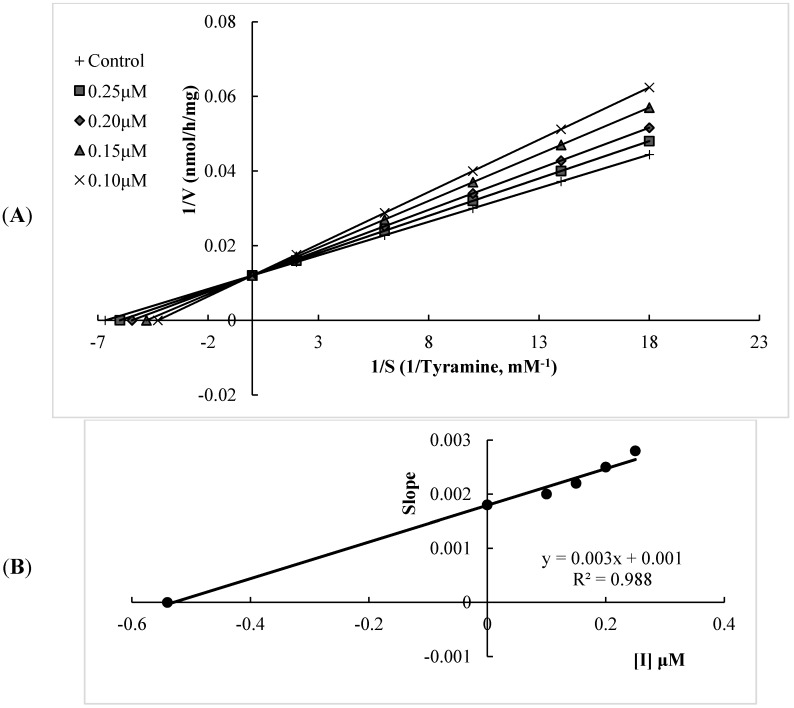
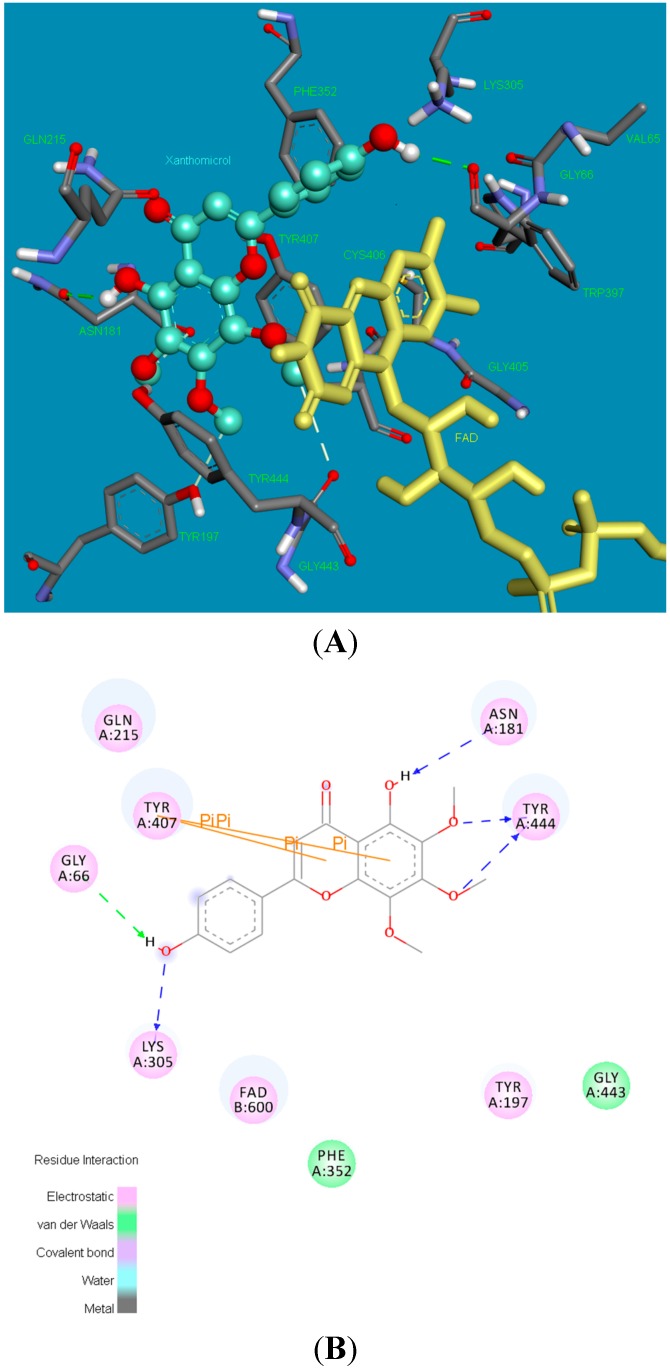
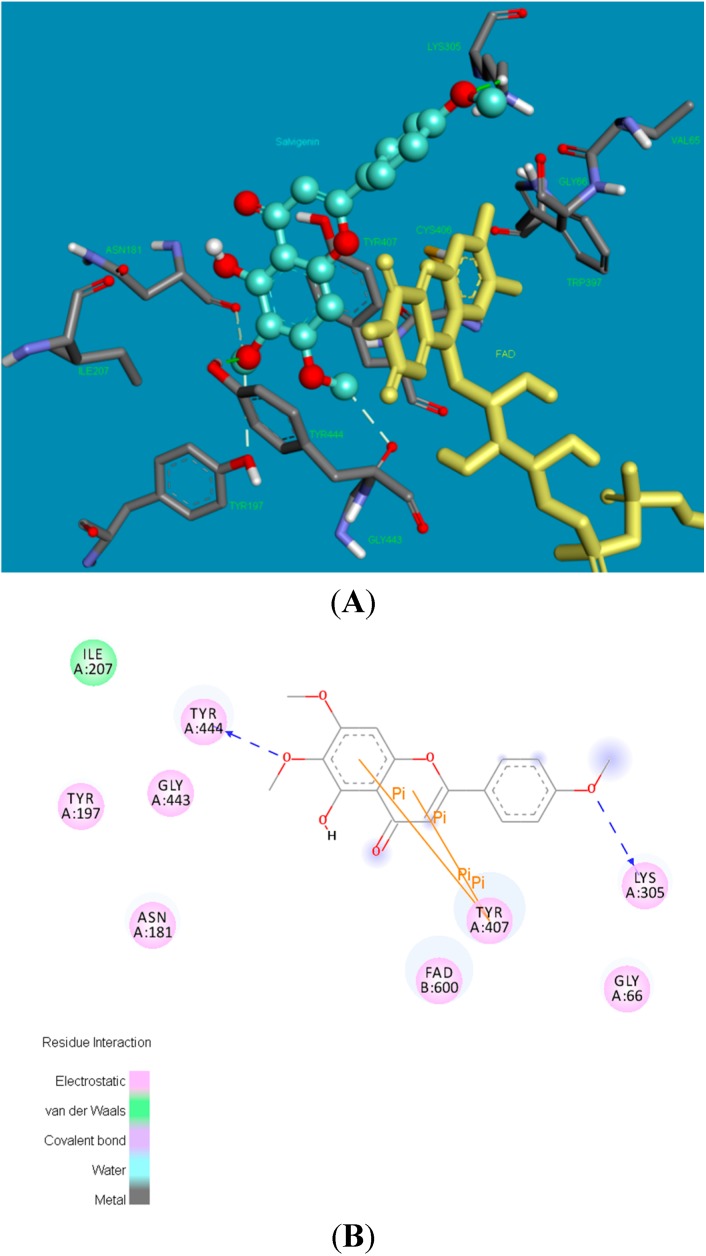
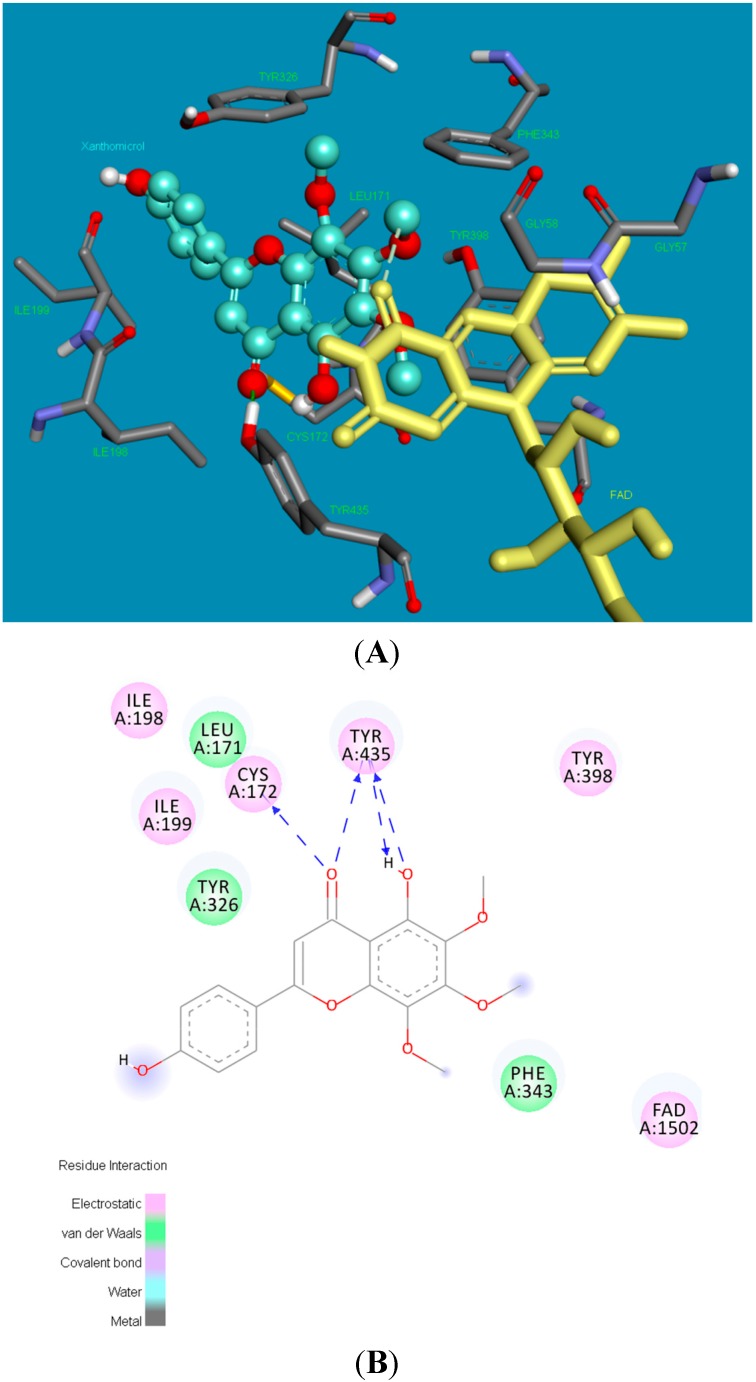
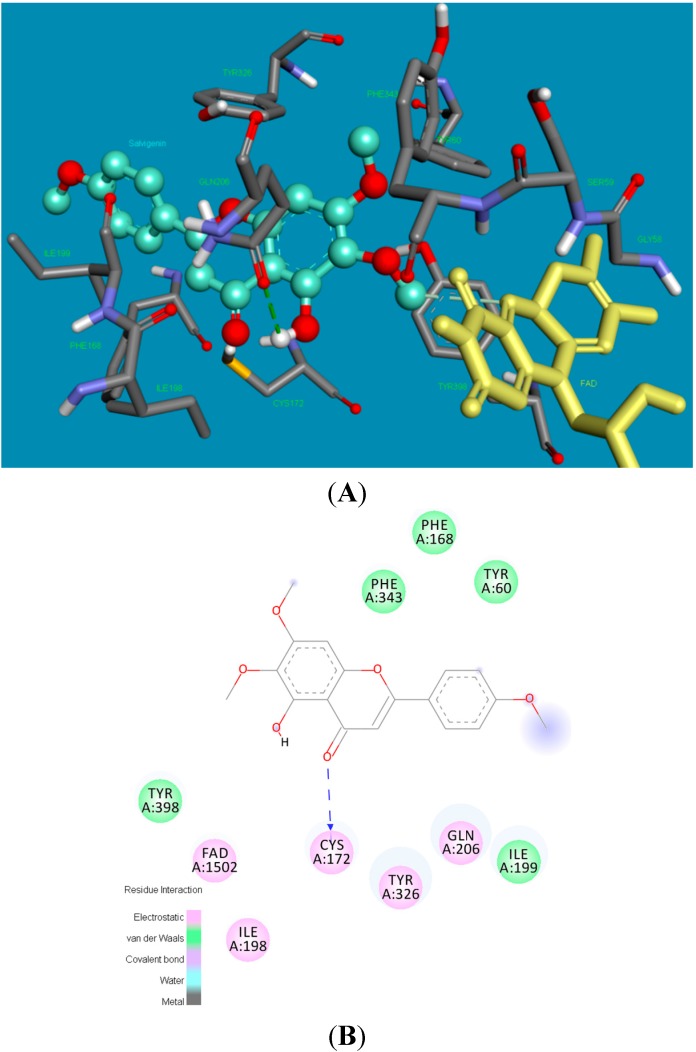
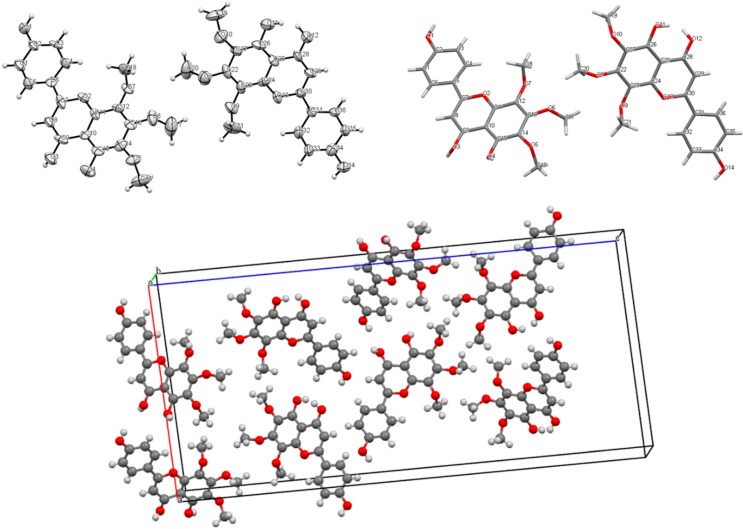
The inhibitory effects of flavonoids on monoamine oxidases (MAOs) have attracted great interest since alterations in monoaminergic transmission are reported to be related to neurodegenerative diseases such as Parkinson's and Alzheimer's diseases and psychiatric disorders such as depression and anxiety, thus MAOs may be considered as targets for the treatment of these multi-factorial diseases. In the present study, four Sideritis flavonoids, xanthomicrol (1), isoscutellarein 7-O-[6'''-O-acetyl-β-D-allopyranosyl-(1→2)]-β-D-glucopyranoside (2), isoscutellarein 7-O-[6'''-O-acetyl-β-D-allopyranosyl-(1→2)]-6''-O-acetyl-β-D-glucopyranoside (3) and salvigenin (4) were docked computationally into the active site of the human monoamine oxidase isoforms (hMAO-A and hMAO-B) and were also investigated for their hMAO inhibitory potencies using recombinant hMAO isoenzymes. The flavonoids inhibited hMAO-A selectively and reversibly in a competitive mode. Salvigenin (4) was found to be the most potent hMAO-A inhibitor, while xanthomicrol (1) appeared as the most selective hMAO-A inhibitor. The computationally obtained results were in good agreement with the corresponding experimental values. In addition, the x-ray structure of xanthomicrol (1) has been shown. The current work warrants further preclinical studies to assess the potential of xanthomicrol (1) and salvigenin (4) as new selective and reversible hMAO-A inhibitors for the treatment of depression and anxiety.
黄酮类化合物对单胺氧化酶(MAOs)的抑制作用引起了极大关注,因为据报道单胺能传递的改变与神经退行性疾病如帕金森病和阿尔茨海默病以及精神疾病如抑郁症和焦虑症有关,因此MAOs可被视为治疗这些多因素疾病的靶点。在本研究中,四种铁角蕨属黄酮类化合物,黄腐醇(1)、异野黄芩黄素7 - O - [6'''- O - 乙酰基 - β - D - 阿洛吡喃糖基 - (1→2)] - β - D - 葡萄糖苷(2)、异野黄芩黄素7 - O - [6'''- O - 乙酰基 - β - D - 阿洛吡喃糖基 - (1→2)] - 6'' - O - 乙酰基 - β - D - 葡萄糖苷(3)和 salvigenin(4)通过计算机对接至人单胺氧化酶同工型(hMAO - A和hMAO - B)的活性位点,并使用重组hMAO同工酶研究了它们对hMAO的抑制效力。这些黄酮类化合物以竞争模式选择性且可逆地抑制hMAO - A。发现salvigenin(4)是最有效的hMAO - A抑制剂,而黄腐醇(1)似乎是最具选择性的hMAO - A抑制剂。计算机计算得到的结果与相应的实验值高度吻合。此外,还展示了黄腐醇(1)的X射线结构。目前的工作需要进一步的临床前研究,以评估黄腐醇(1)和salvigenin(4)作为新型选择性和可逆性hMAO - A抑制剂治疗抑郁症和焦虑症的潜力。