Perry Rachel J, Lee Sangwon, Ma Lie, Zhang Dongyan, Schlessinger Joseph, Shulman Gerald I
1] Howard Hughes Medical Institute, Yale University School of Medicine, New Haven, Connecticut 06536-8012, USA [2] Department of Internal Medicine, Yale University School of Medicine, New Haven, Connecticut 06536-8012, USA [3] Department of Cellular &Molecular Physiology, Yale University School of Medicine, New Haven, Connecticut 06536-8012, USA.
1] Department of Internal Medicine, Yale University School of Medicine, New Haven, Connecticut 06536-8012, USA [2] Department of Pharmacology, Yale University School of Medicine, New Haven, Connecticut, USA.
Nat Commun. 2015 Apr 28;6:6980. doi: 10.1038/ncomms7980.
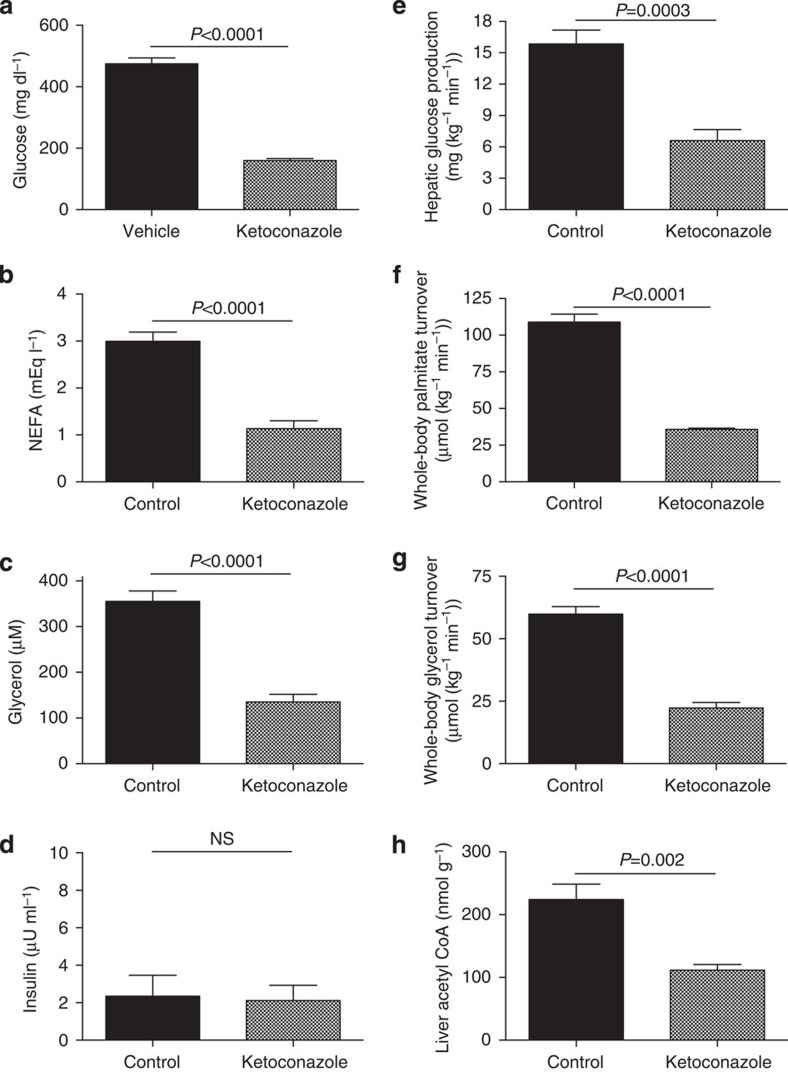
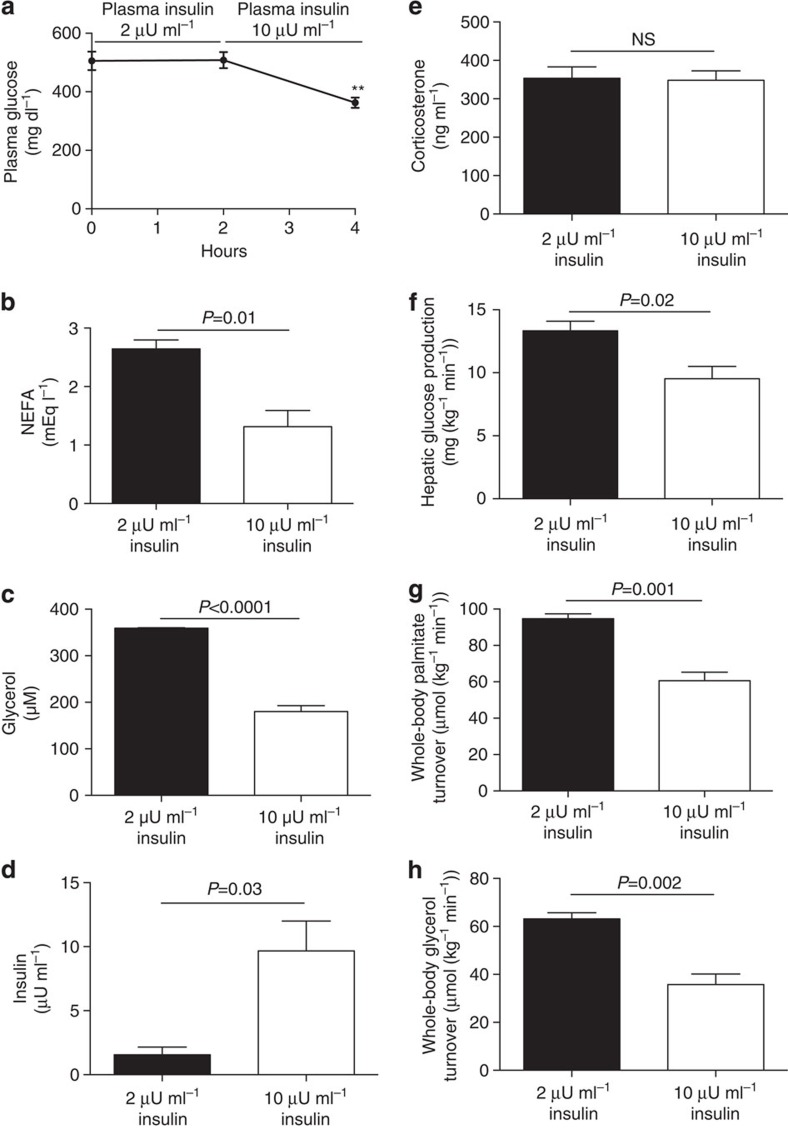
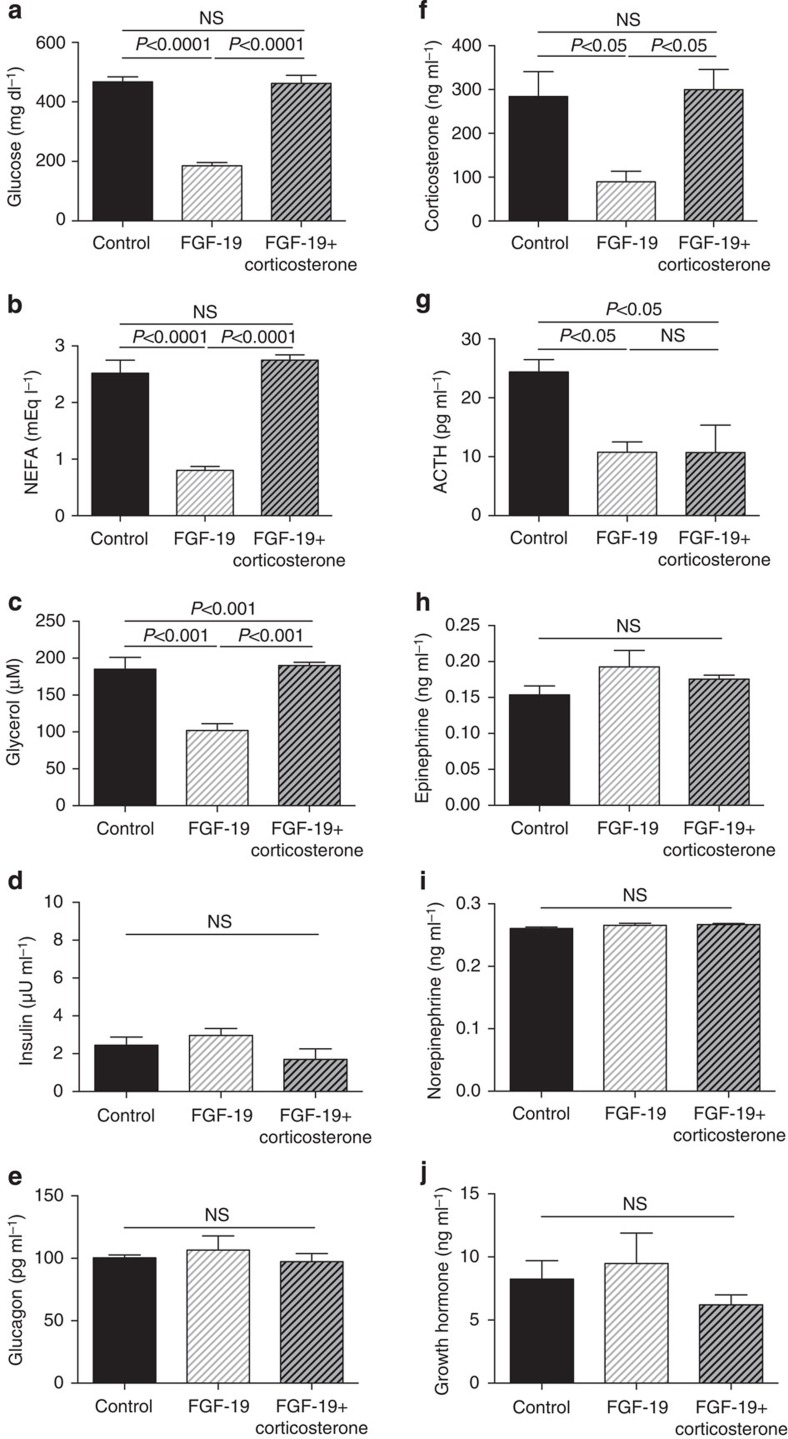
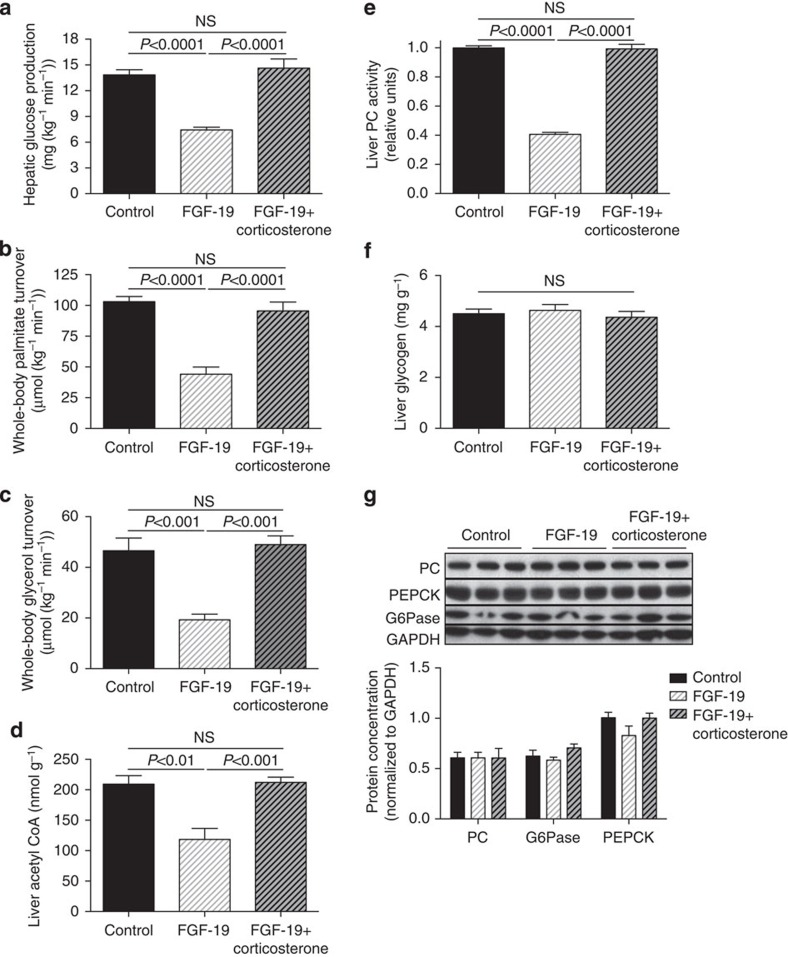
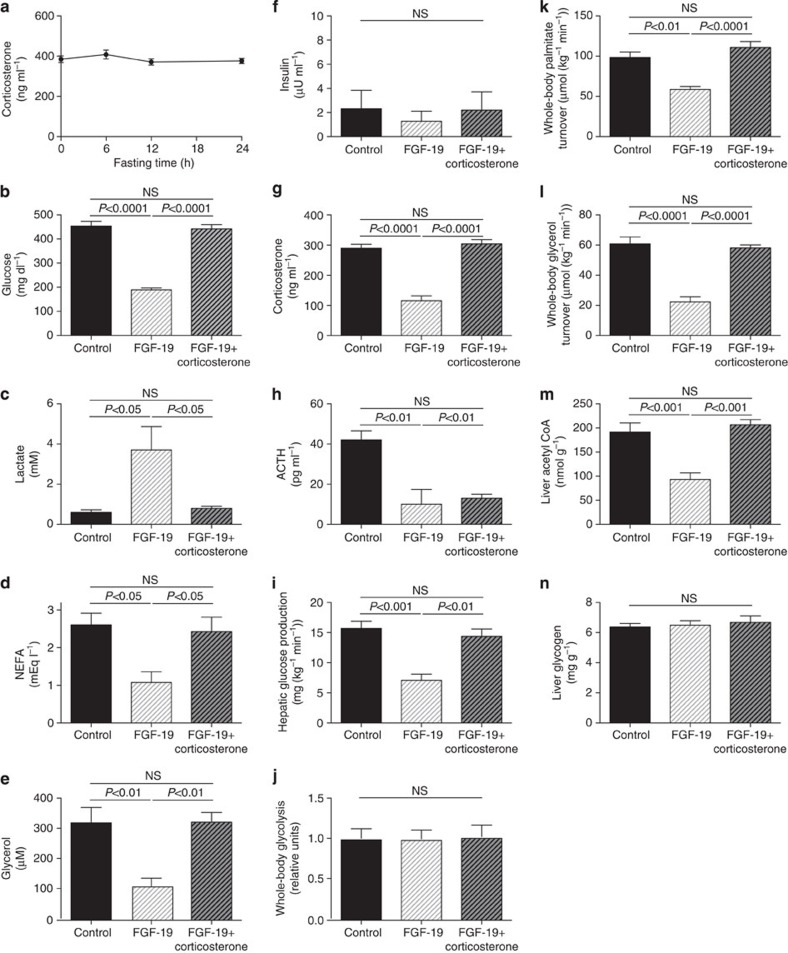
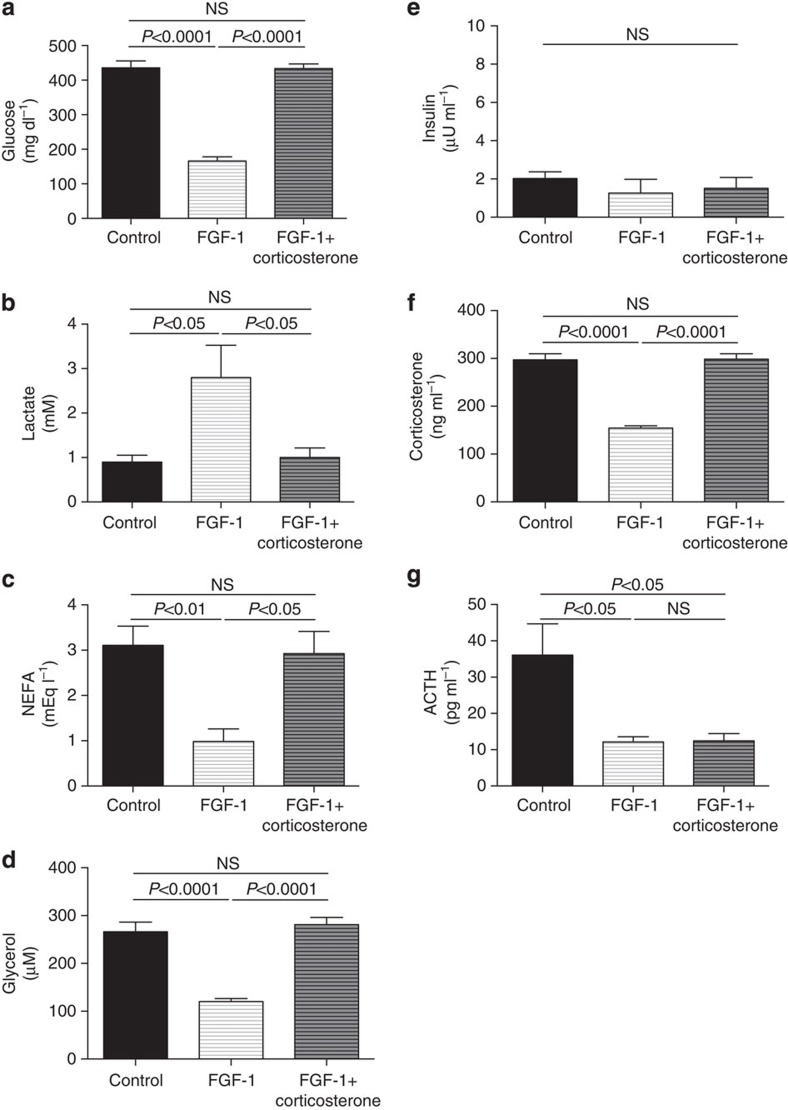
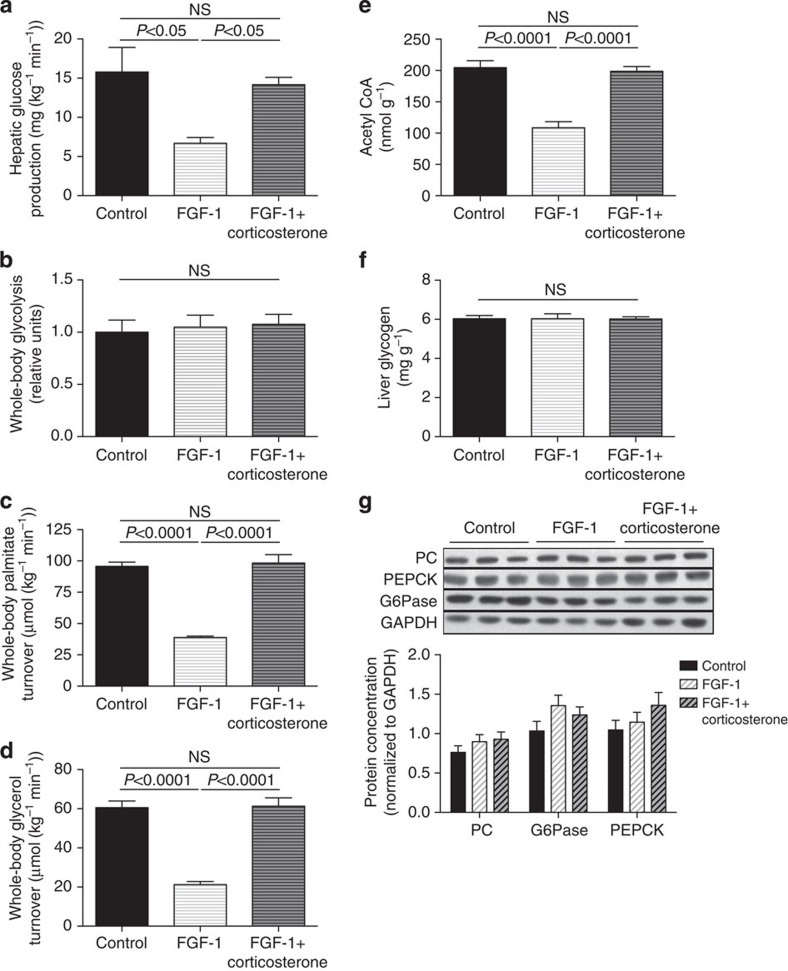
Fibroblast growth factor-1 (FGF1) and FGF19 have been shown to improve glucose metabolism in diabetic rodents, but how this occurs is unknown. Here to investigate the mechanism of action of these growth factors, we perform intracerebroventricular (i.c.v.) injections of recombinant FGF1 or FGF19 in an awake rat model of type 1 diabetes (T1D) and measure rates of whole-body lipolysis, hepatic acetyl CoA content, pyruvate carboxylase activity and hepatic glucose production. We show that i.c.v. injection of FGF19 or FGF1 leads to a ∼60% reduction in hepatic glucose production, hepatic acetyl CoA content and whole-body lipolysis, which results from decreases in plasma ACTH and corticosterone concentrations. These effects are abrogated by an intra-arterial infusion of corticosterone. Taken together these studies identify suppression of the HPA axis and ensuing reductions in hepatic acetyl CoA content as a common mechanism responsible for mediating the acute, insulin-independent, glucose-lowering effects of FGF1 and FGF19 in rodents with poorly controlled T1D.
成纤维细胞生长因子-1(FGF1)和FGF19已被证明可改善糖尿病啮齿动物的葡萄糖代谢,但具体机制尚不清楚。在此,为了研究这些生长因子的作用机制,我们在清醒的1型糖尿病(T1D)大鼠模型中进行脑室内(i.c.v.)注射重组FGF1或FGF19,并测量全身脂肪分解率、肝脏乙酰辅酶A含量、丙酮酸羧化酶活性和肝脏葡萄糖生成率。我们发现,脑室内注射FGF19或FGF1可使肝脏葡萄糖生成、肝脏乙酰辅酶A含量和全身脂肪分解降低约60%,这是由于血浆促肾上腺皮质激素(ACTH)和皮质酮浓度降低所致。动脉内输注皮质酮可消除这些作用。综合这些研究结果表明,在控制不佳的T1D啮齿动物中,抑制下丘脑-垂体-肾上腺(HPA)轴并随后降低肝脏乙酰辅酶A含量是介导FGF1和FGF19急性、不依赖胰岛素的降糖作用的共同机制。